01
Lipids defined, and the structure of fatty acids
- Lipids are a collective term for biomolecules with low water solubility and good solubility in organic solvents, not one structural family
- A fatty acid is a carboxylic acid with a carboxyl group and a long hydrocarbon chain, R-COOH
- The carboxyl group provides polarity and ionisation while the hydrocarbon chain is non-polar
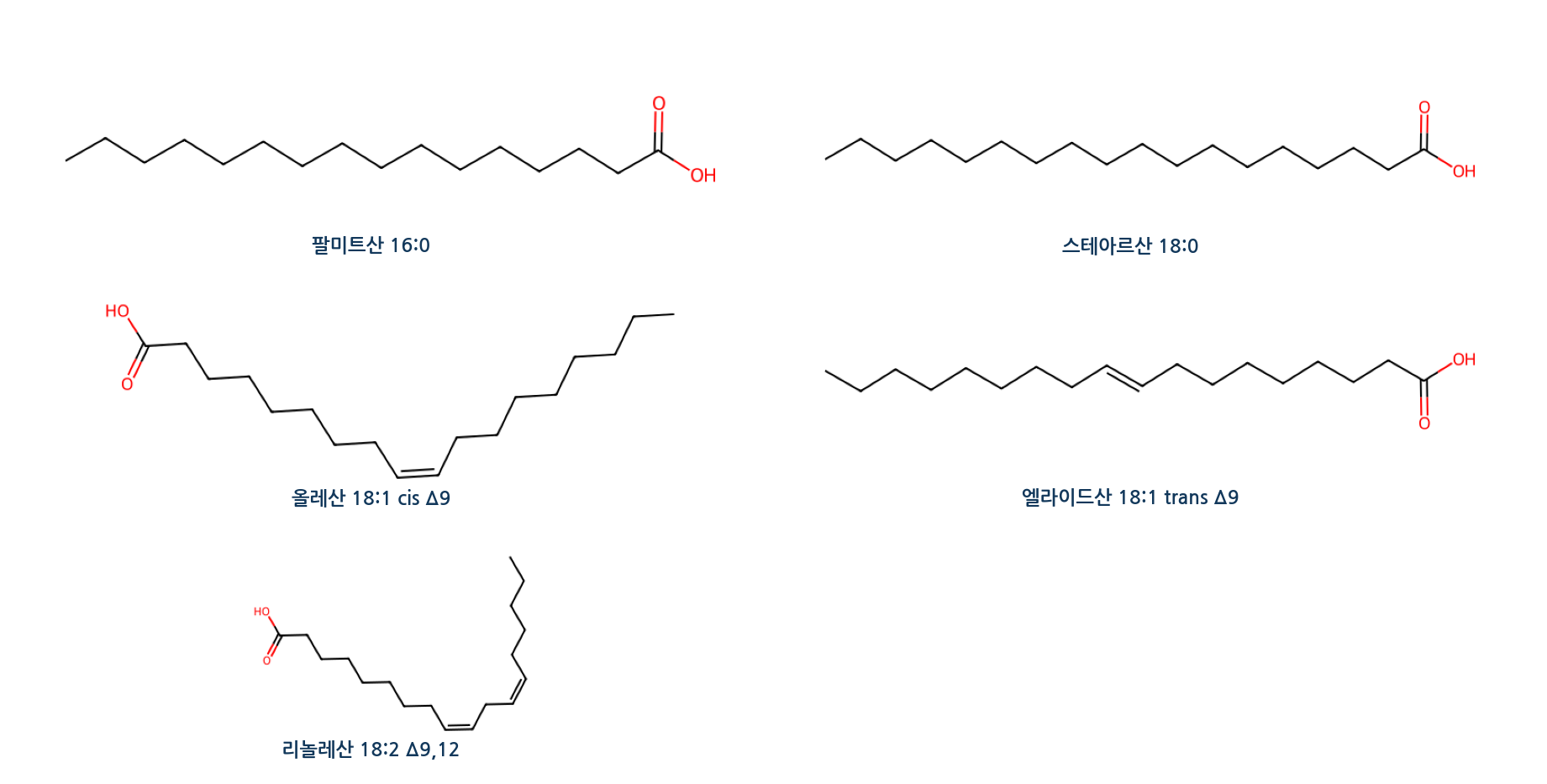
- Saturated fatty acids have no C=C and unsaturated ones have at least one
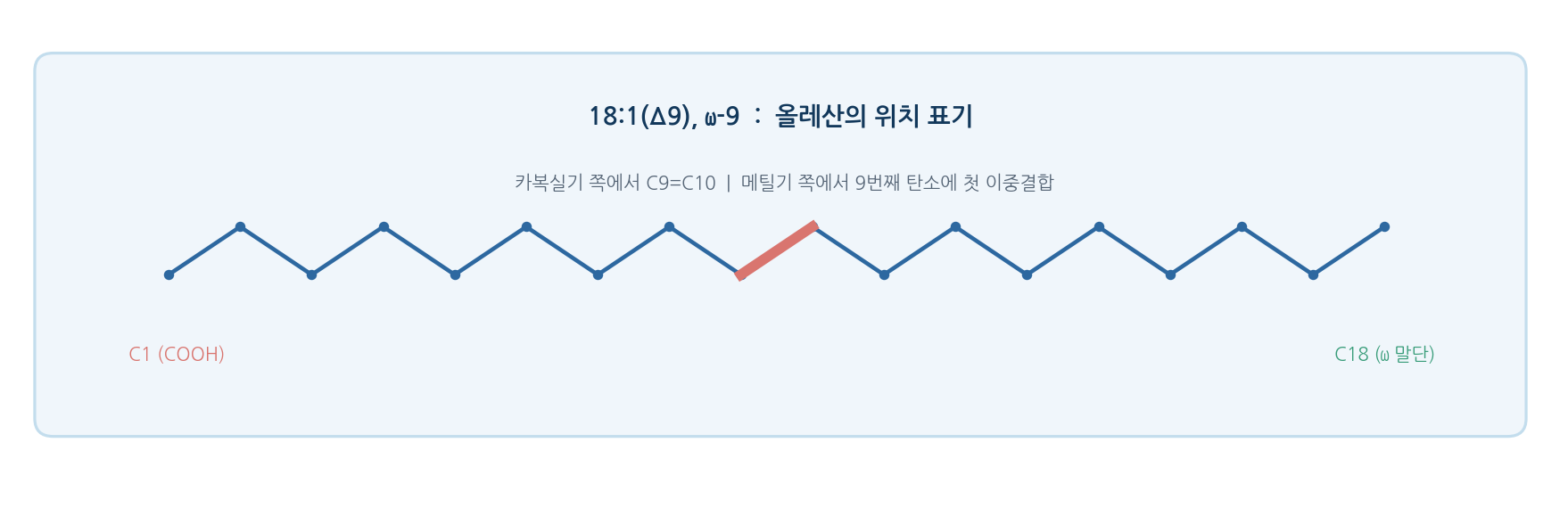
- In 18:1(delta-9) there are 18 carbons and one double bond between C9 and C10, counting the carboxyl carbon as C1
- The omega-9 or n-9 designation counts from the methyl end to the first double bond
- Oleic acid is 18:1(delta-9, cis) and omega-9, and linoleic acid is 18:2(delta-9,12, cis,cis) and omega-6
- Humans cannot synthesise linoleic acid (omega-6) or alpha-linolenic acid (omega-3), which are essential dietary fatty acids
- Each additional C=C removes two hydrogens, so stearic acid is C18H36O2 and oleic acid is C18H34O2
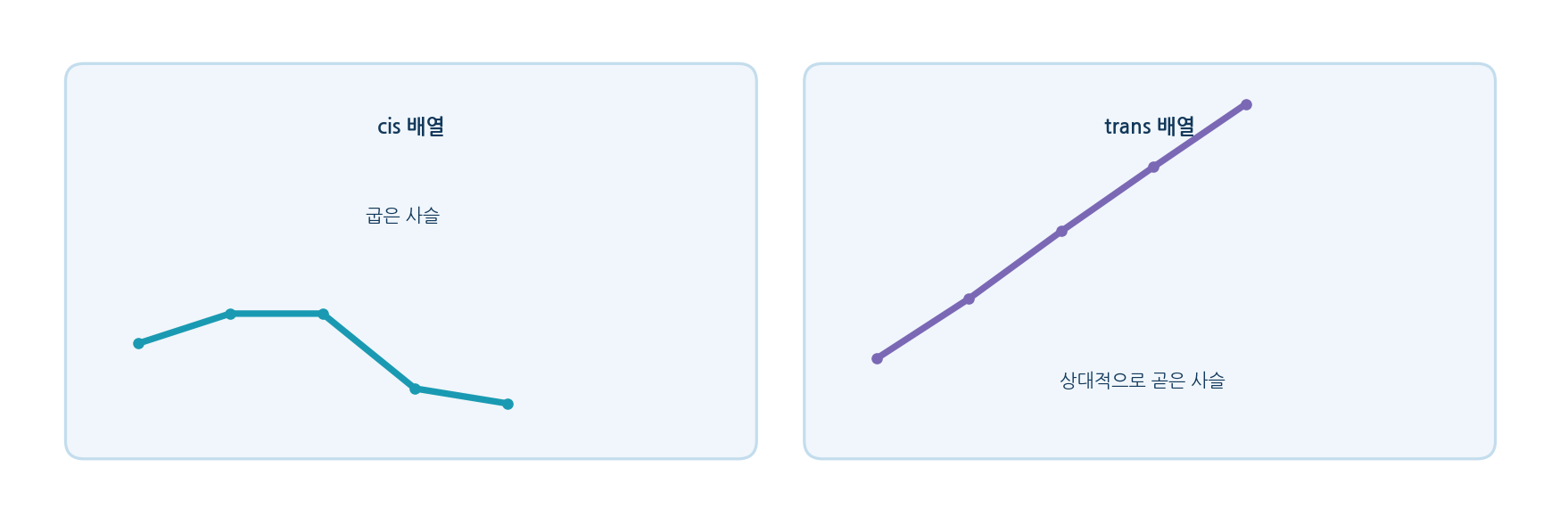
- cis and trans forms are geometric isomers with identical atom counts, formula and molar mass
02
Melting point and chain packing
- Melting point depends on chain length, the number, position and configuration of double bonds, and mixture composition
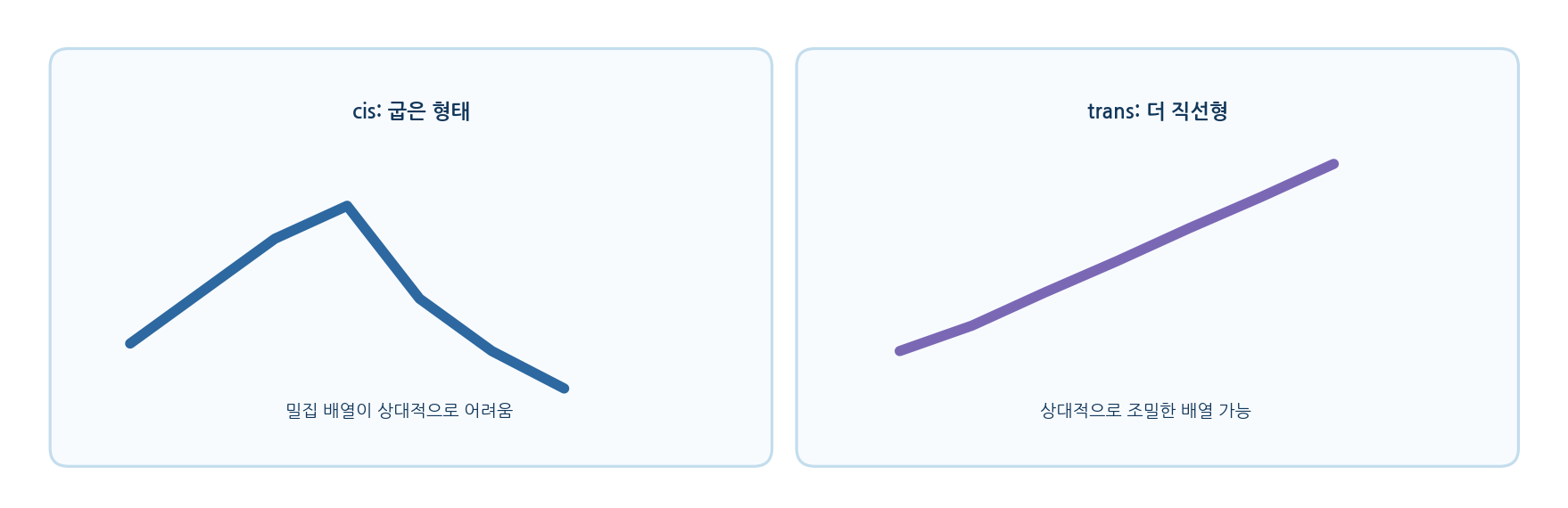
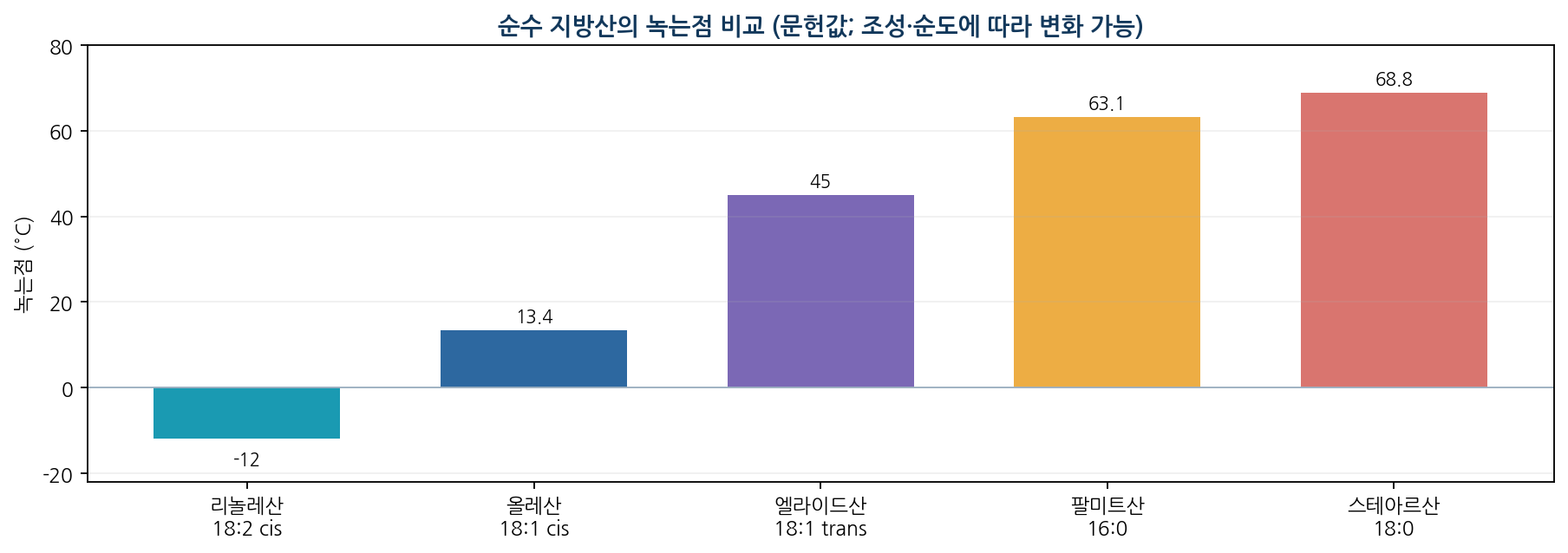
- At equal carbon number a cis double bond disrupts packing and tends to lower the melting point
- Pure oleic acid (18:1 cis) melts far lower than elaidic acid (18:1 trans)
- Longer chains increase dispersion forces, pack more tightly and raise the melting point
- Edible oils and animal fats are mixtures of many triacylglycerols, so pure fatty acid values cannot be assumed
03
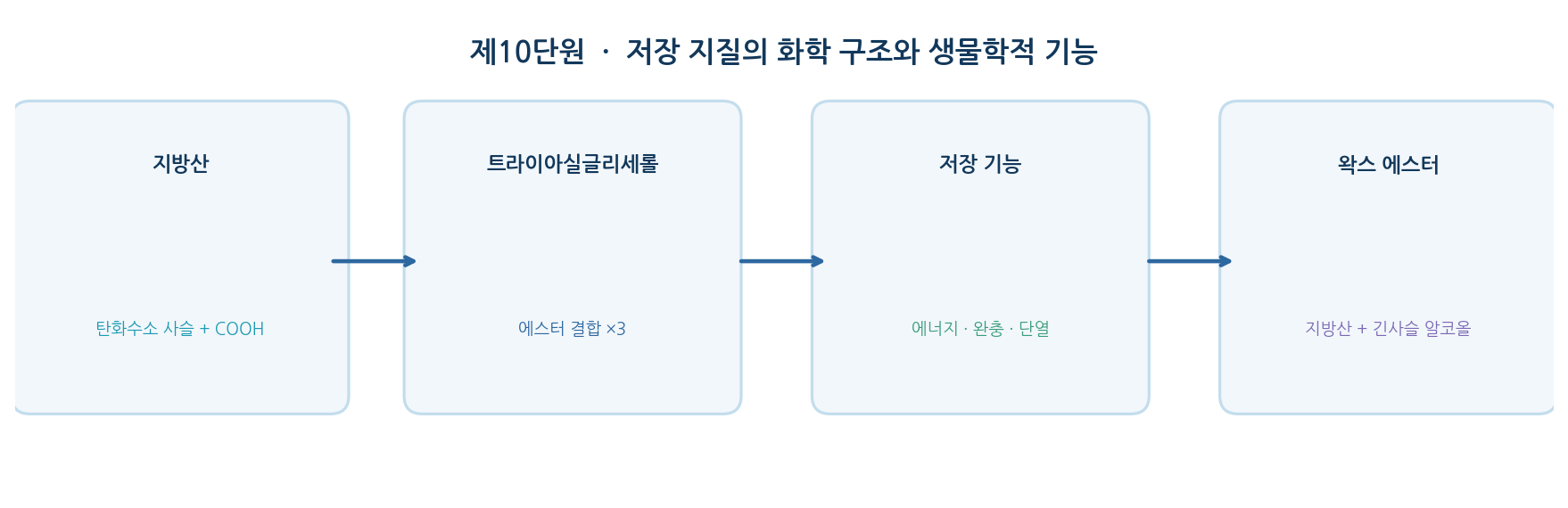
Triacylglycerols are fatty acid esters of glycerol
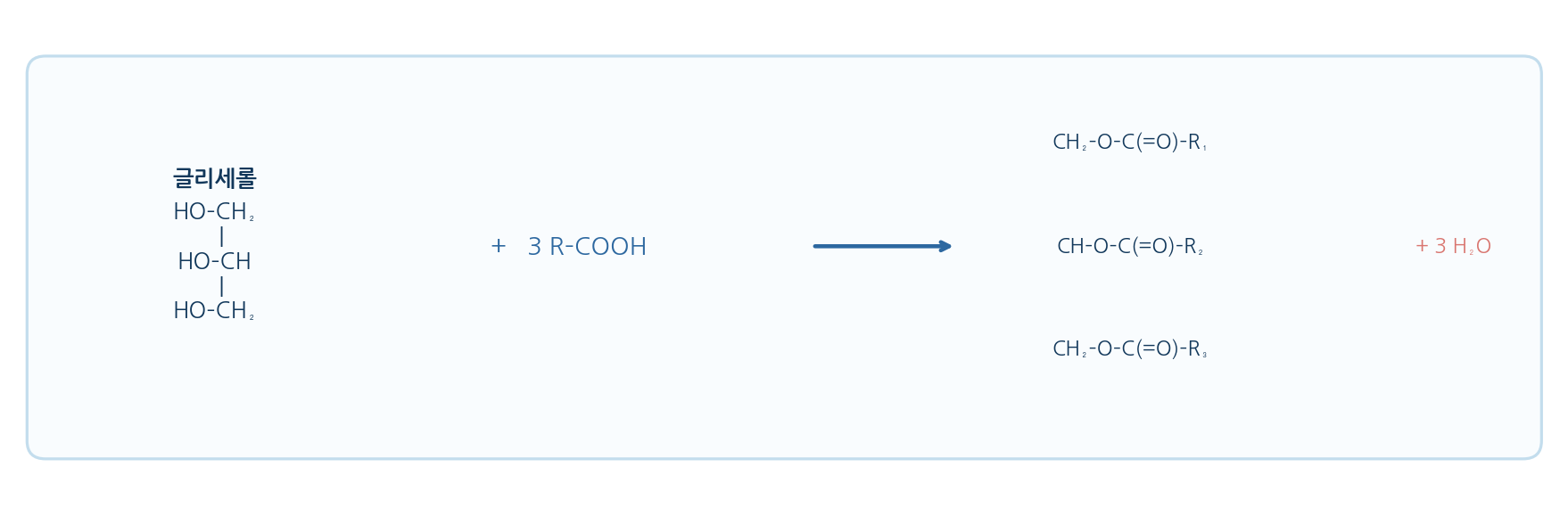
- Glycerol is a trihydric alcohol with three hydroxyl groups
- A triacylglycerol is a neutral lipid in which all three hydroxyls form ester bonds with fatty acid carboxyl groups
- The teaching equation is glycerol plus three fatty acids in equilibrium with triacylglycerol plus three waters
- Cells use activated precursors such as fatty acyl-CoA rather than simple mixing
- Three palmitate residues give tripalmitin and three oleate residues give triolein
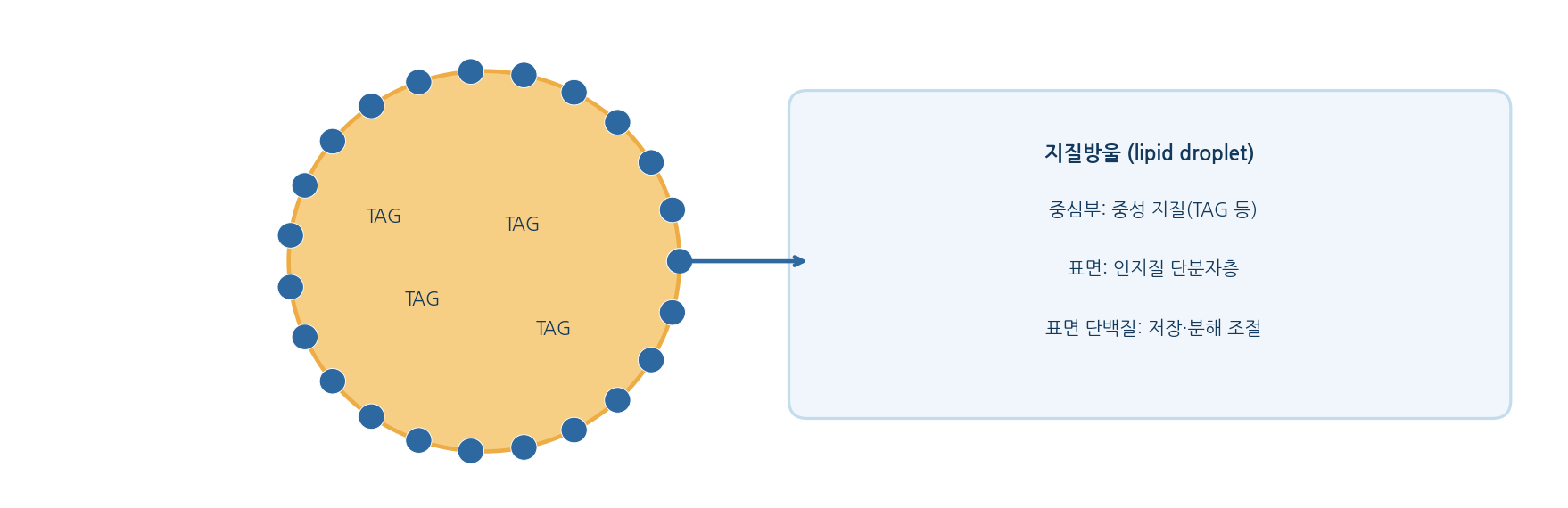
- Lacking a phosphate-containing polar head, triacylglycerols form neutral lipid droplets in water rather than bilayers
- A lipid droplet has a monolayer surface around a neutral lipid core
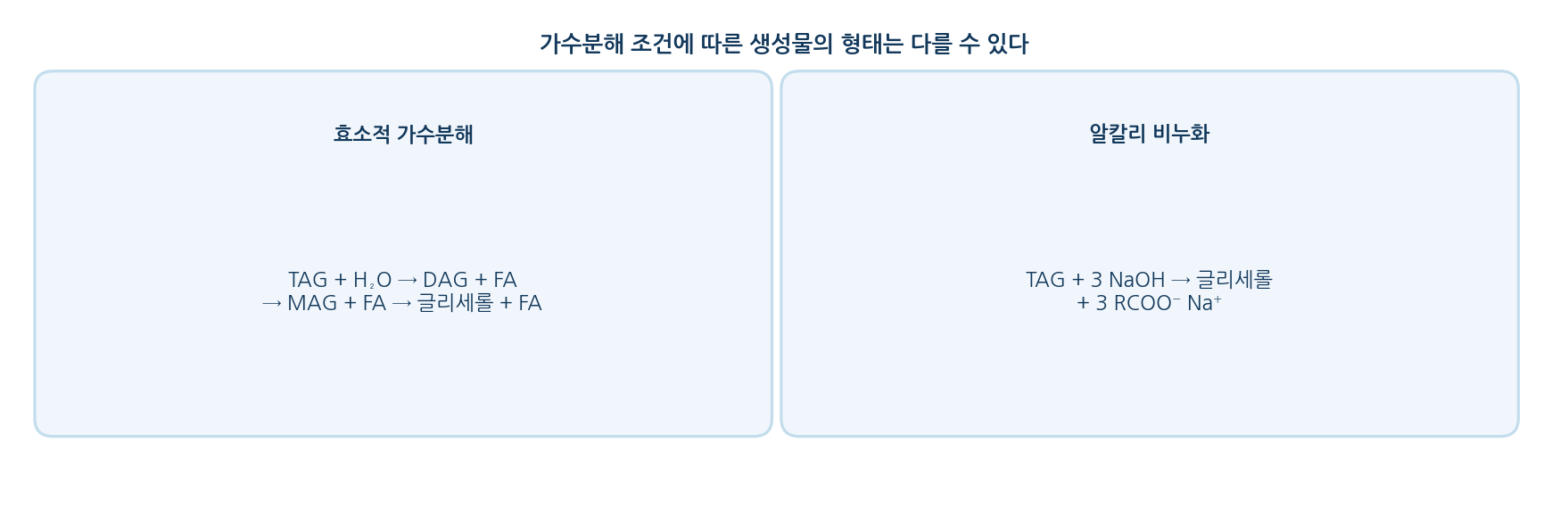
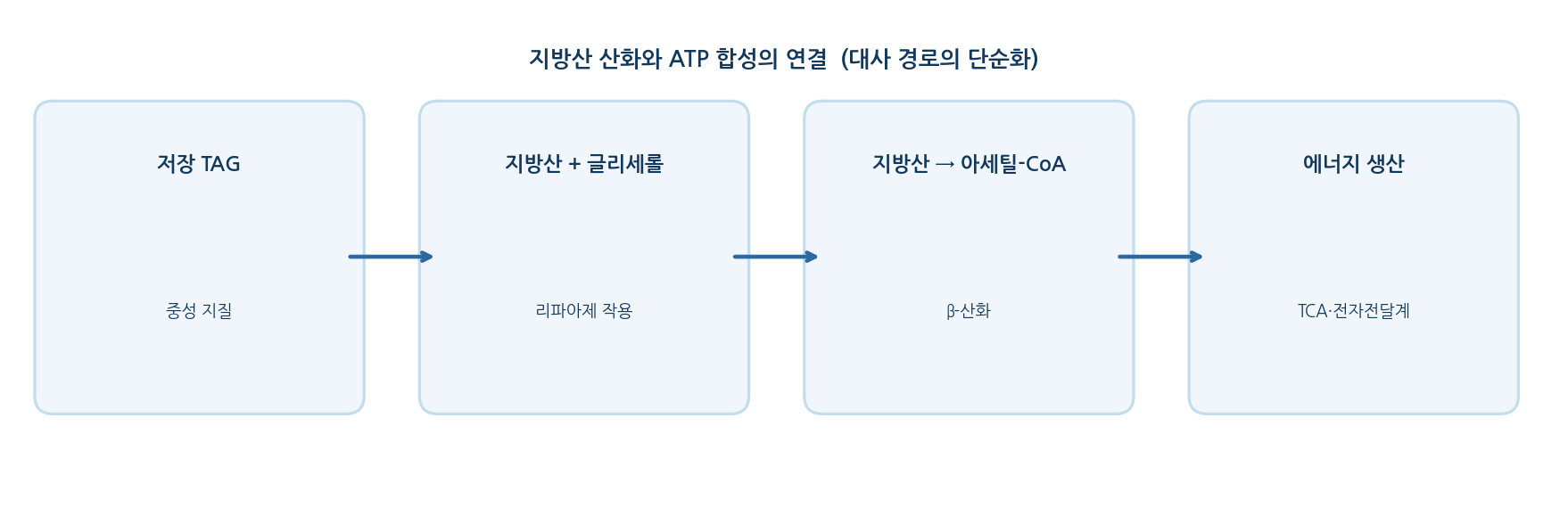
- Lipases hydrolyse the ester bonds stepwise to diacylglycerol, monoacylglycerol and free fatty acids
- Complete hydrolysis under strong alkali gives fatty acid salts, the saponification reaction
- Triacylglycerol plus three NaOH gives glycerol plus three carboxylate salts in the ideal case
- Example: tripalmitin molar mass is about 807.30 g/mol from 92.09 plus three times 256.42 minus three times 18.015
04
Triacylglycerols store energy and provide insulation
- Fatty acid chains are more reduced than carbohydrate and give more energy per gram on complete oxidation
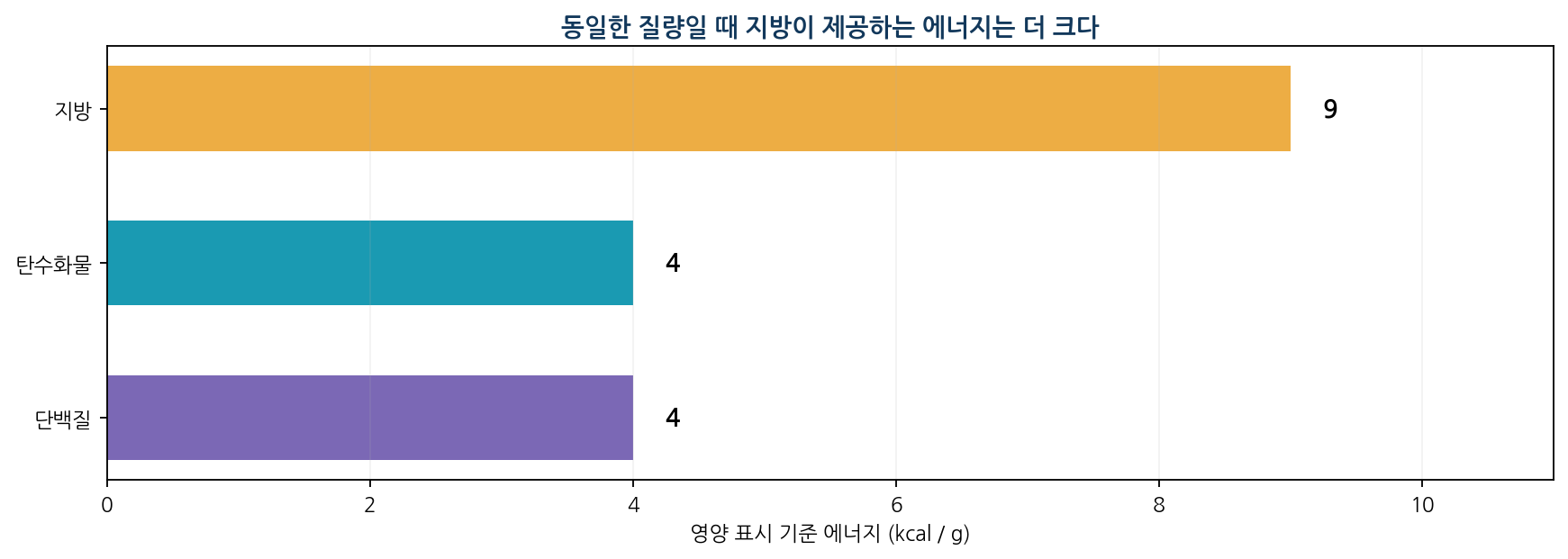
- Nutrition labelling uses about 9 kcal per gram for fat and about 4 for carbohydrate and protein
- These are nutritional averages for metabolisable energy, not identical heats of combustion for every lipid molecule
- Triacylglycerols carry almost no water, so the same energy is stored at lower mass
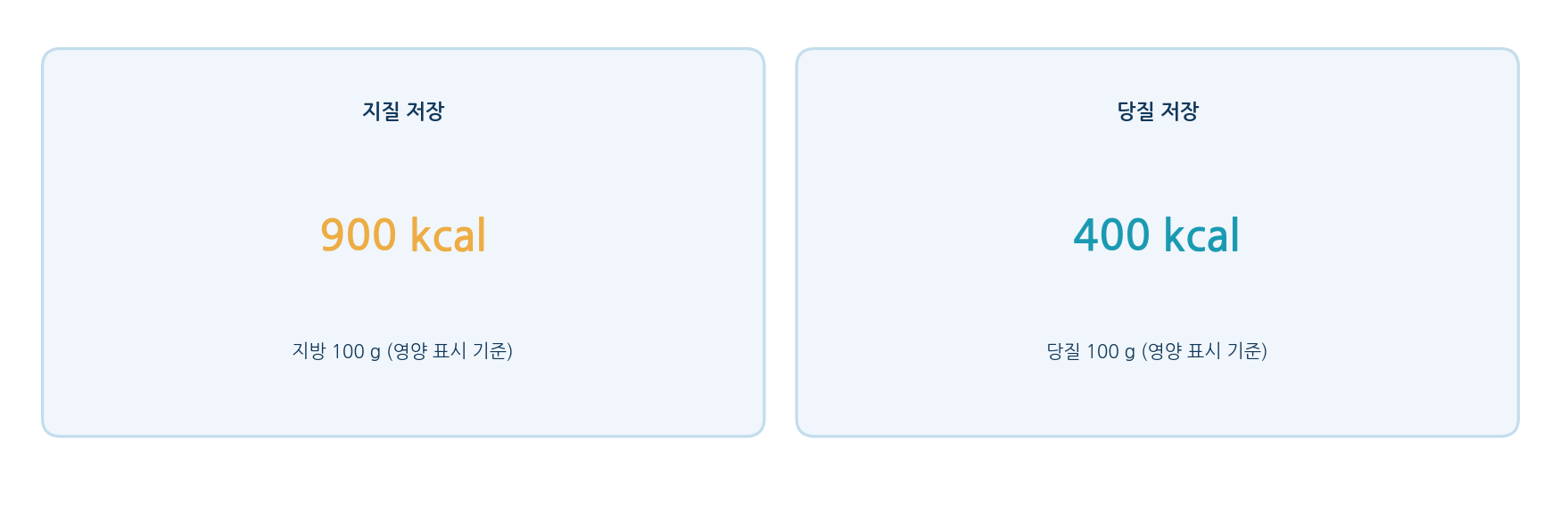
- 100 g of fat is about 900 kcal or 3,766 kJ, while 100 g of carbohydrate is about 400 kcal or 1,674 kJ
- Adipose tissue reduces heat loss and cushions and protects organs
- Insulation depends on fat thickness, blood flow and the state of skin and muscle
- Adipose tissue secretes hormones and signals and is metabolically active, not a passive store
- On mobilisation triacylglycerols are hydrolysed and fatty acids undergo beta oxidation to acetyl-CoA
- Example: 200 g of fat at 9 kcal per gram gives 1,800 kcal or about 7,531 kJ, with use depending on digestion and metabolism
05
Partial hydrogenation can create trans fatty acids
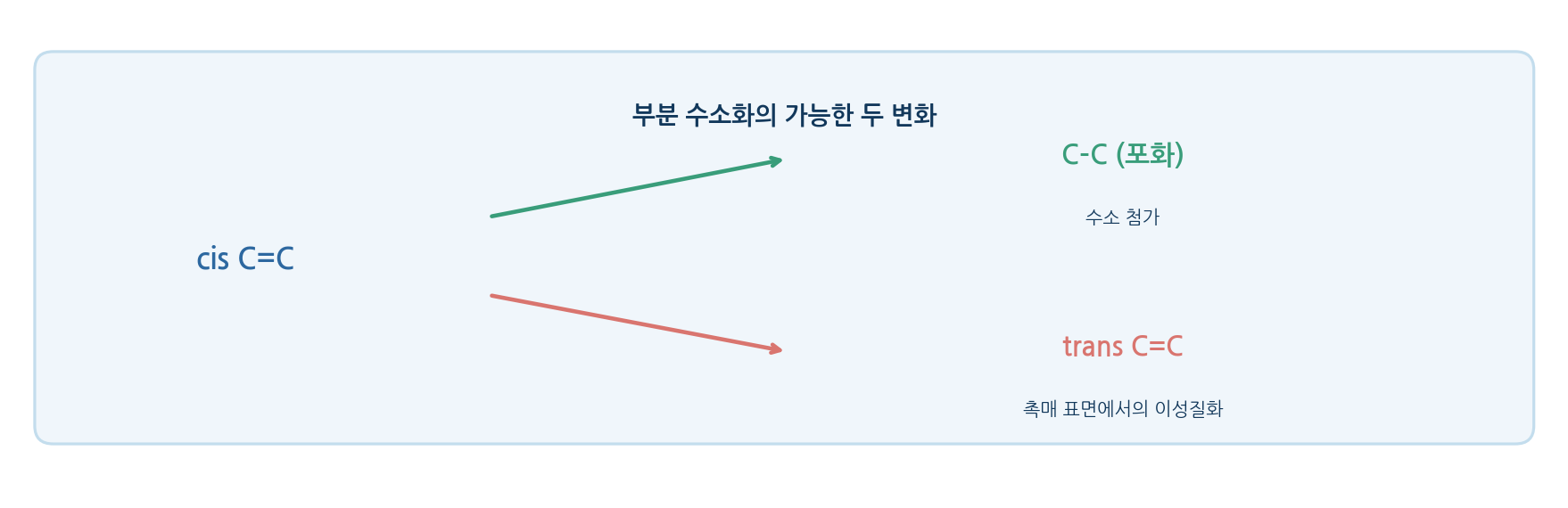
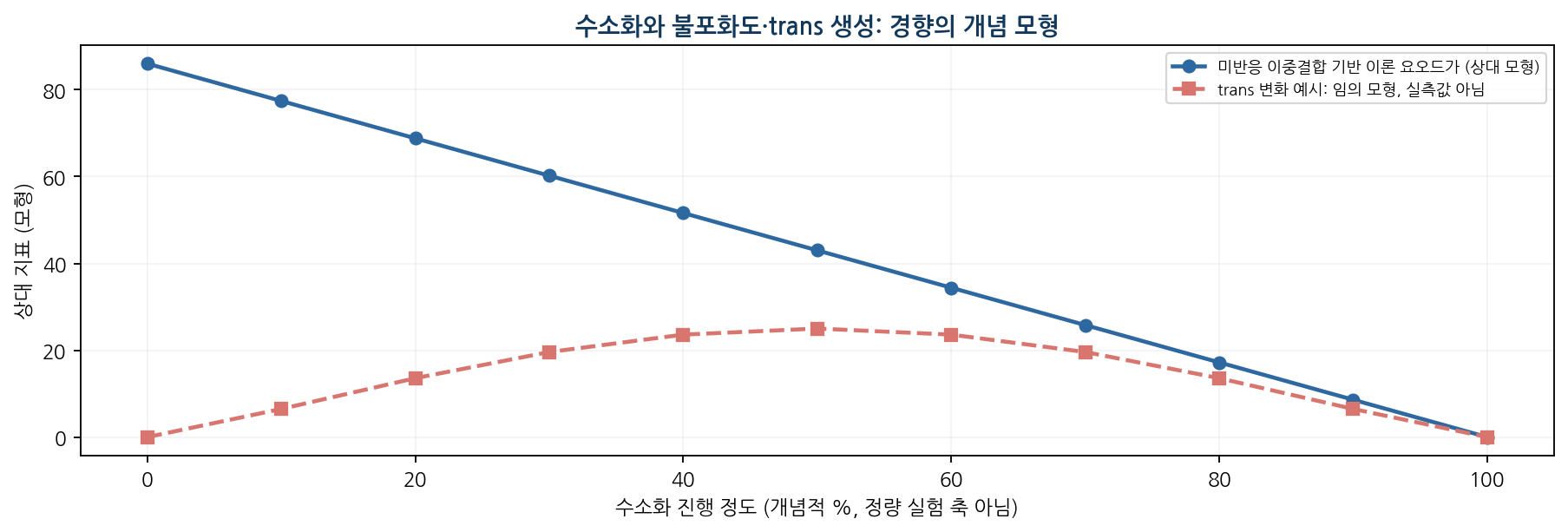
- Hydrogenation adds H2 across a C=C to give a single bond and lowers the degree of unsaturation
- Under metal catalysis partial hydrogenation can be accompanied by cis to trans isomerisation
- Partial hydrogenation can therefore increase saturation and create trans double bonds at the same time
- Not every hydrogenation process produces trans fat
- Partial hydrogenation has been used to adjust solidity and oxidative stability of edible oils
- Evidence links high intake of industrially produced trans fat to cardiovascular disease
- WHO promotes elimination of industrially produced trans fat from food supply chains
- Ruminant foods also contain small amounts of naturally occurring trans fat
- Heating cooking oil is not equivalent to partial hardening
- Unsaturated fatty acids oxidise readily to peroxides and breakdown products that cause off-flavours
- Oxidation depends on oxygen, temperature, light, antioxidants and fatty acid composition, so oxidative stability and nutritional safety are different concepts
06
Wax esters store energy and repel water
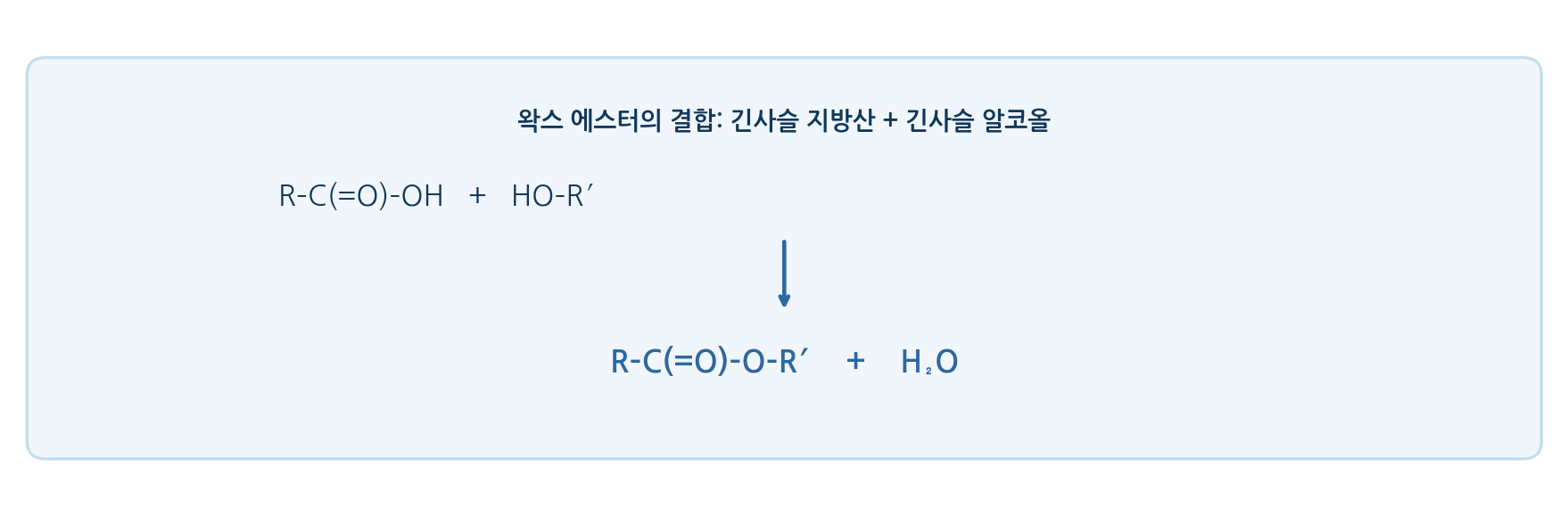
- A wax ester is an ester of a long-chain fatty acid with a long-chain monohydric alcohol
- Unlike a triacylglycerol with glycerol and three fatty acids, it has one fatty acid residue and one fatty alcohol residue
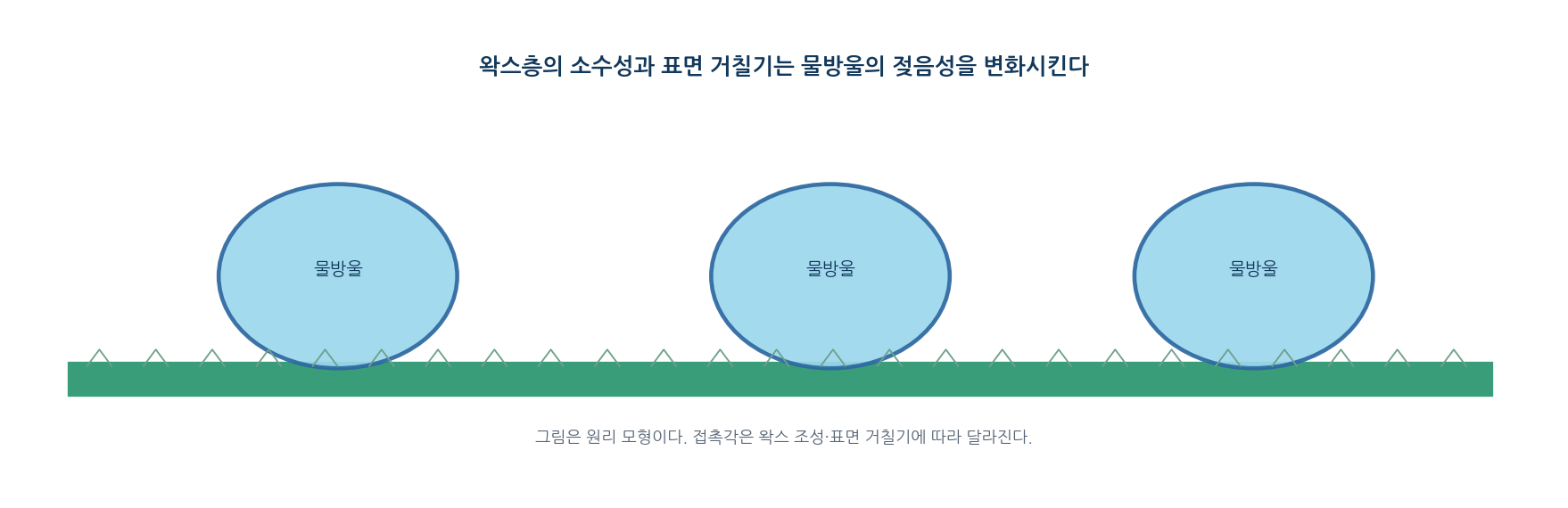
- Long chains and a large non-polar portion make wax esters very poorly soluble in water
- Beeswax is not a single substance but a mixture of wax esters, hydrocarbons and fatty acids
- Waxes on leaves and fruit affect water loss, water entry and adhesion of contaminants
- Beeswax is the building material of the comb
- Some marine copepods use wax esters as their main storage lipid
- So waxes serve neither energy storage alone nor waterproofing alone
07
Quantitative measures of structure and function
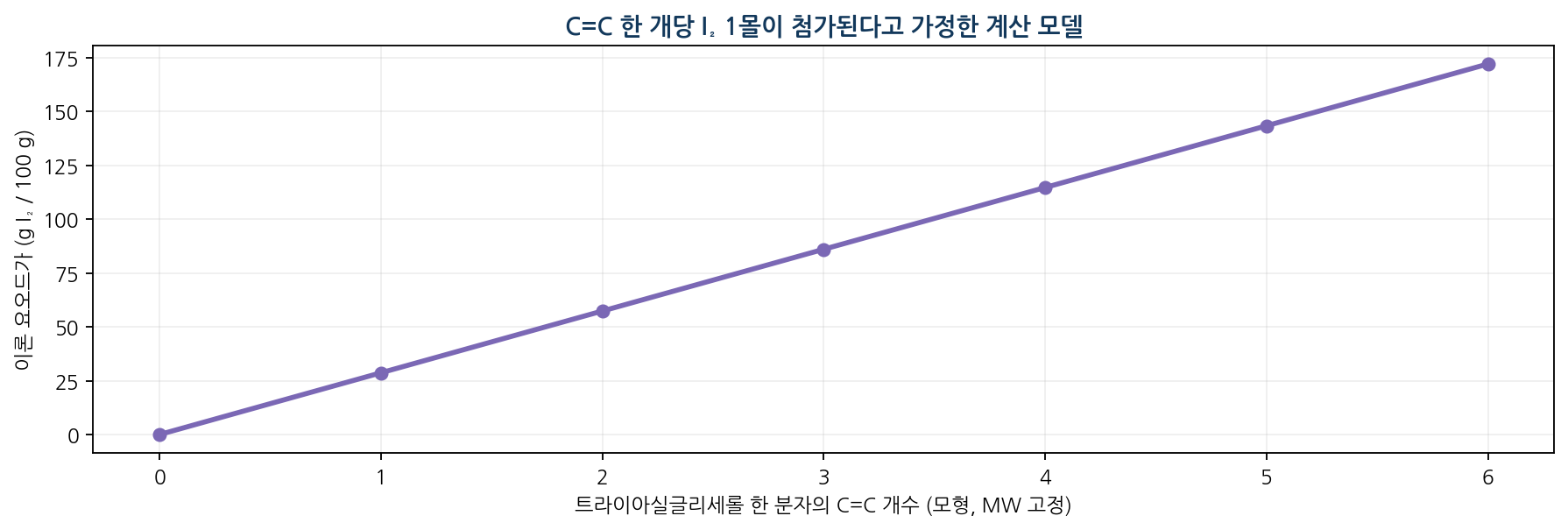
- The iodine value is the grams of iodine absorbed by 100 g of fat, an index of unsaturation
- Assuming one C=C reacts with one I2, d double bonds correspond to d moles of I2
- Theoretical iodine value is the number of C=C times the molar mass of I2 divided by lipid molar mass, times 100
- Example: triolein at 885.43 g/mol with three C=C gives about 86.0 g I2 per 100 g
- Real measurement uses defined reagents such as the Wijs method, and conjugated double bonds or side reactions cause deviations
- The saponification value is the milligrams of KOH needed to saponify 1 g of lipid
- Three ester bonds per triacylglycerol require three moles of KOH
- The theoretical value is 3 times 56.11 times 1000 divided by the molar mass, in mg KOH per g
- Example: tripalmitin at 807.30 g/mol gives 208.5 mg KOH per g
- At equal ester count a larger molar mass means less KOH per gram
References