01
Most enzymes are proteins
- An enzyme speeds a specific reaction and is not consumed net in the process
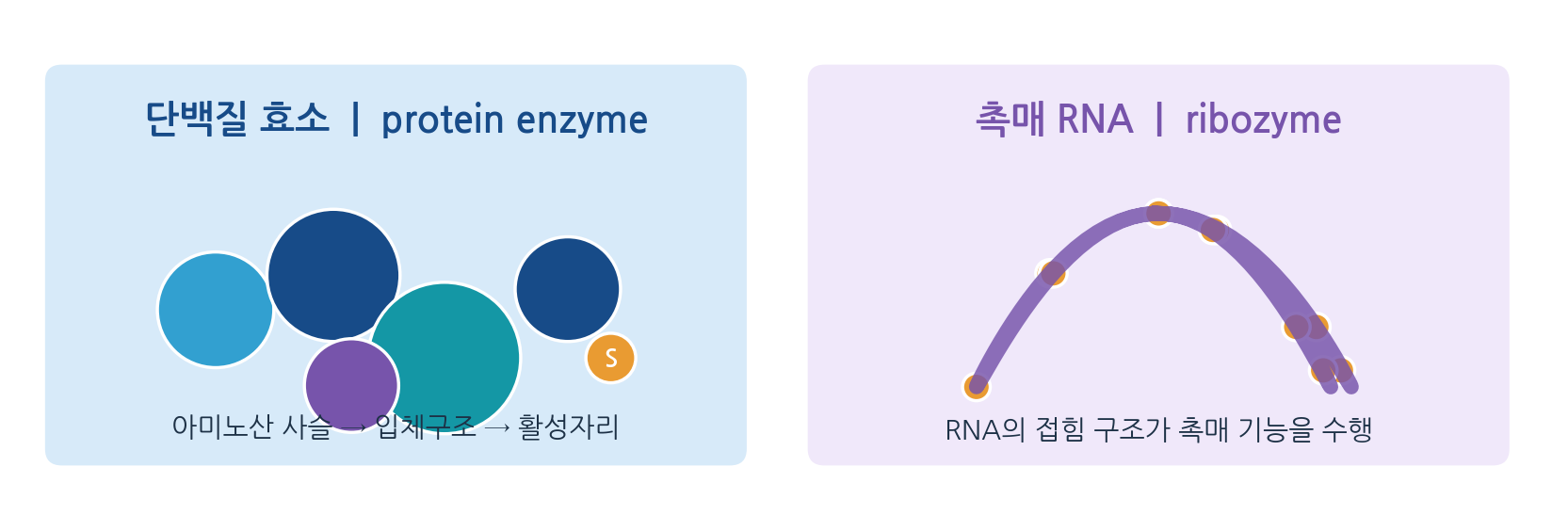
- Most are built from one or more polypeptide chains, and the sequence-derived three-dimensional structure is the basis of catalysis
- The catalytic cycle can involve structural change or transient covalent intermediates, so the enzyme is not literally identical at every instant
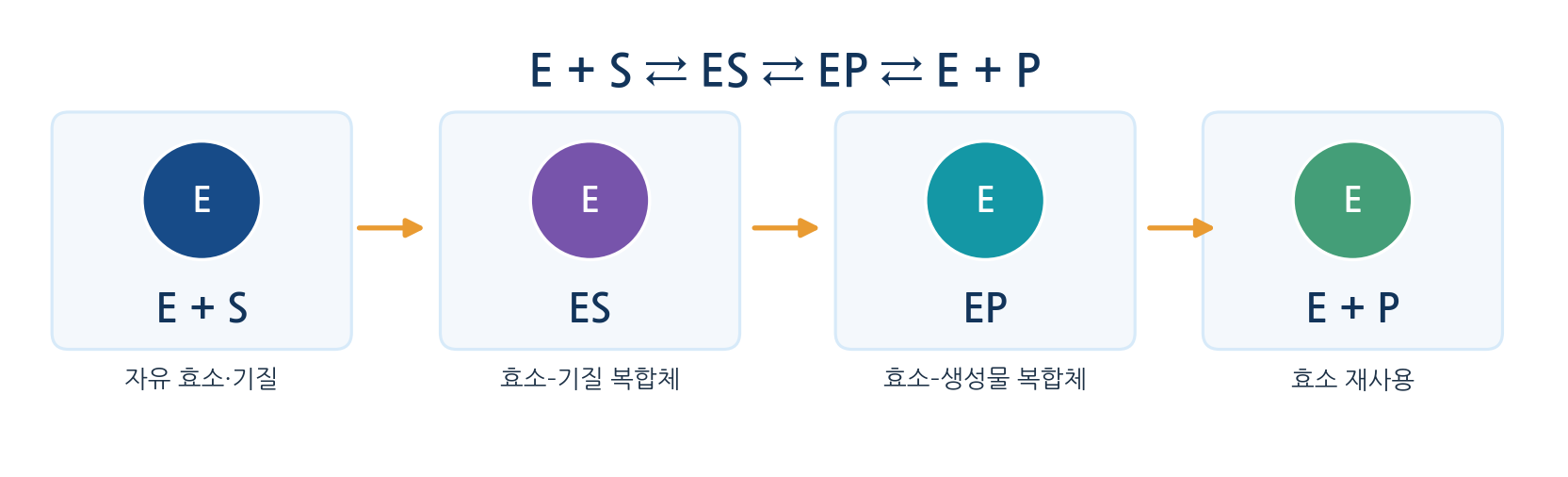
- Basic cycle E + S to ES to EP to E + P; not every enzyme has two separable ES and EP states
- The active site is the three-dimensional region of binding and catalysis, using hydrogen bonds, electrostatics, van der Waals forces and the hydrophobic effect
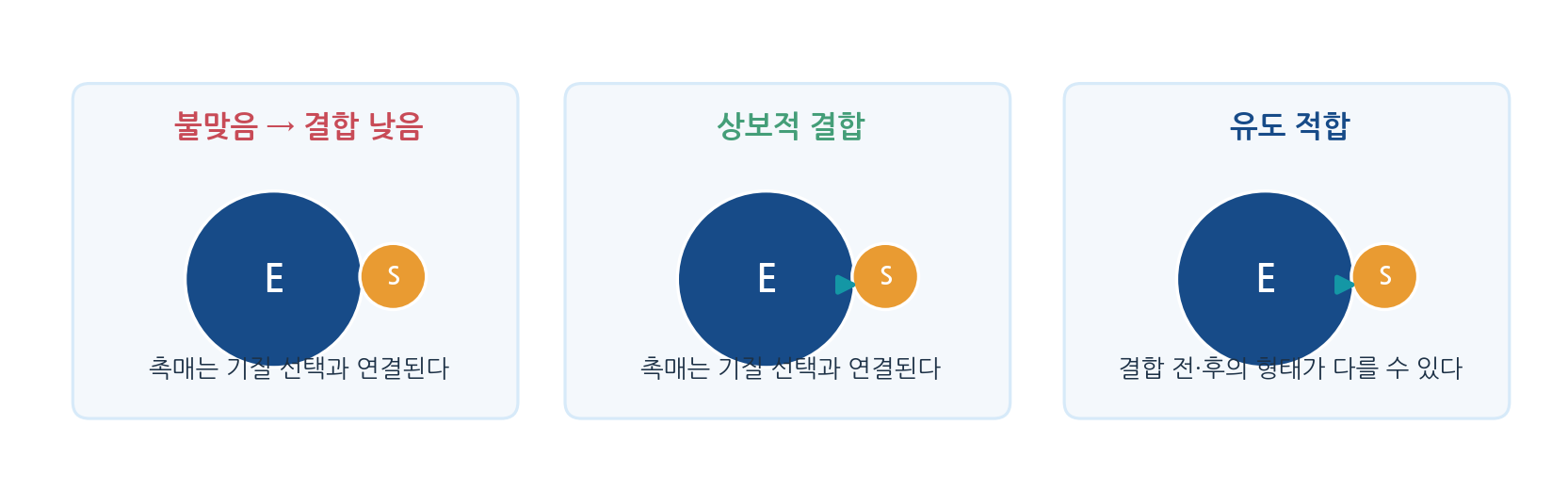
- Lock-and-key and induced fit are teaching descriptions; real structural change is more varied
02
The protein nature of enzymes and its exceptions
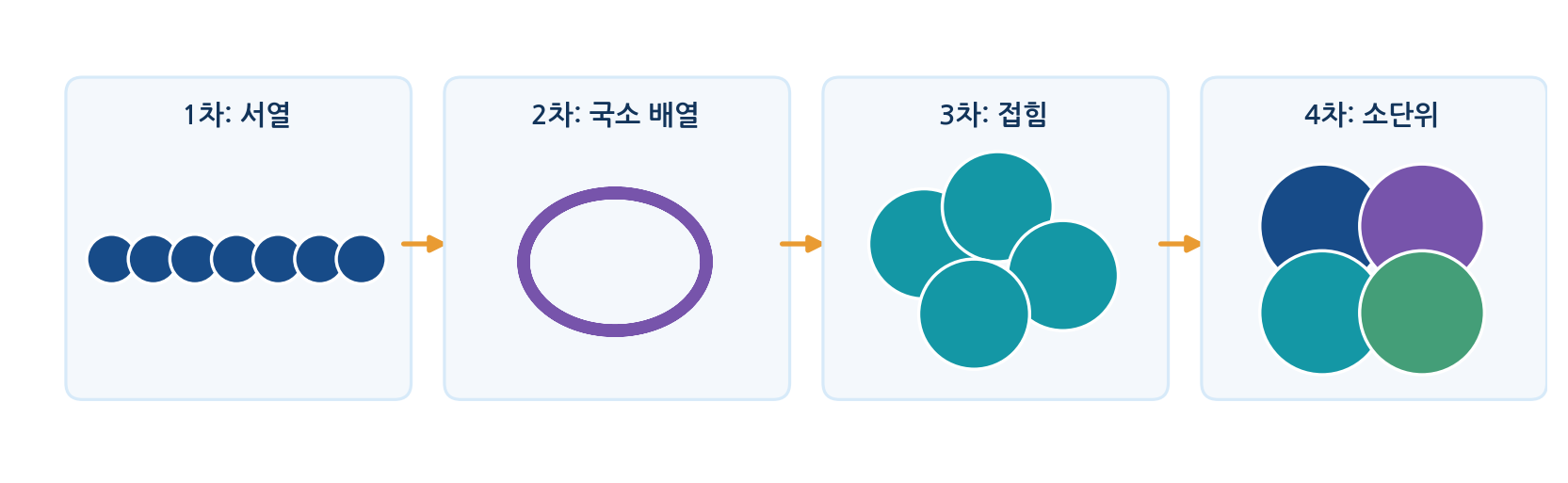
- Primary structure fixes which residues take part in binding and catalysis and where they sit
- Secondary, tertiary and quaternary structure gather distant residues into the active site and create substrate selectivity
- Heat, pH or denaturants that destroy structure lower activity, but a change in activity does not always mean global unfolding
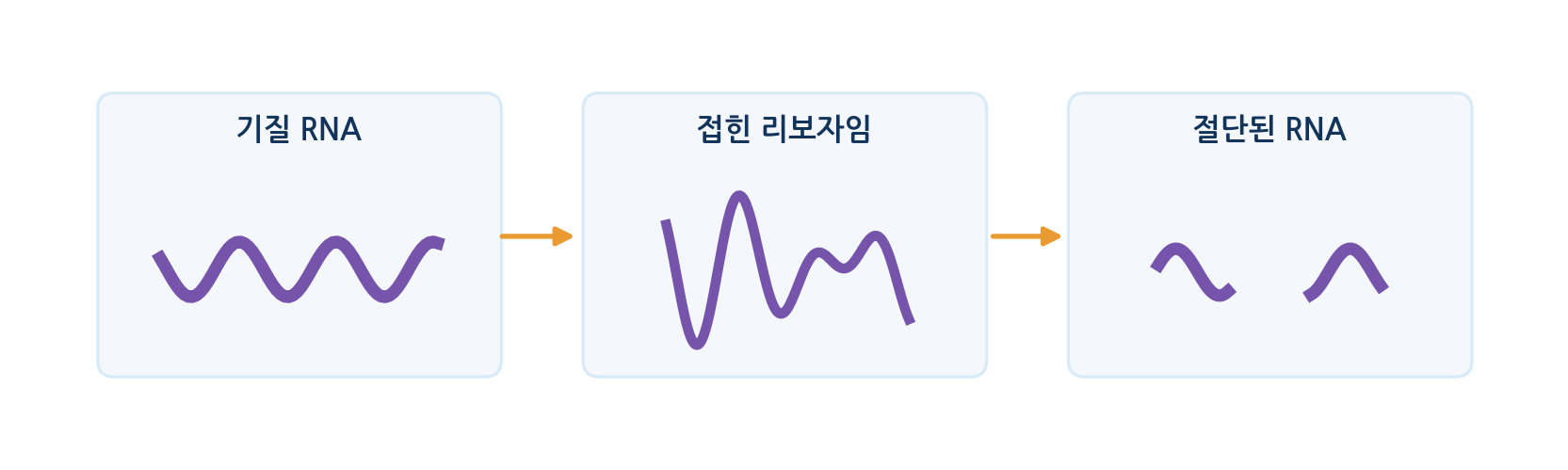
- Ribozymes are catalytically active RNAs, with self-splicing RNA and the ribosomal peptidyl transferase centre as key examples
- Peptide bond formation in the ribosome depends on rRNA at the catalytic centre, so all enzymes are proteins is false and most are proteins is correct
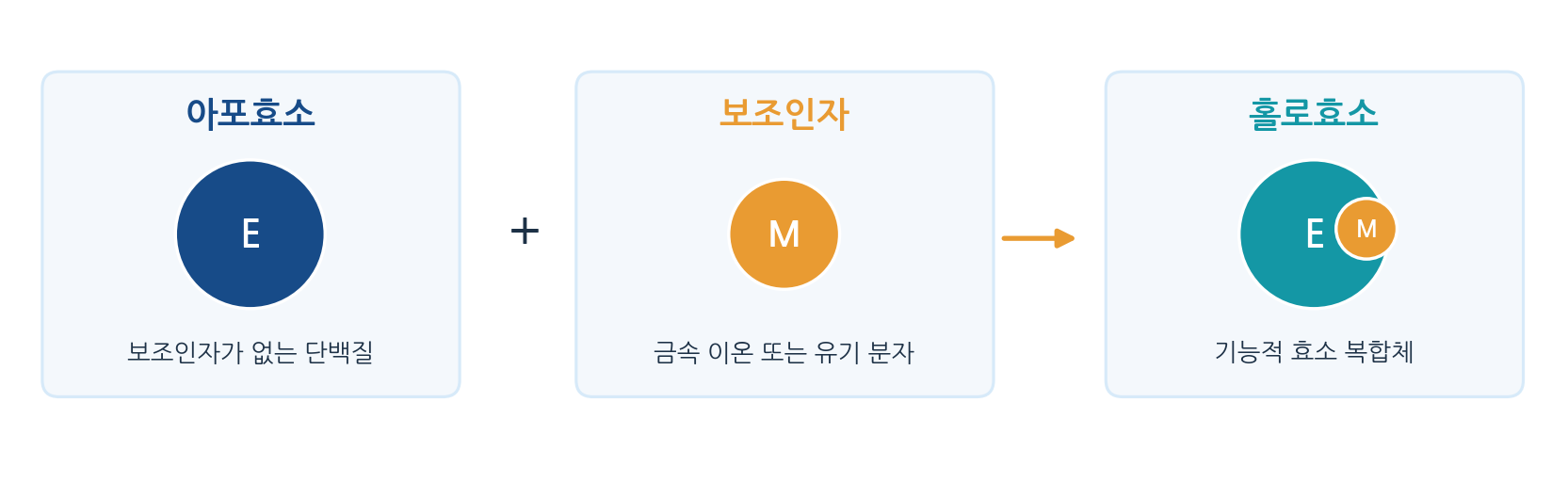
- Apoenzyme plus essential cofactor gives the holoenzyme; a coenzyme is an organic cofactor and a prosthetic group is tightly bound
- Catalytic rate depends on temperature, pH, ionic strength, substrate supply, cofactors and inhibitors, and there is no universal optimum
03
Enzymes are classified by the reaction they catalyse
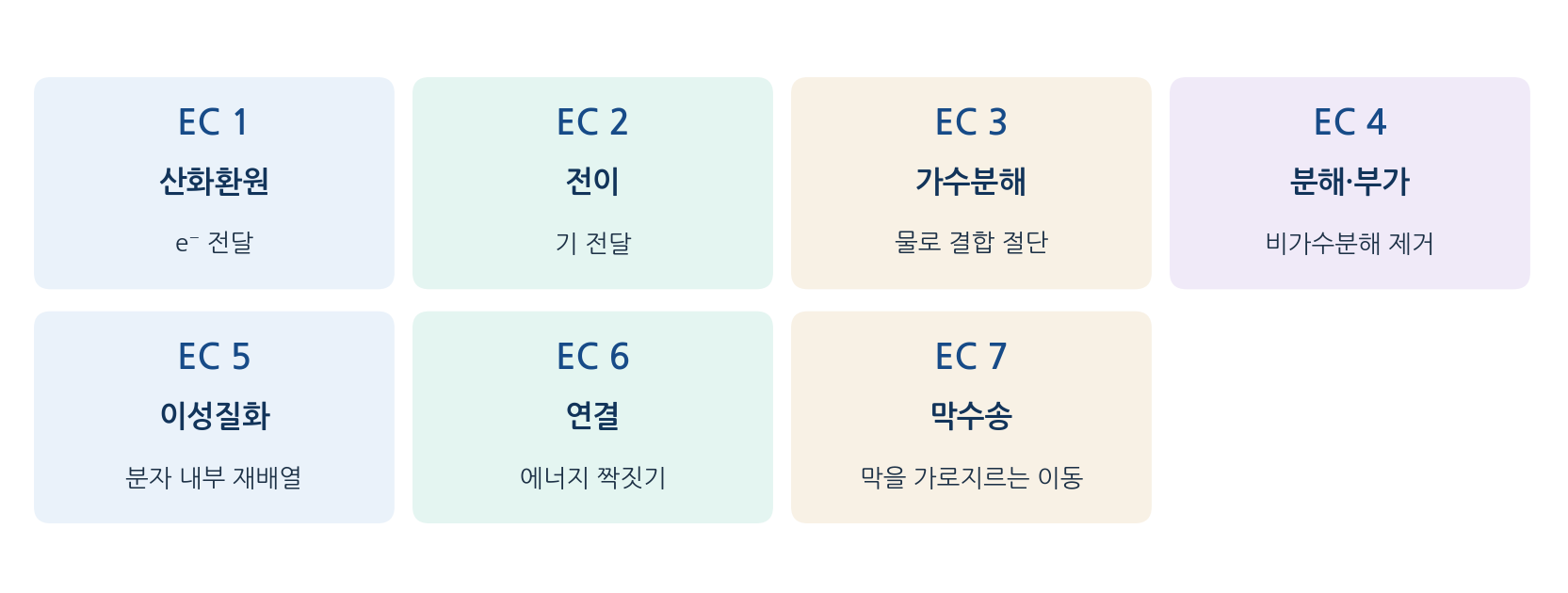
- The IUBMB enzyme commission classifies by the chemical reaction actually catalysed
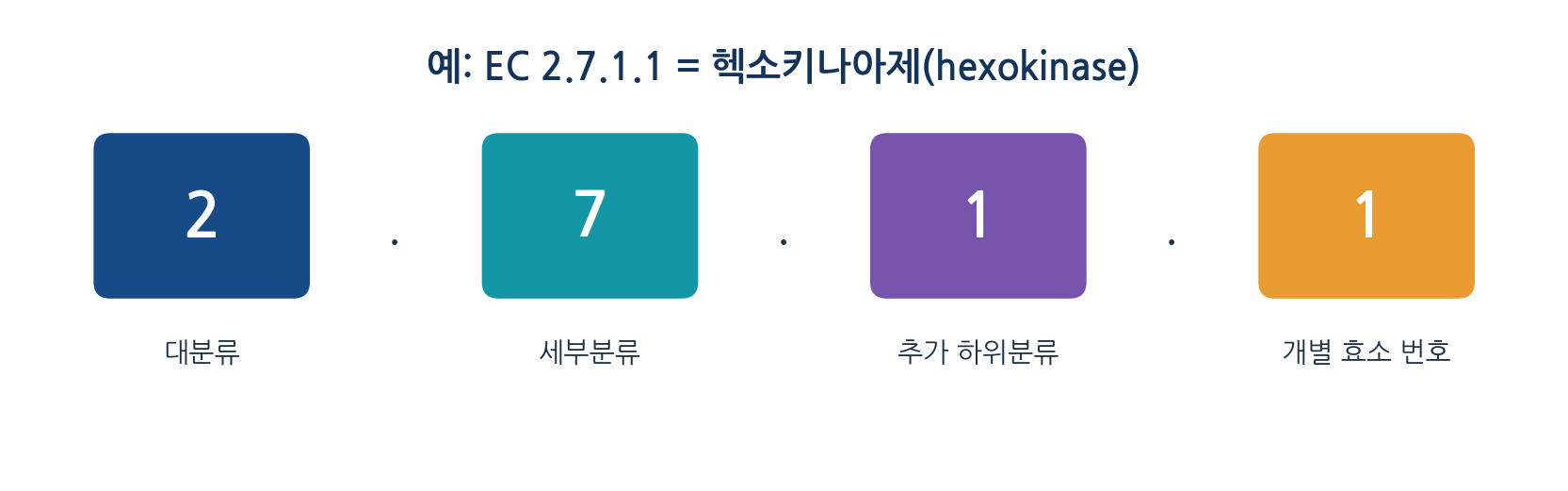
- An EC number has four positions: class, subclass, sub-subclass and serial number
- EC 7 translocases were added in 2018, so there are now seven classes rather than six
- Common names usually end in -ase, but a name never fully describes the mechanism
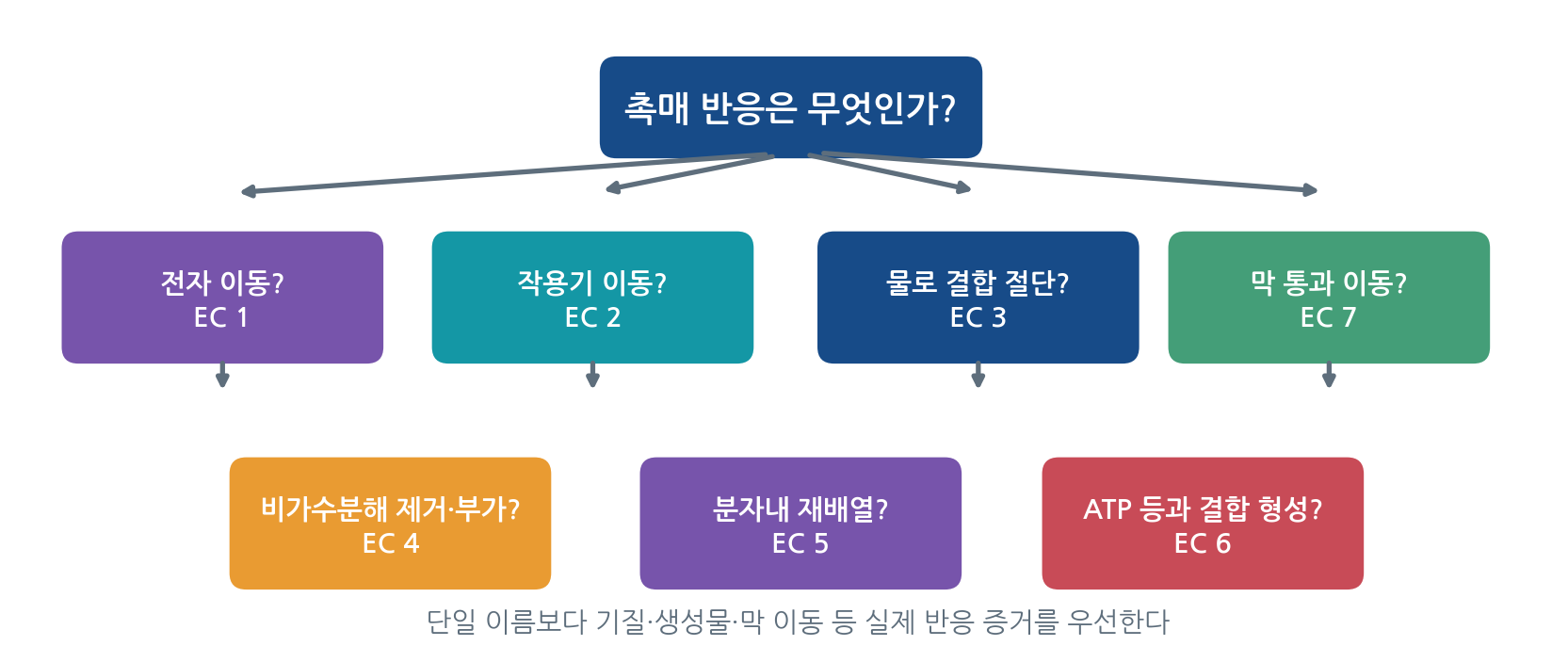
- Procedure: compare reactants and products, identify the group moved, check whether water takes part in hydrolysis, test for energy-coupled bond formation, then check for membrane transport
04
The seven classes and representative reactions
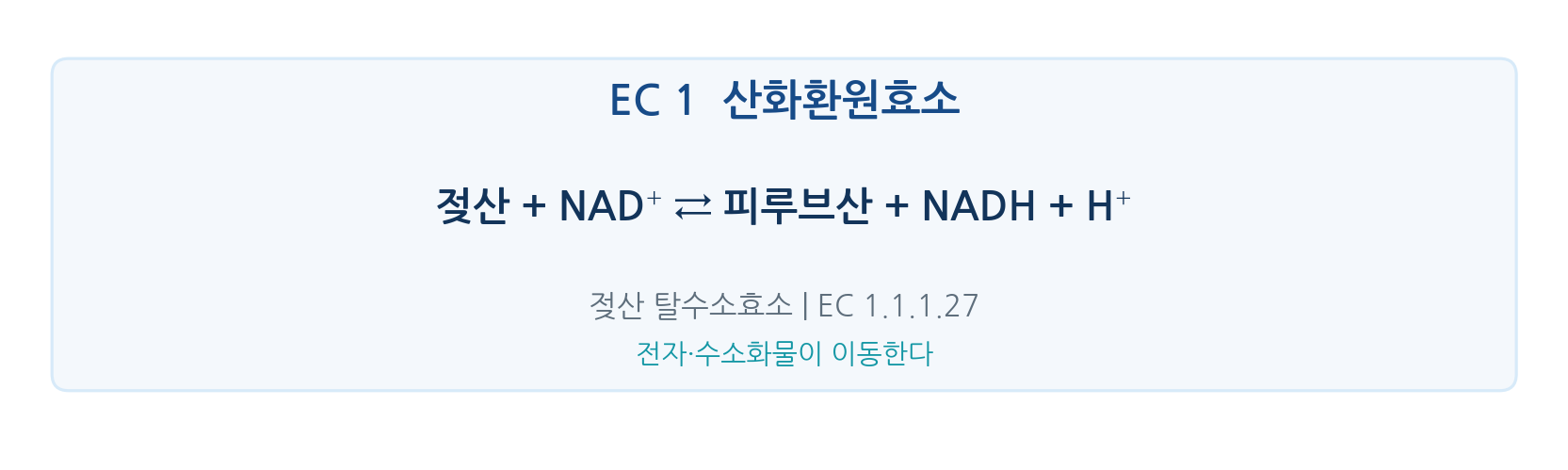
- EC 1 oxidoreductases: lactate dehydrogenase moves reducing power from lactate to NAD+
- EC 2 transferases: hexokinase transfers the terminal phosphate of ATP to glucose; using ATP is not itself the criterion
- EC 3 hydrolases: alpha-amylase consumes water to cleave glycosidic bonds, and not every cleavage is hydrolysis
- EC 4 lyases: fumarase adds or removes water across a double bond, so water alone does not make an enzyme EC 3
- EC 5 isomerases: triose phosphate isomerase interconverts GAP and DHAP, same composition and different arrangement
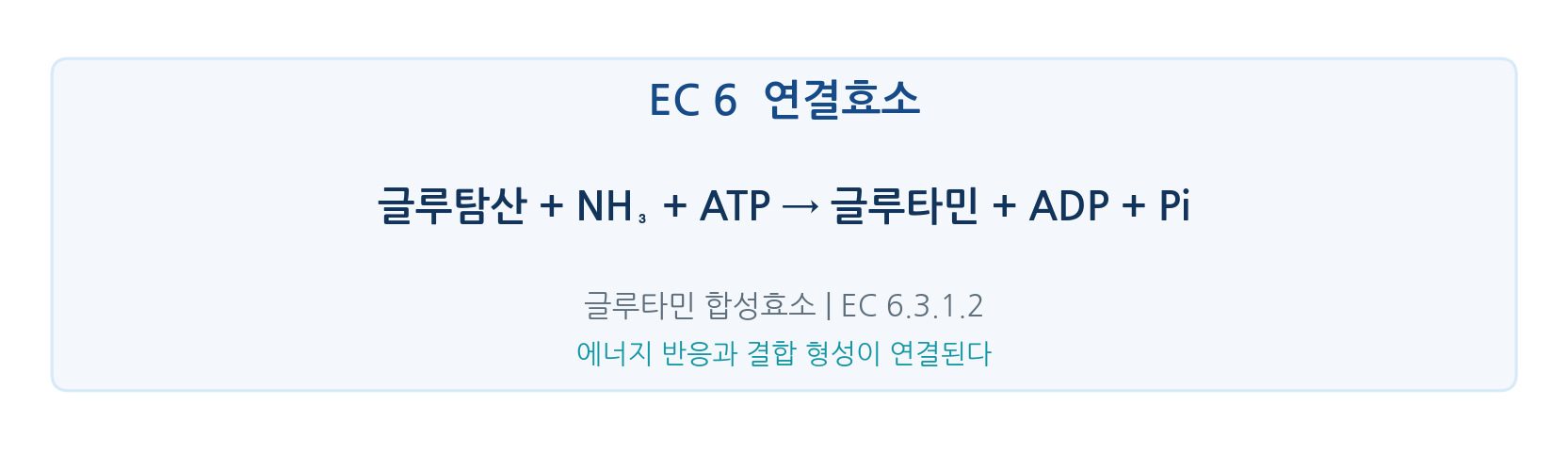
- EC 6 ligases: glutamine synthetase forms a C-N bond coupled to ATP, where energy coupling rather than simple joining is the point
- EC 7 translocases: Na+/K+-ATPase uses one ATP to export three Na+ and import two K+
05
How enzyme activity is established in practice
- Presence of the protein, shown immunologically, and catalytic activity are different kinds of evidence
- Equal protein amounts can give different activity through denaturation, inhibition, cofactor loss or pH change
- Registering a new enzyme needs direct experimental evidence for the reaction, not sequence similarity alone
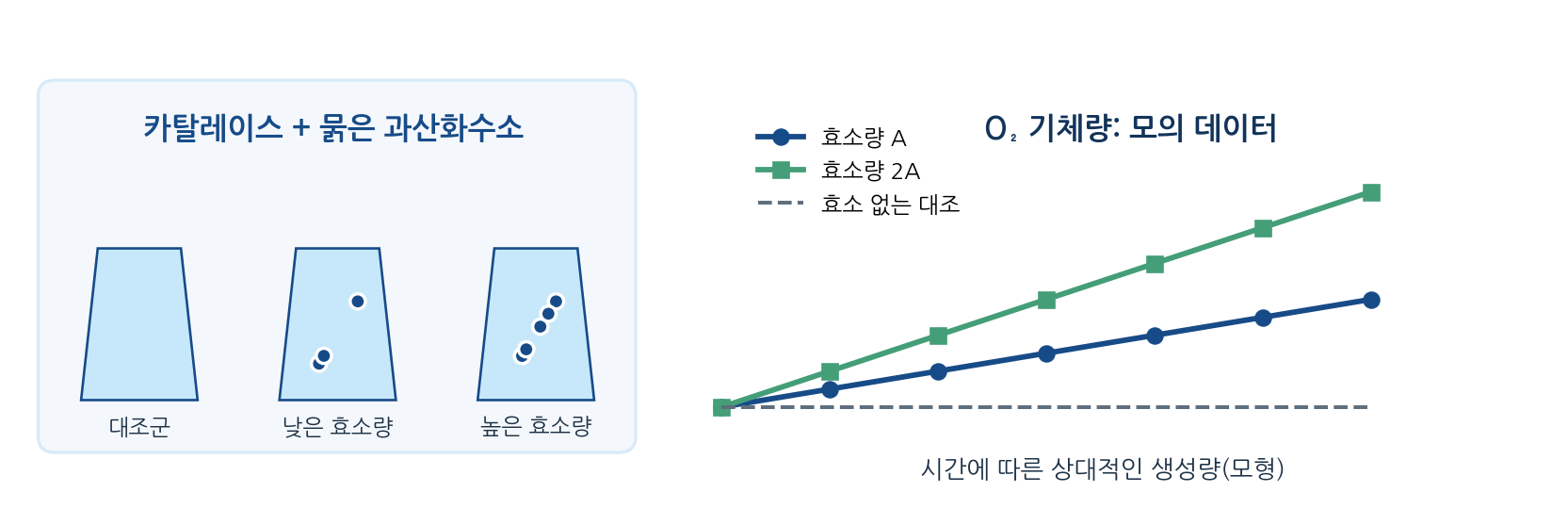
- Catalase 2 H2O2 to 2 H2O + O2 requires no-enzyme and heat-treated controls at matched volume and concentration
- Foam height alone cannot give an oxygen volume, and observations also reflect temperature, mixing and surface effects
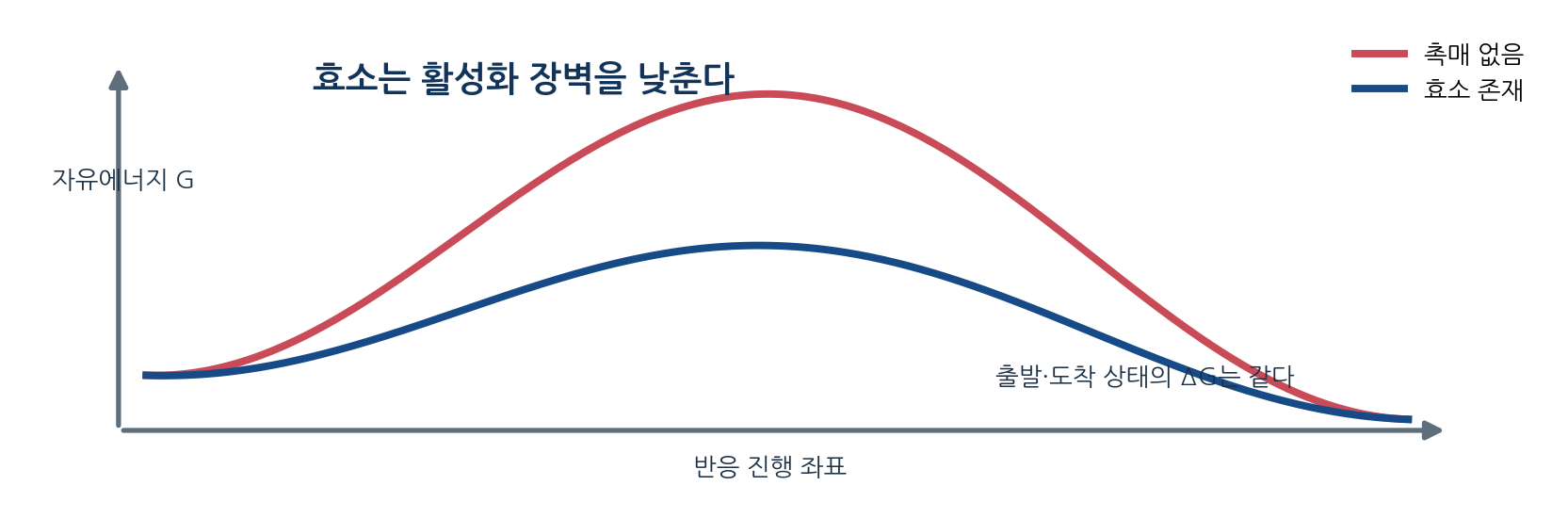
- An enzyme raises the rate but does not change ΔG°′ or the equilibrium constant
References
| Term | Meaning | What to distinguish |
|---|---|---|
| Enzyme (E) | Biological catalyst | Passes through several states during the reaction and is reused. |
| Substrate (S) | Reactant the enzyme acts on | Range and specificity differ between enzymes. |
| Product (P) | Substance formed by the reaction | May differ from the substrate in structure or position. |
| Active site | Region where binding and catalysis occur | Residues far apart in sequence can meet in three dimensions. |
| Cofactor | Non-protein component some enzymes require | May be a metal ion or an organic molecule. |

| Class | Example | Functional feature |
|---|---|---|
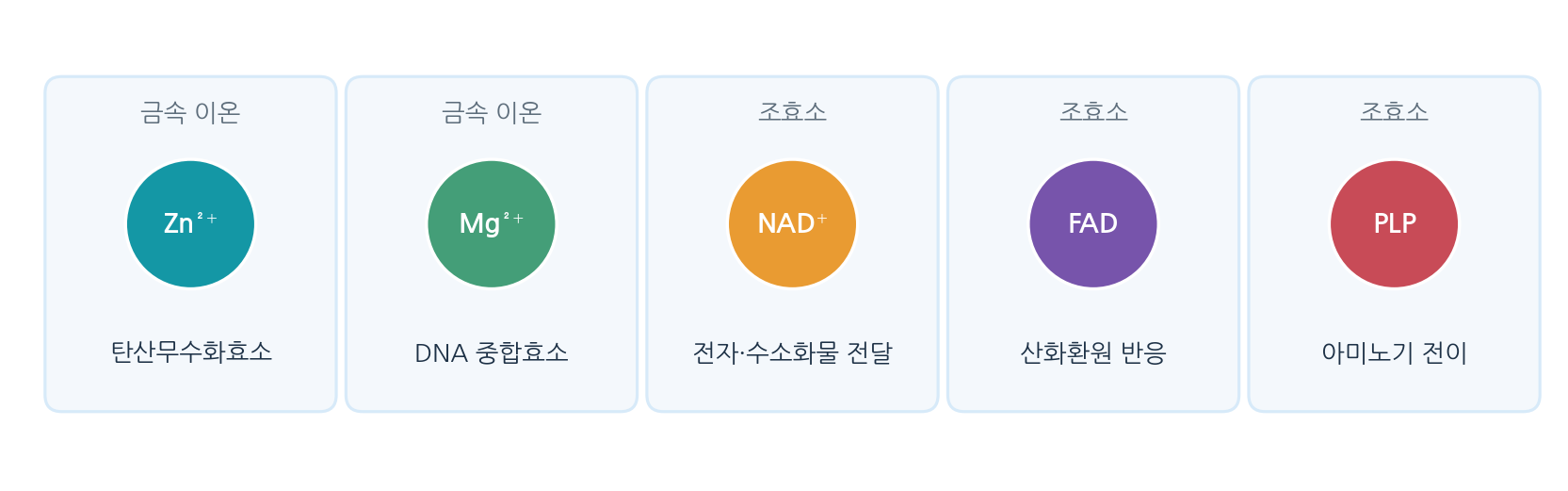
| Metal ion | Zn2+, Mg2+, Fe2+/Fe3+ | May stabilise charge, coordinate ligands or carry electrons. |
| Coenzyme | NAD+, NADP+, FAD, PLP, CoA | Carries electrons or specific chemical groups. |
| Prosthetic group | Haem in some enzymes, bound FAD | Bound relatively tightly to the protein. |
| Apoenzyme | Protein without the essential factor | Catalytic activity falls sharply if the cofactor is required. |
| Holoenzyme | Apoenzyme plus essential factor | Enzyme with all catalytic components present. |
| EC | Class | Core question | Representative enzyme |
|---|---|---|---|
| 1 | Oxidoreductases | Is there electron or hydride transfer? | Lactate dehydrogenase |
| 2 | Transferases | Is a group moved to another molecule? | Hexokinase |
| 3 | Hydrolases | Does water take part in bond cleavage? | Alpha-amylase |
| 4 | Lyases | Is a group removed or added without hydrolysis or oxidation? | Fumarase |
| 5 | Isomerases | Is an isomer formed by atomic rearrangement? | Triose phosphate isomerase |
| 6 | Ligases | Is a bond formed with ATP or a similar coupling? | Glutamine synthetase |
| 7 | Translocases | Are ions or molecules moved across a membrane? | Na+/K+-ATPase |