01
Monosaccharides are aldoses or ketoses
- Carbohydrates are aldehydes or ketones bearing several hydroxyl groups, together with their derivatives
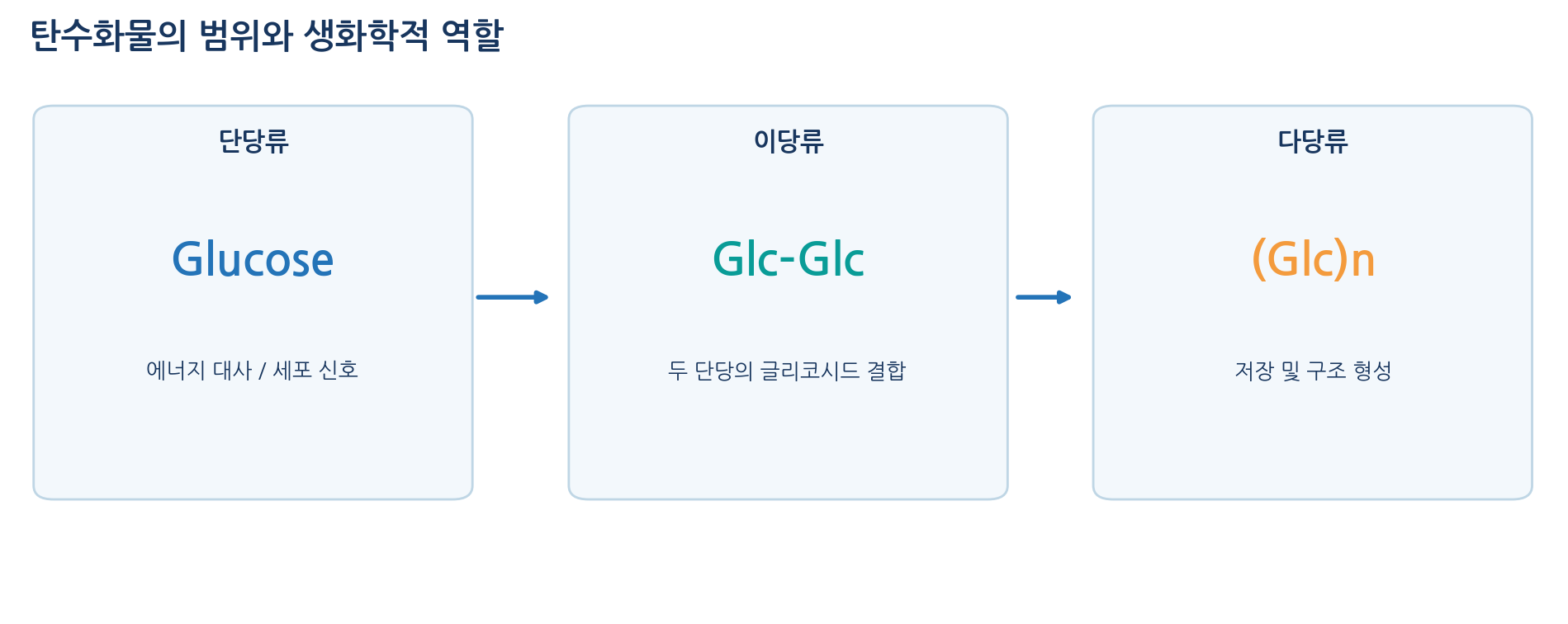
- A monosaccharide cannot be hydrolysed to a smaller sugar unit, while a disaccharide is two monosaccharides joined by a glycosidic bond
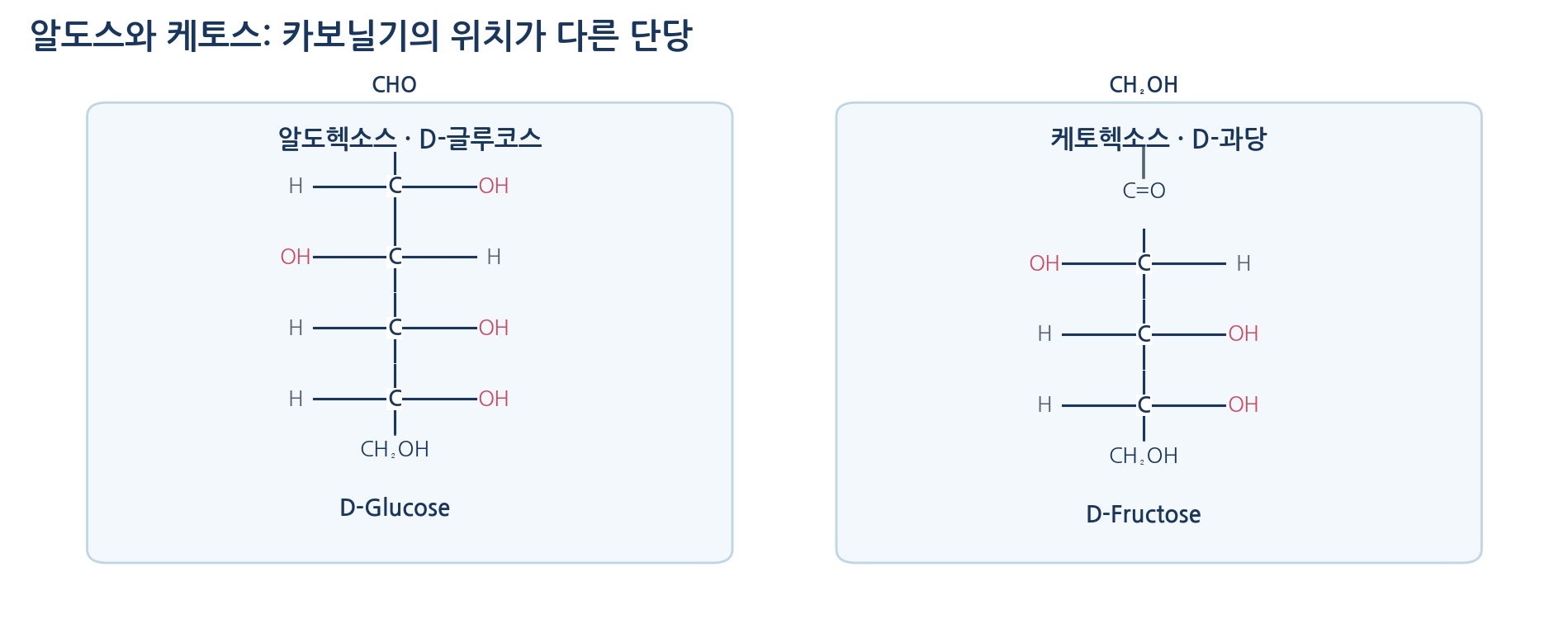
- Carbon number gives trioses, pentoses and hexoses, and the carbonyl type gives aldoses and ketoses
- Glucose is an aldohexose with an aldehyde at C1 and fructose a ketohexose with a ketone at C2
- The formula of an unsubstituted monosaccharide is CnH2nOn, yet cells contain many derivatives
- Phosphorylation, oxidation and amination change function greatly, so the formula alone does not fix a role
02
Monosaccharides contain chiral centres
- A chiral carbon bears four different atoms or groups, and dihydroxyacetone is the exception with none
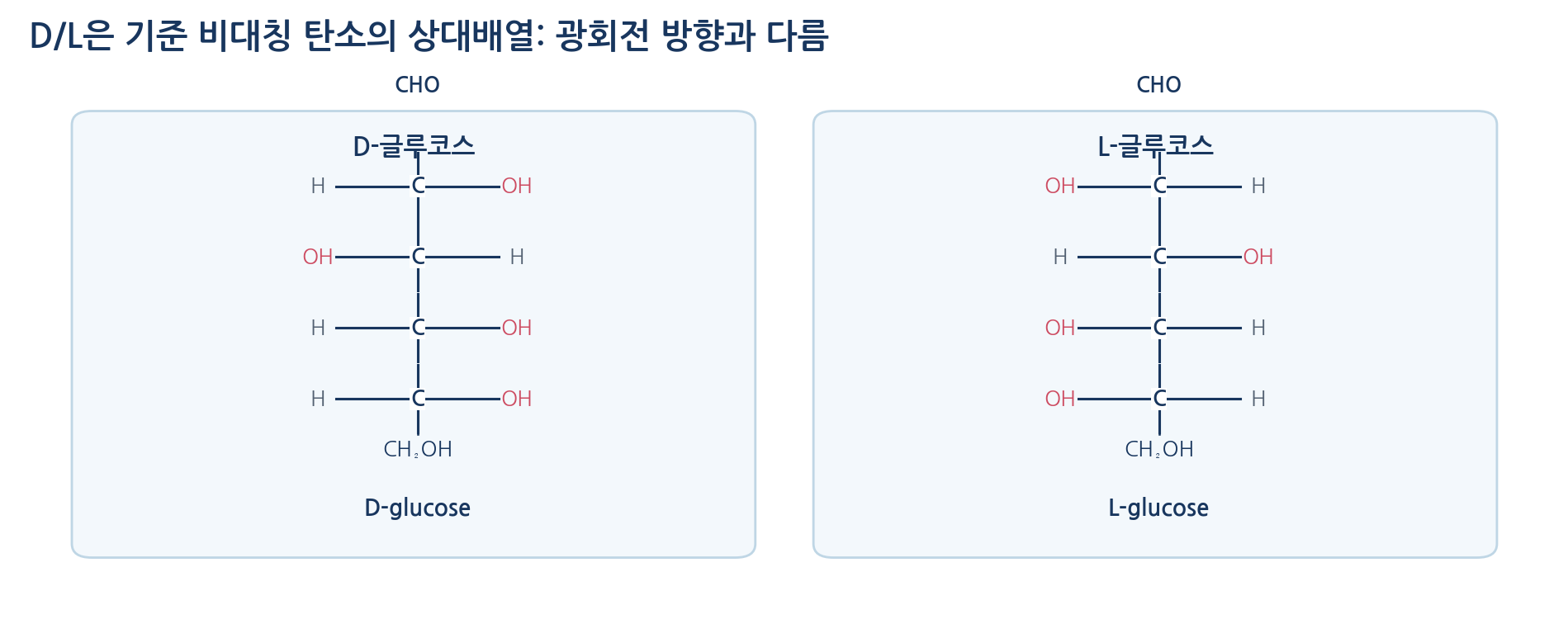
- In a Fischer projection horizontal bonds come toward the viewer and vertical bonds go behind the page
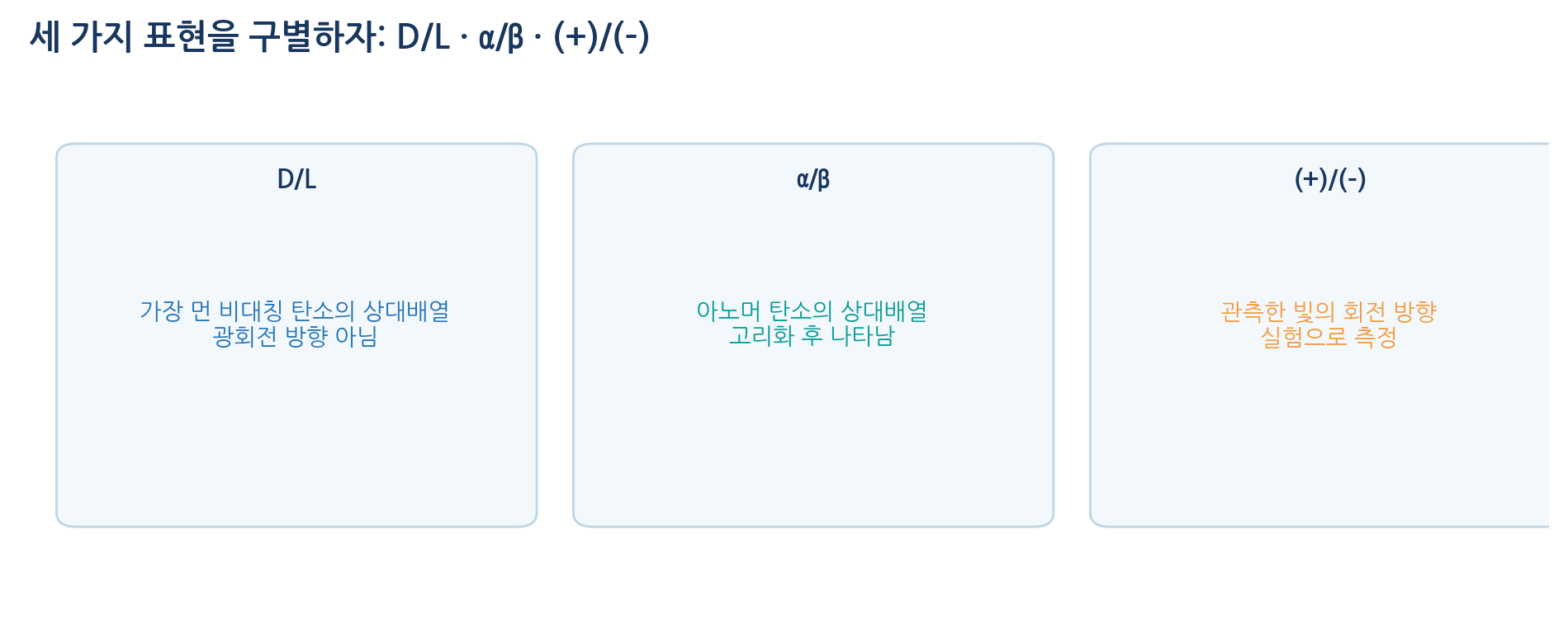
- D/L is relative configuration, R/S is CIP absolute configuration and (+)/(-) is measured rotation, and none can be substituted for another
- D sugars predominate in biology, though not every biological sugar is D
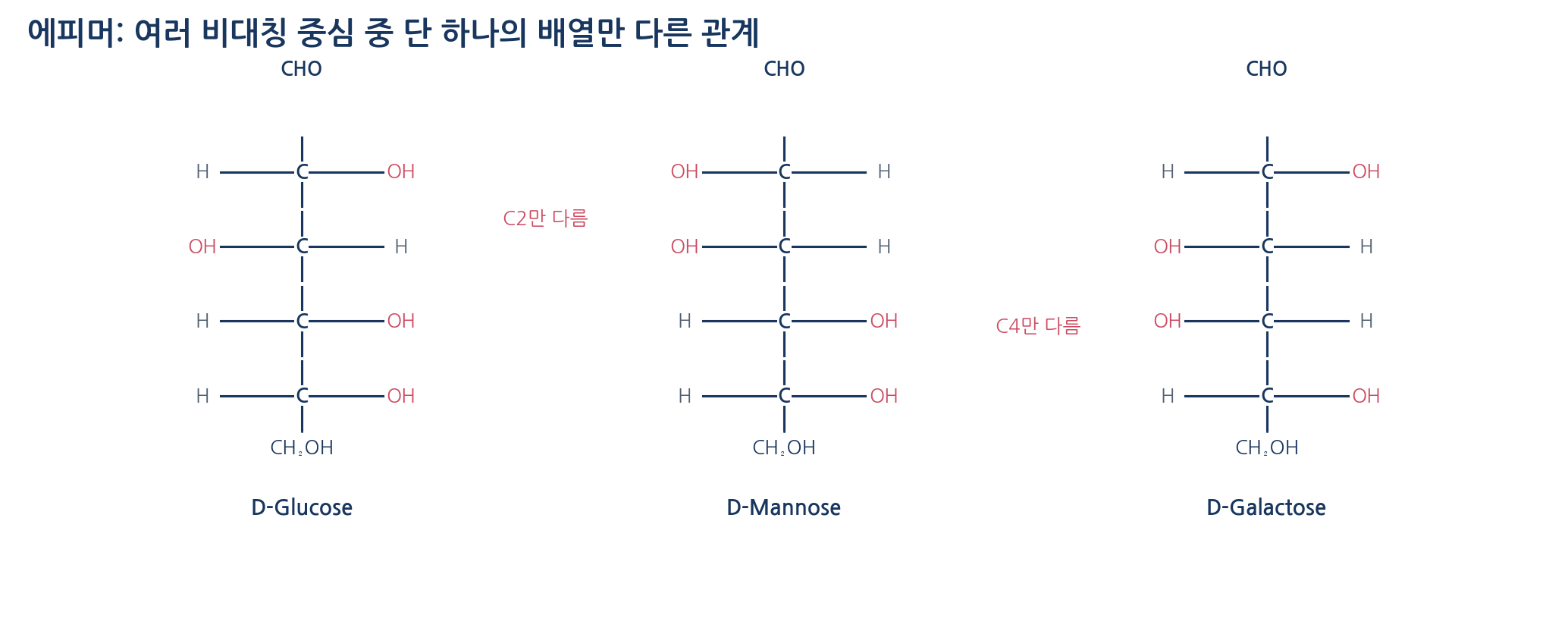
- An epimer differs at exactly one of several chiral centres, so D-mannose is the C2 epimer and D-galactose the C4 epimer of D-glucose
- Glucose and fructose differ in carbonyl position and connectivity and are therefore not epimers
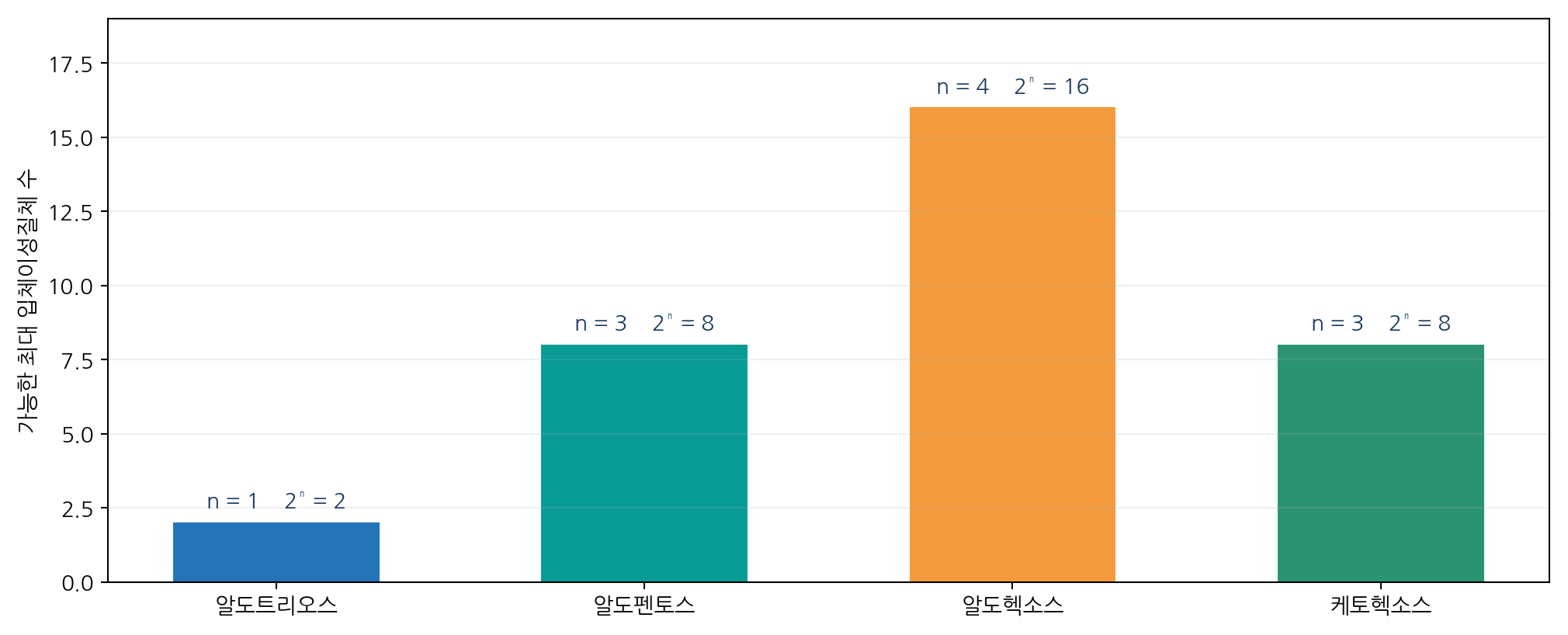
- With n independent chiral centres there are at most 2 to the n stereoisomers, giving 16 for an aldohexose and 8 for a ketohexose
03
Common monosaccharides are cyclic
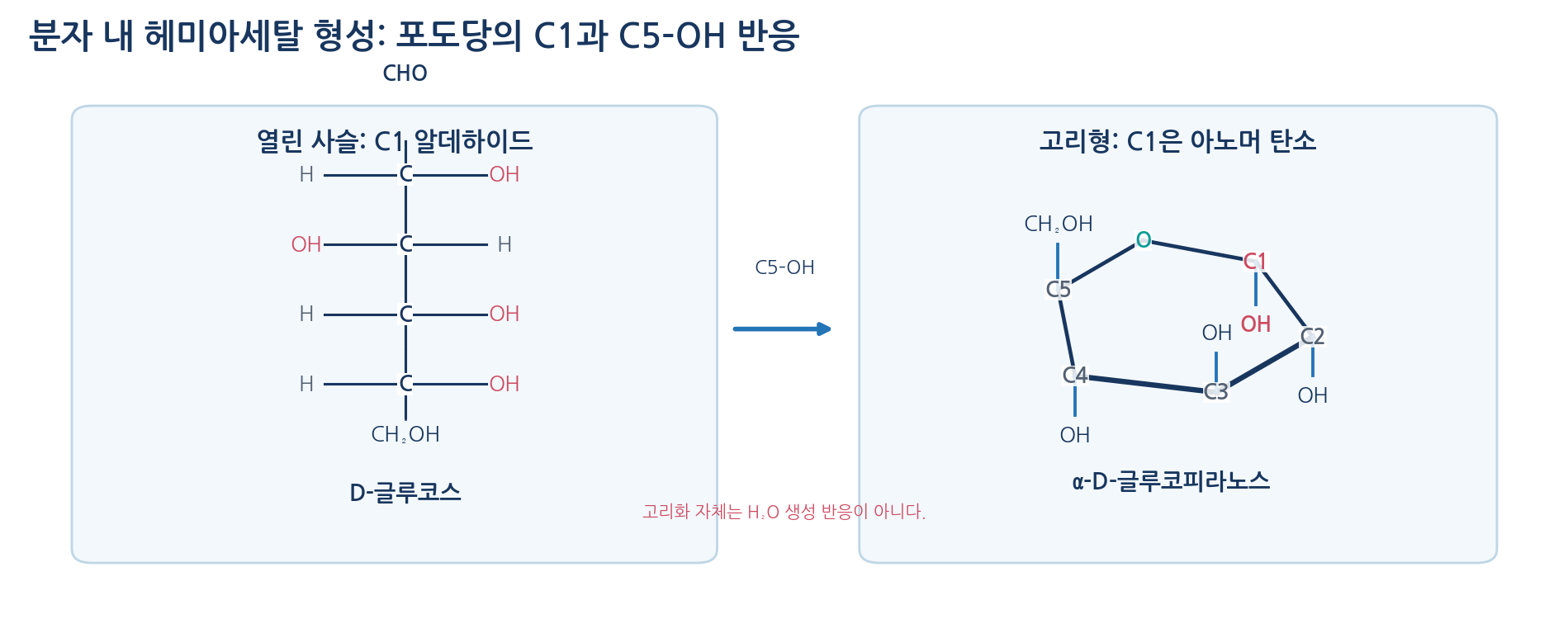
- The C5 hydroxyl oxygen of glucose attacks the C1 aldehyde carbon to give an intramolecular hemiacetal and a six-membered pyranose ring
- This is an intramolecular nucleophilic addition, not a dehydration condensation, and ketoses form a hemiketal instead
- The former carbonyl carbon becomes the anomeric carbon, usually C1 in an aldose and C2 in fructose
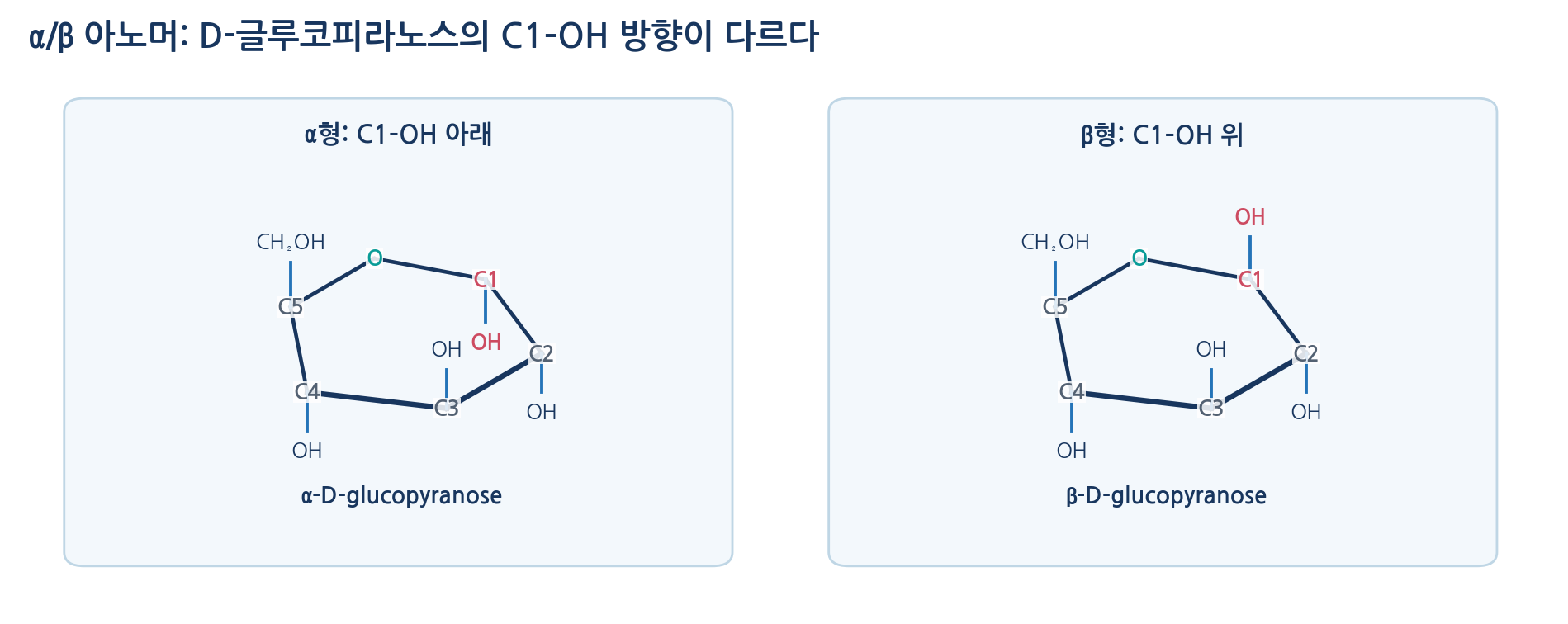
- In the Haworth projection with C5-CH2OH up, an OH below C1 means alpha and above means beta
- The alpha and beta definition rests on the relative arrangement of the anomeric substituent and a reference carbon, so it also applies to L sugars
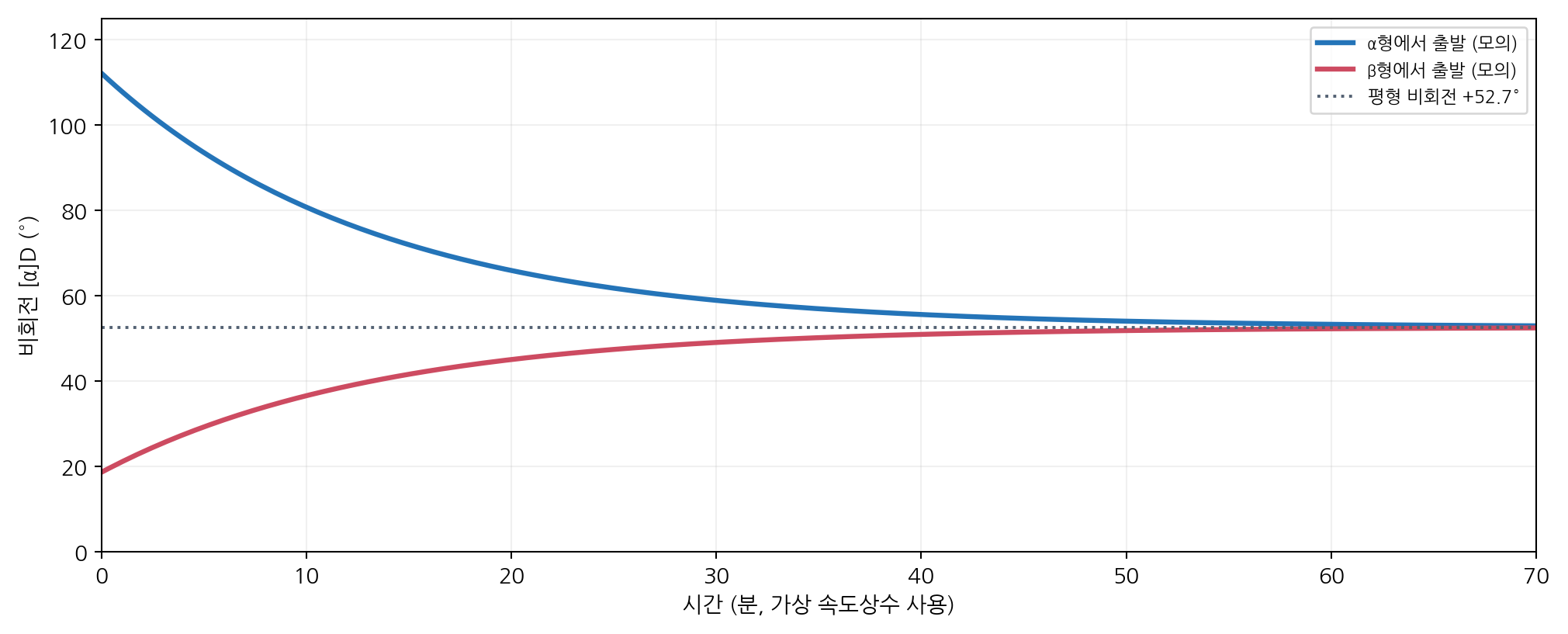
- Mutarotation is the change in observed rotation as ring opening and closing equilibrate the alpha and beta forms
- Reported values near 20 degrees Celsius are about +112 degrees for alpha, +19 for beta and +52.7 for the equilibrium mixture
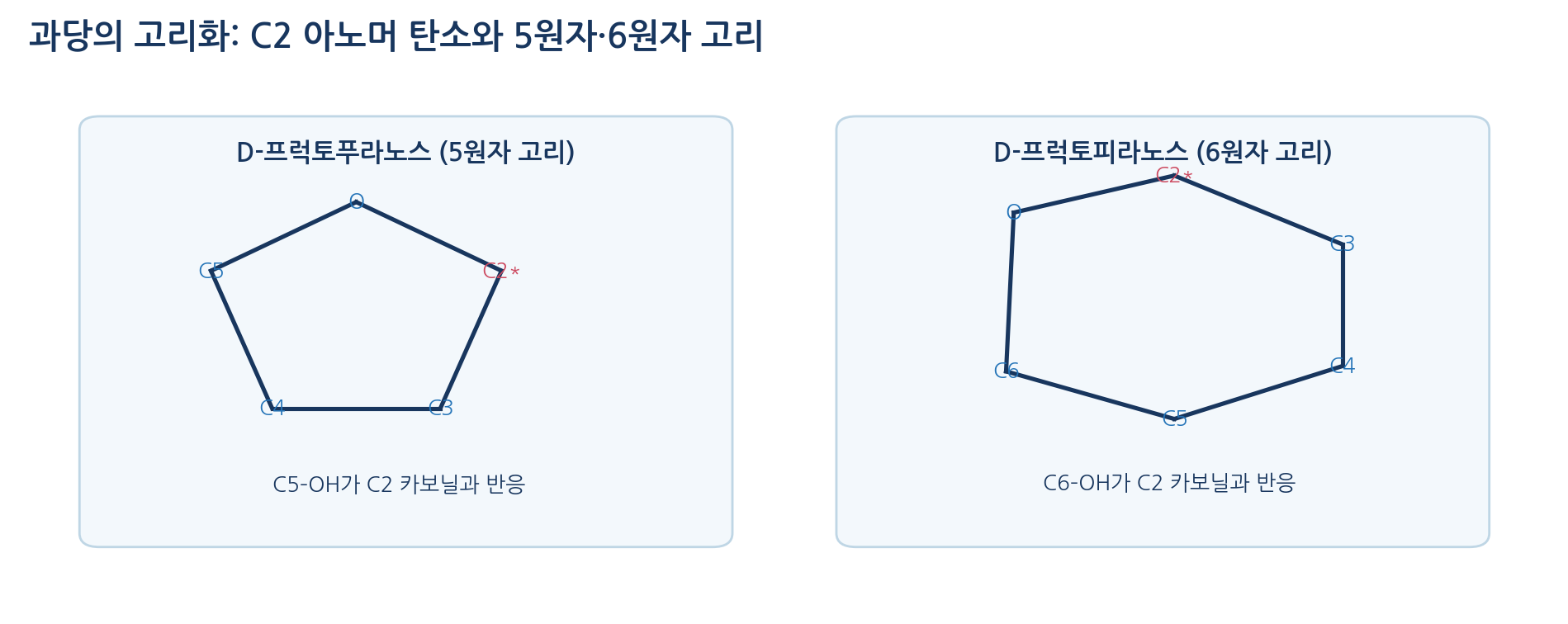
- Fructose forms fructofuranose when C5-OH adds and fructopyranose when C6-OH adds, and sucrose contains the furanose form
04
Cells contain many hexose derivatives
- Sugars serve not only as fuel but as surface recognition signals, extracellular matrix components and building blocks of glycans
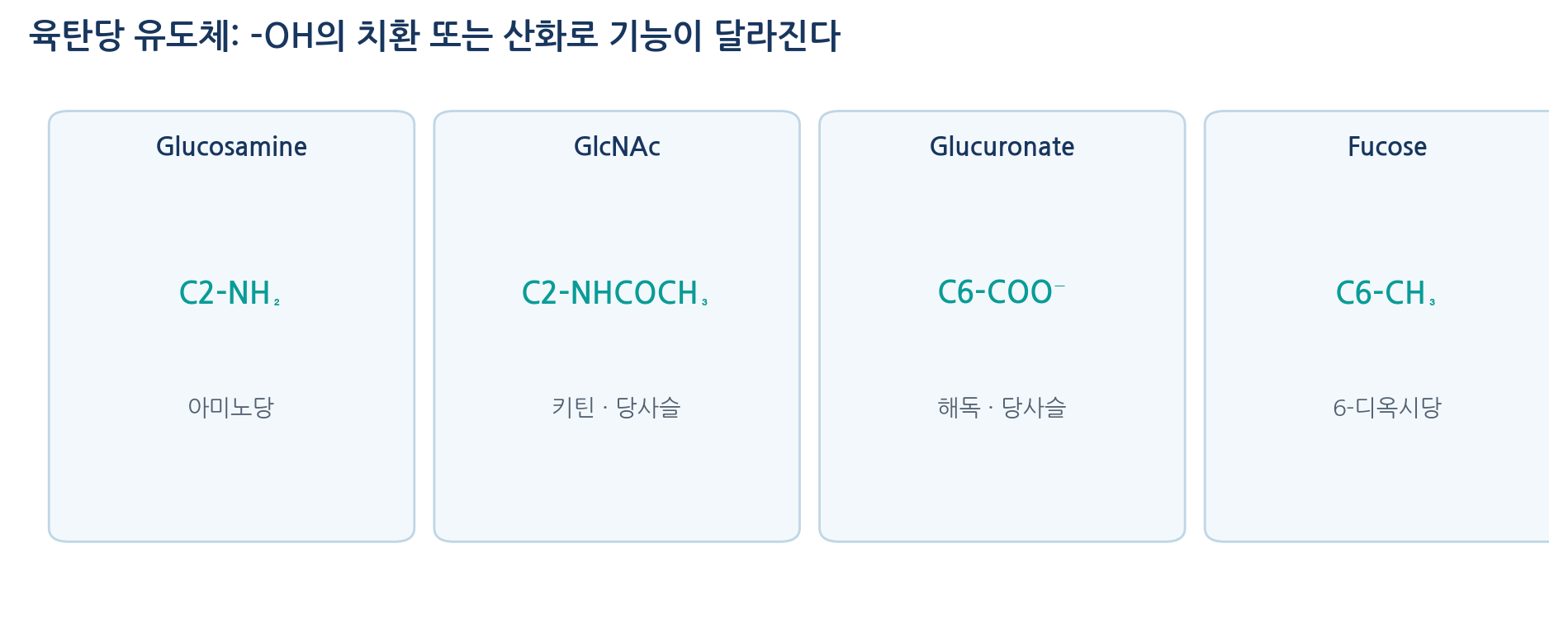
- Glucosamine carries an amino group in place of the C2 hydroxyl, and N-acetylation gives N-acetylglucosamine
- Glucuronic acid has an oxidised carboxyl at C6 and exists as glucuronate at physiological pH
- Fucose is a 6-deoxy sugar found in glycoproteins and recognition glycans
- These modifications change solubility, charge and recognition and thereby determine function
05
[Separate note 7-1] Measuring blood glucose in diagnosis
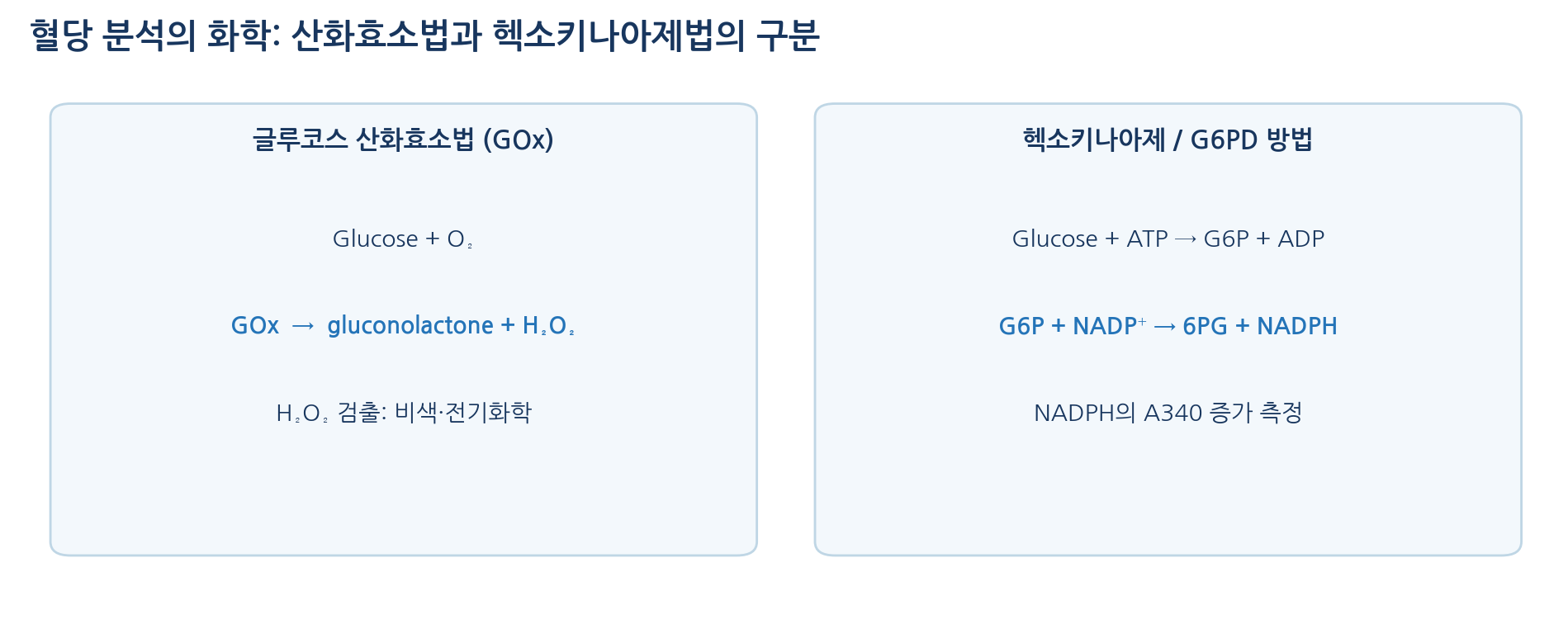
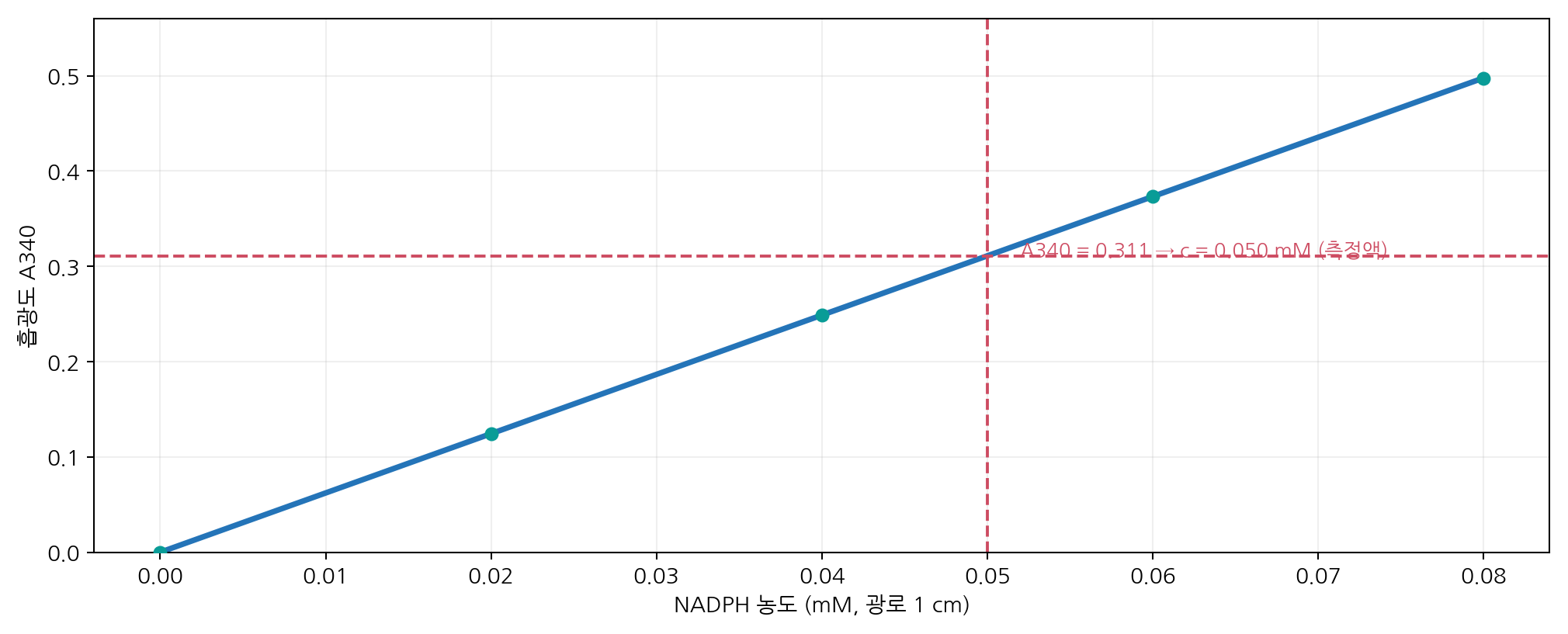
- The hexokinase method phosphorylates glucose with ATP and couples glucose 6-phosphate oxidation to reduction of NADP+ to NADPH
- The rise in absorbance at 340 nm is proportional to glucose under suitable conditions
- Glucose oxidase methods measure oxygen consumption and the resulting hydrogen peroxide or electron-transfer signal
- Example: with epsilon 6.22 L per mmol per cm and A340 0.311 the cuvette holds 0.0500 mmol/L, so a 100-fold dilution is 5.00 mmol/L, about 90.1 mg/dL
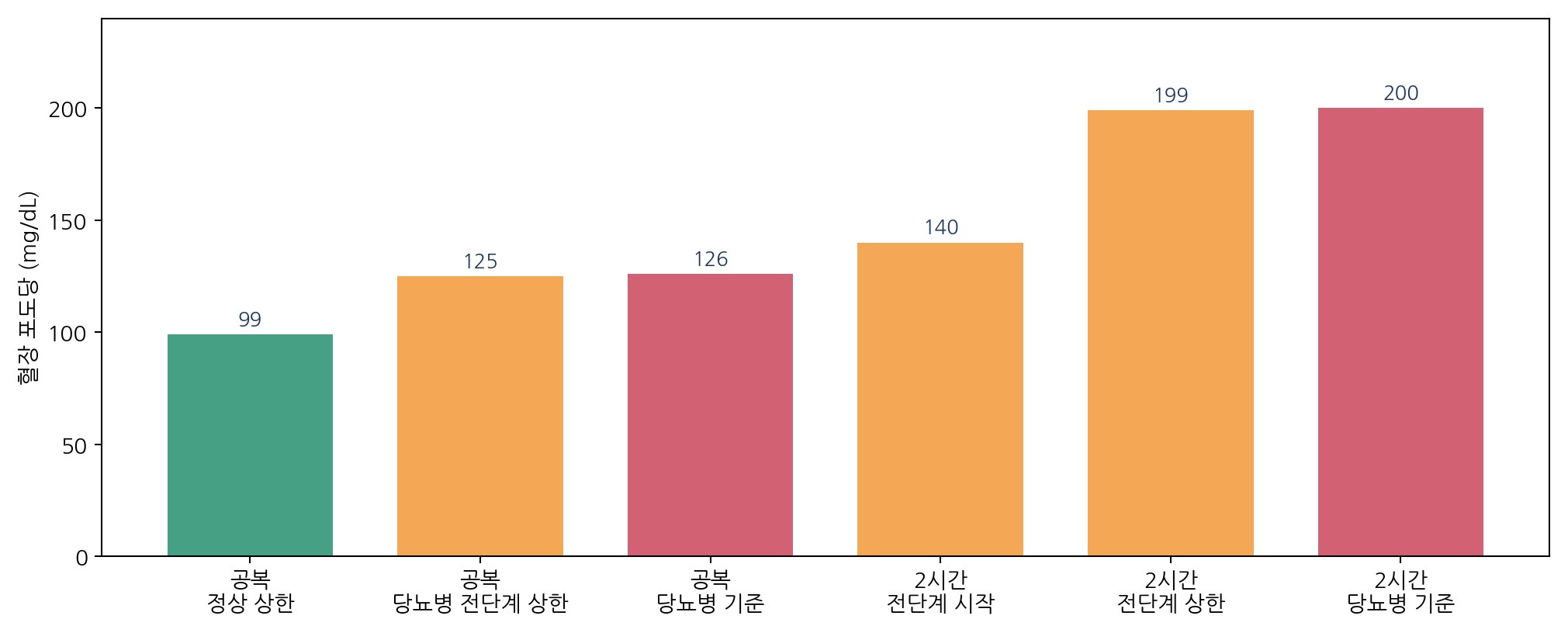
- ADA 2026 criteria for non-pregnant adults: HbA1c at least 6.5 percent, fasting plasma glucose at least 126 mg/dL and a 2-hour value of at least 200 mg/dL after 75 g
- With typical hyperglycaemic symptoms a random plasma glucose of at least 200 mg/dL is diagnostic
- Without a crisis a confirmatory test is usual, and home meters or continuous monitors must not be the sole basis for a decision
06
Monosaccharides can act as reducing agents
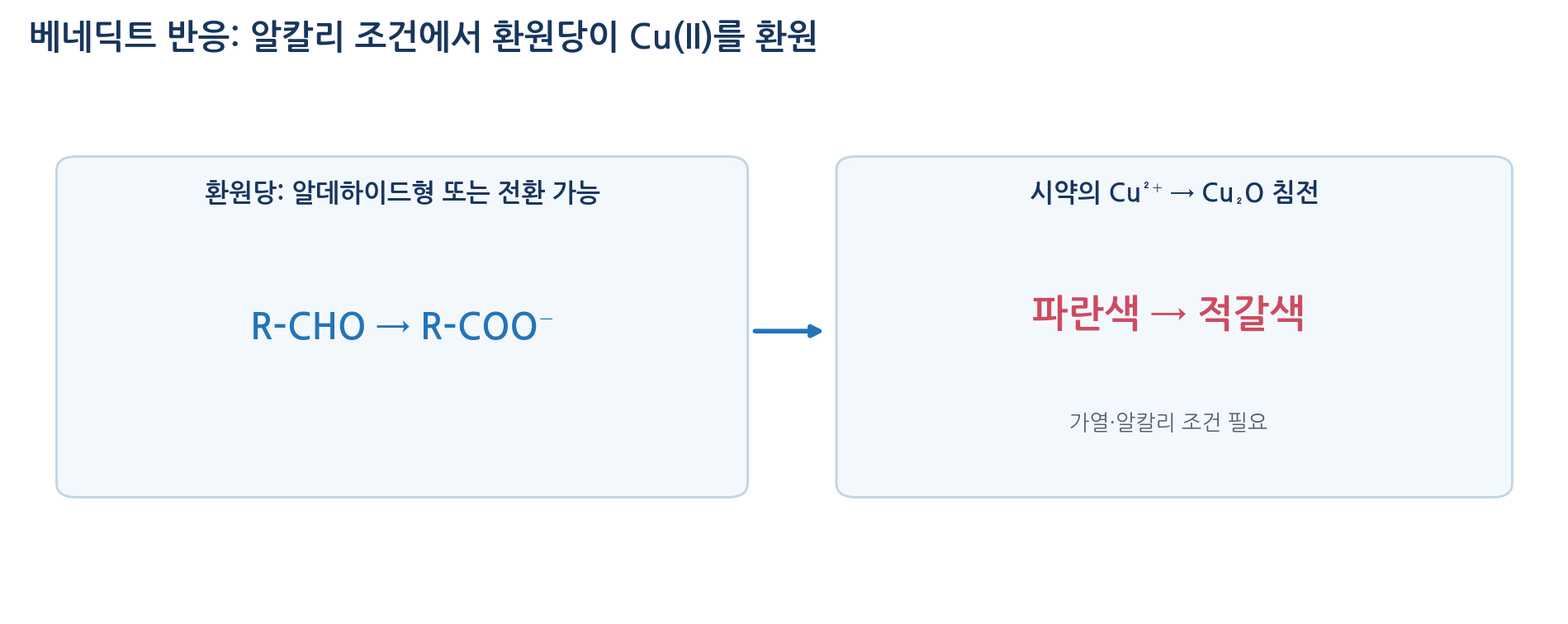
- A reducing sugar can be oxidised under suitable conditions and reduce another substance
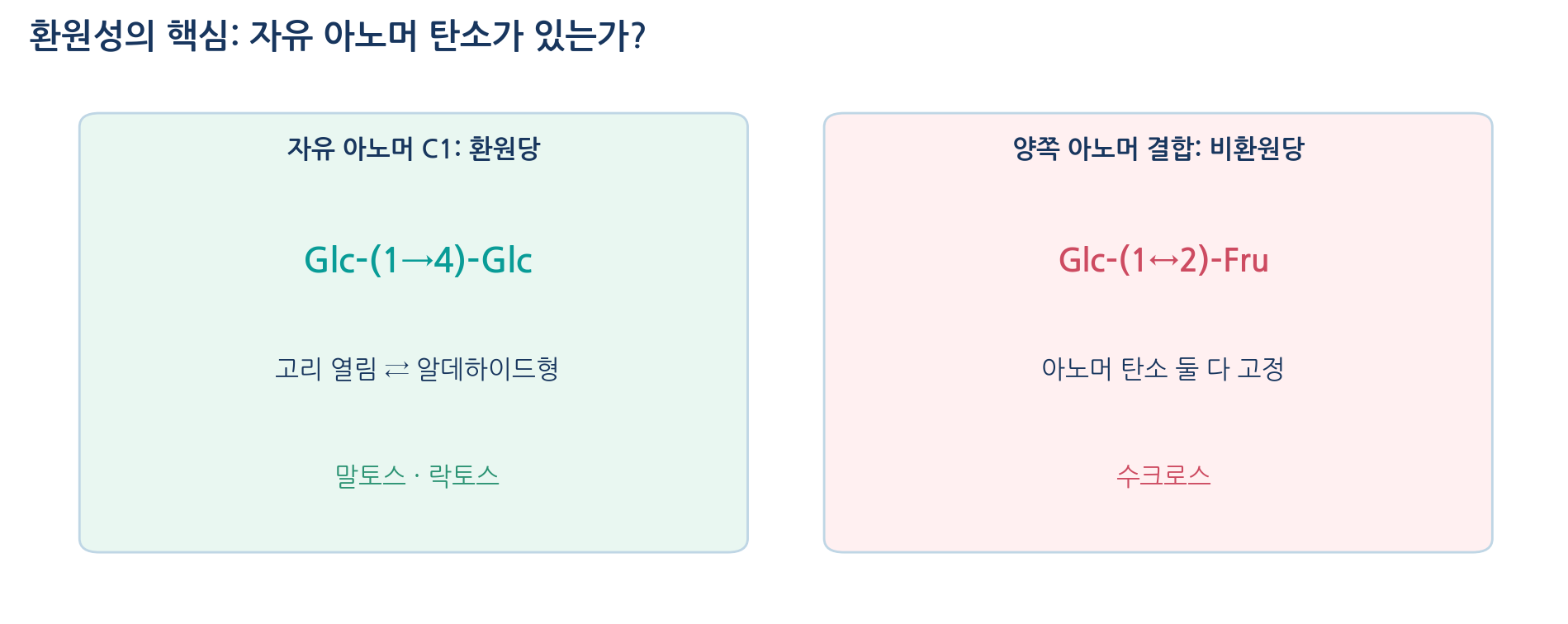
- A free hemiacetal or hemiketal anomeric centre allows the ring to open to the reactive chain form
- Glucose, maltose and lactose are reducing, and fructose, though a ketose, rearranges through an enediol to an aldose form in alkali
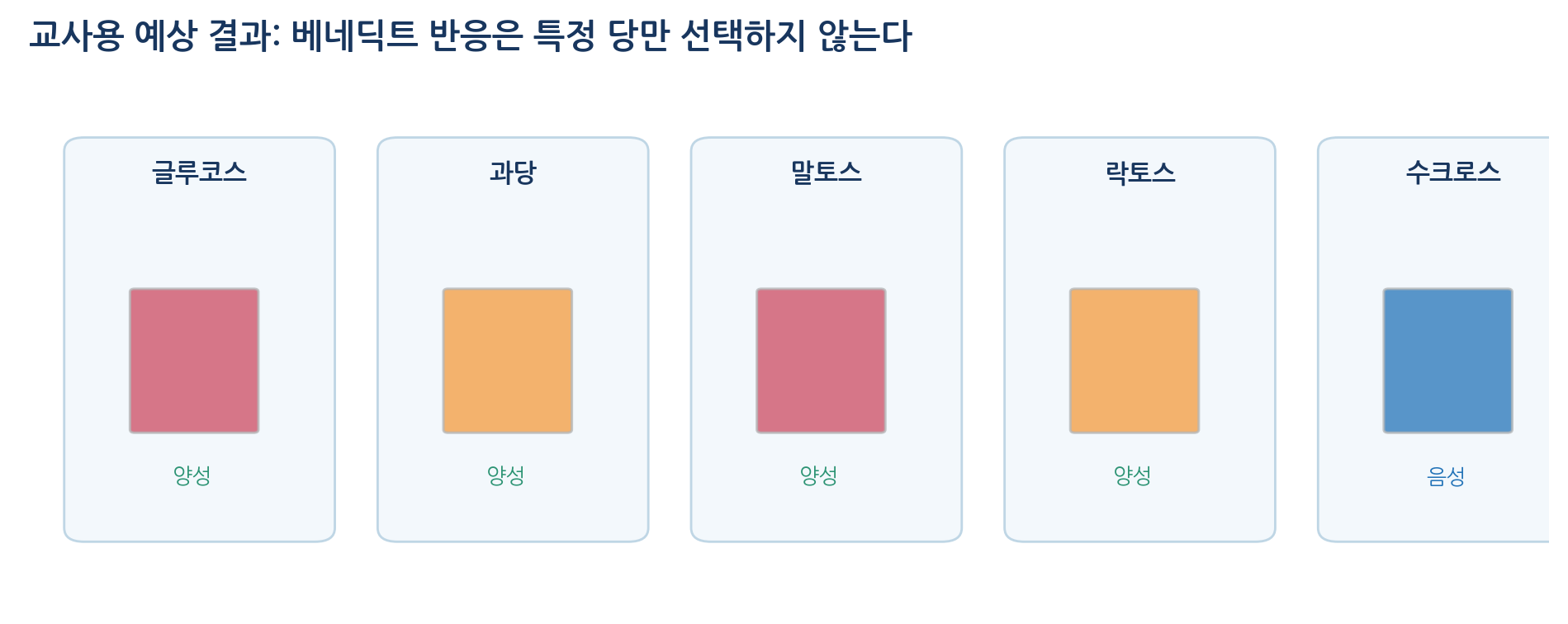
- Cu2+ in Benedict reagent is reduced to Cu+ in hot alkali and gives a brick-red Cu2O precipitate
- Colour intensity cannot establish the identity or exact concentration of a particular sugar
- Sucrose is not reducing before hydrolysis
07
Monosaccharides form disaccharides through glycosidic bonds
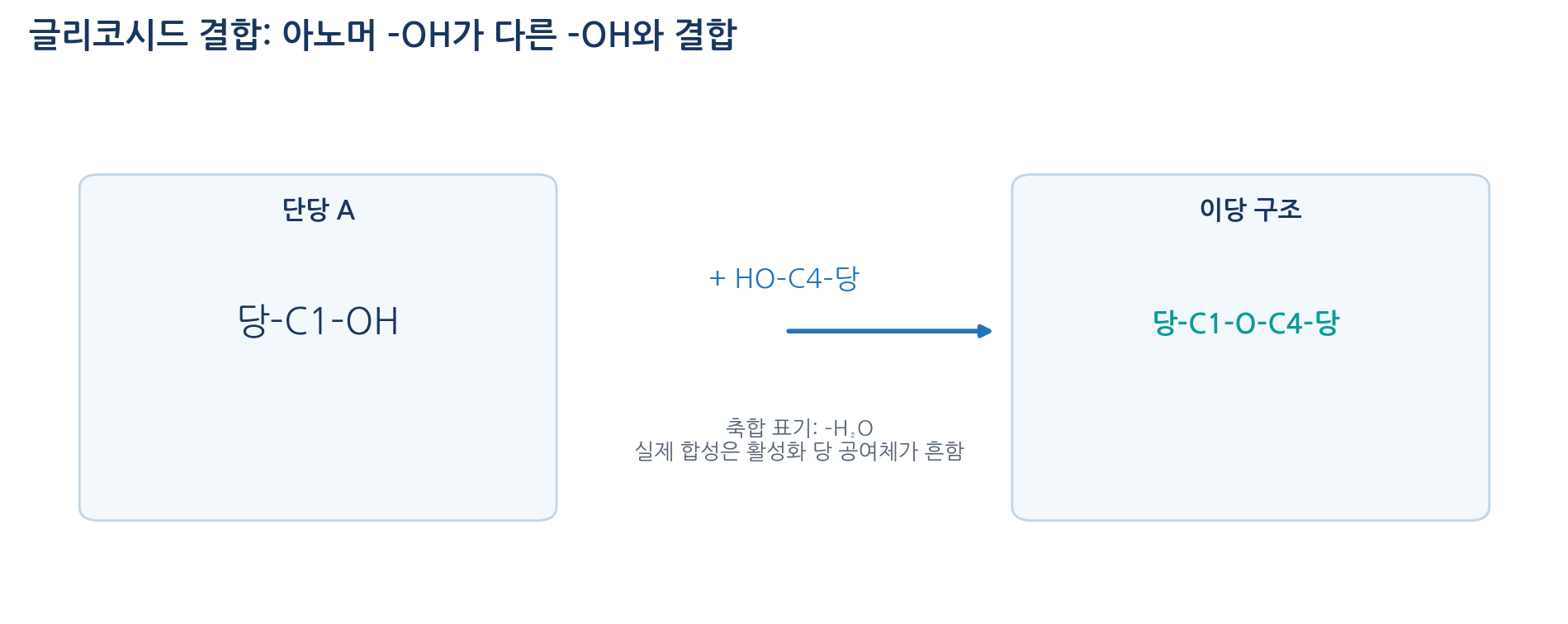
- A disaccharide is an O-glycosidic structure formed when the hydroxyl of one anomeric centre reacts with a hydroxyl of another sugar
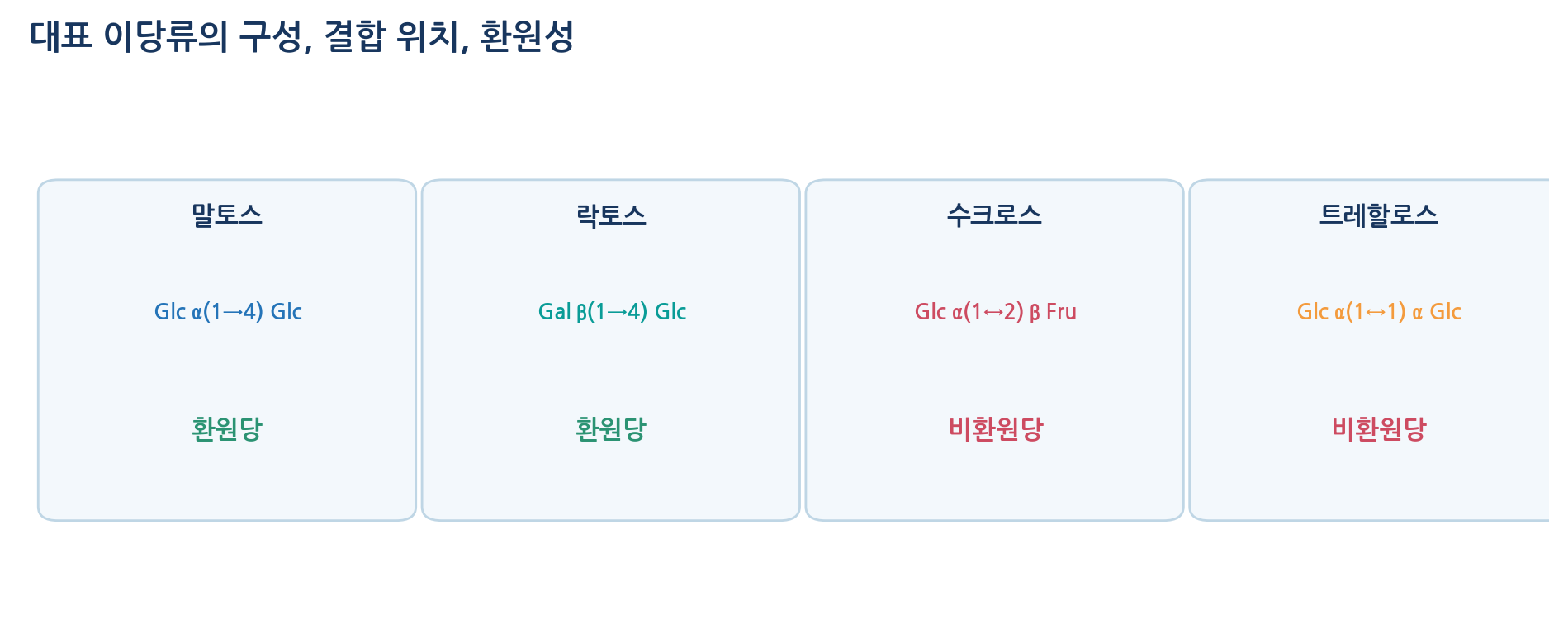
- Alpha or beta states the configuration of the participating anomeric centre and (1-4) or (1-2) gives the linked carbons
- Cellular synthesis uses activated sugar nucleotides rather than simple condensation of neutral sugars
- Maltose with alpha(1-4) and lactose with beta(1-4) retain a free anomeric carbon and are reducing
- Sucrose with alpha(1-2)beta and trehalose with alpha(1-1)alpha have both anomeric carbons fixed and are non-reducing
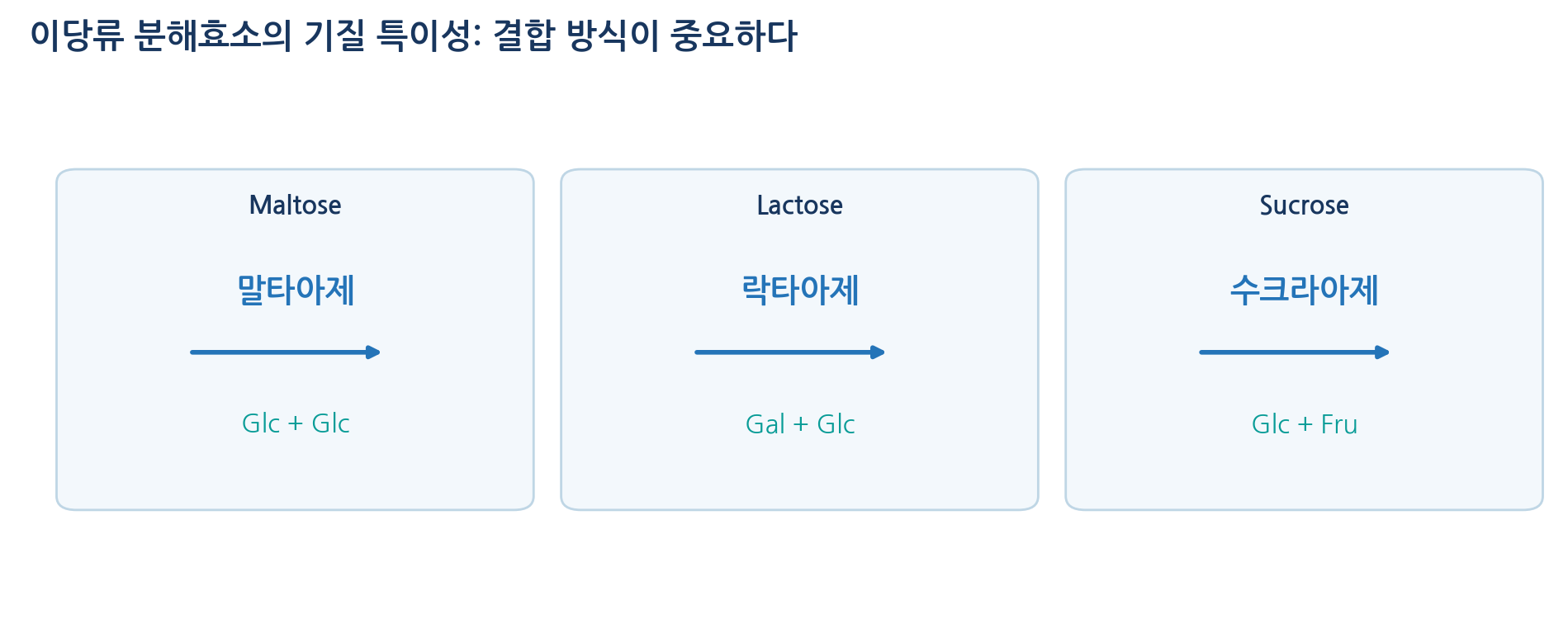
- Hydrolysis consumes one water and the enzymes involved are selective for bond configuration and sugar type
- Example: 34.23 g of sucrose, 0.1000 mol, gives 0.1000 mol each of glucose and fructose, 18.02 g of each
08
[Separate note 7-2] Sweetness and what else follows
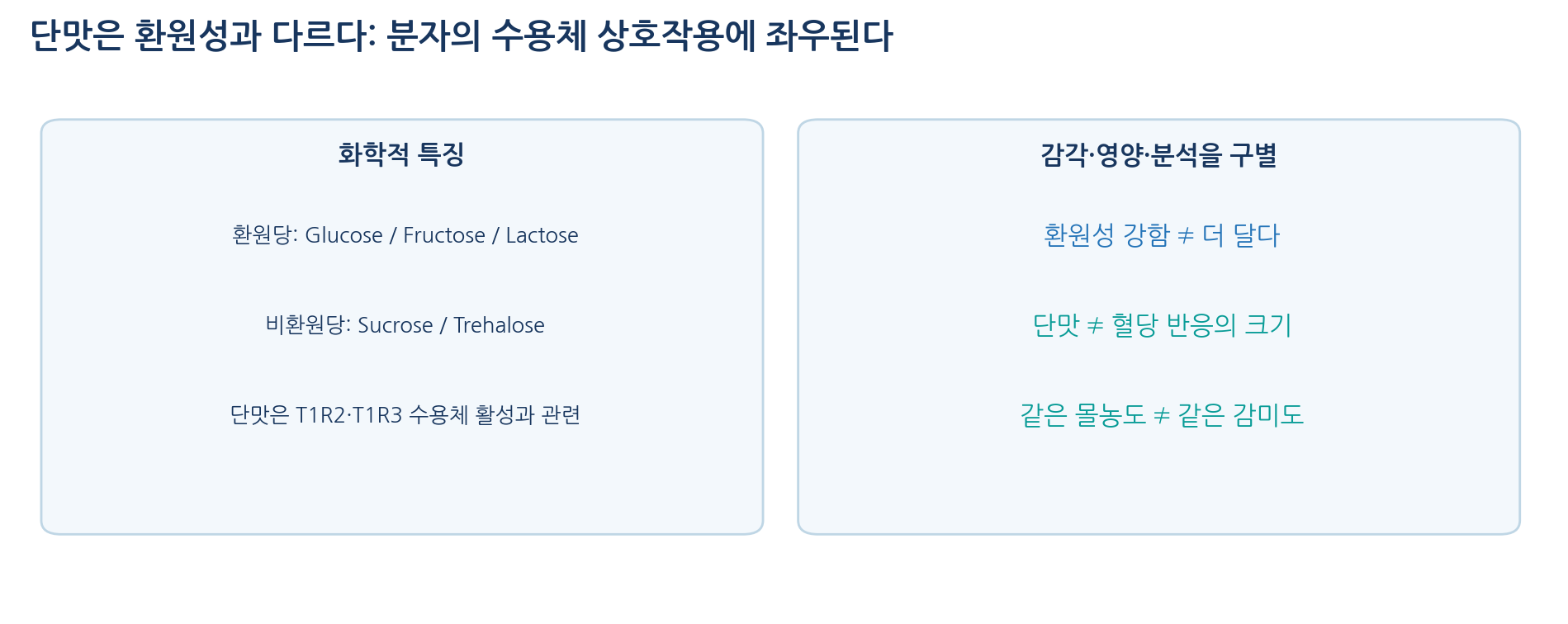
- Sweetness does not correspond directly to whether a sugar is reducing
- Sweet-tasting molecules act through T1R2 and T1R3 taste receptors
- Glucose, fructose, sucrose and lactose differ in structure, and perceived sweetness changes with concentration, temperature and mixture
- The claim that equal sugar mass means equal sweetness and equal blood glucose response does not hold
- WHO treats added sugars and the free sugars of honey, syrups and juice as a separate category
- Molecular chemistry, food labelling and glucose control are different levels and must be interpreted separately
References
| Feature | Aldose | Ketose |
|---|---|---|
| Carbonyl group | Terminal -CHO | Internal >C=O |
| Examples | Glucose, galactose, ribose | Fructose, dihydroxyacetone |
| Reactive carbon | Aldehyde carbon (C1 of glucose) | Ketone carbon (C2 of fructose) |
| Derivative | Key structural change | Biological meaning |
|---|---|---|
| Glucosamine | C2-OH replaced by -NH2 | Building block of amino sugars and glycans |
| N-Acetylglucosamine | Acetylated amino group at C2 | Component of chitin and glycoproteins |
| Glucuronic acid | C6 primary alcohol oxidised to carboxyl | Conjugation reactions and glycosaminoglycans |
| Fucose | 6-Deoxy form | Glycoprotein and cell-recognition glycans |
| Test | Prediabetes range | Diabetes threshold |
|---|---|---|
| Fasting plasma glucose | 100-125 mg/dL | at least 126 mg/dL |
| 2-hour oral glucose tolerance | 140-199 mg/dL | at least 200 mg/dL |
| HbA1c | 5.7-6.4 percent | at least 6.5 percent |
| Random plasma glucose | Not used for prediabetes | Typical symptoms or crisis plus at least 200 mg/dL |
| Disaccharide | Monosaccharides | Glycosidic bond | Reducing |
|---|---|---|---|
| Maltose | Glc + Glc | alpha(1-4) | Yes |
| Lactose | Gal + Glc | beta(1-4) | Yes |
| Sucrose | Glc + Fru | alpha(1-2)beta, both anomeric carbons | No |
| Trehalose | Glc + Glc | alpha(1-1)alpha | No |