01
Some homopolysaccharides store fuel
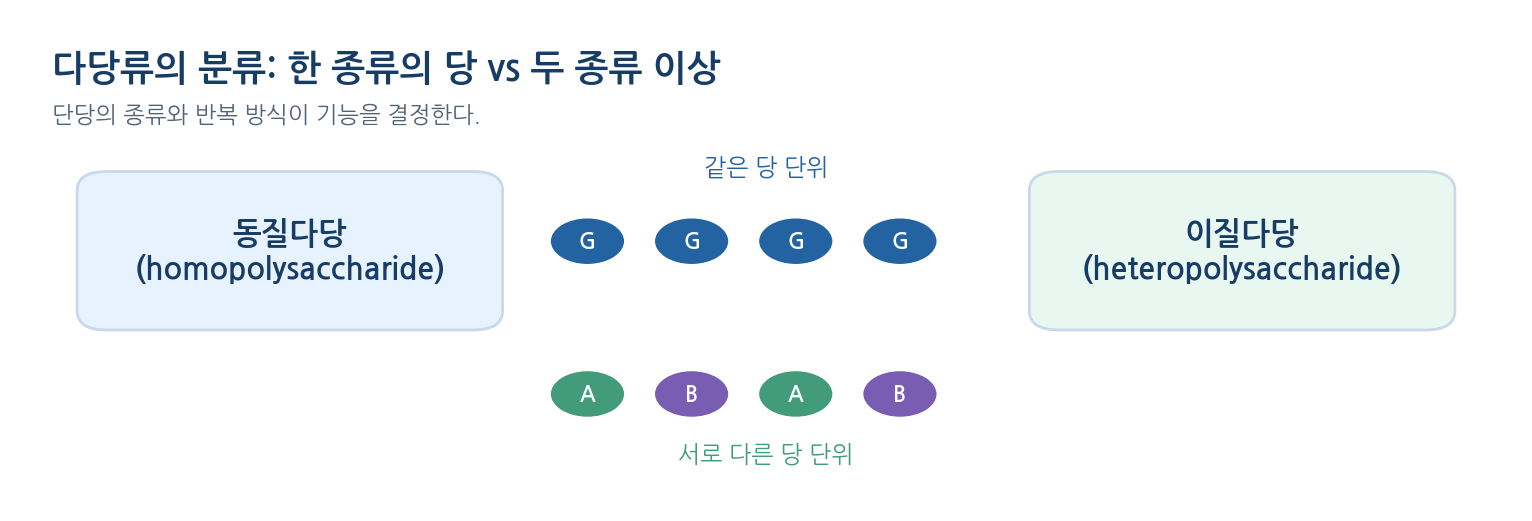
- A polysaccharide is a polymer of monosaccharide residues joined by glycosidic bonds, homopolysaccharide with one residue type and heteropolysaccharide with several
- Storage polysaccharides pack sugar into many bonds, with plant starch and animal or fungal glycogen as the main examples
- The polymer form limits the rise in free solute particles and so reduces osmotic load
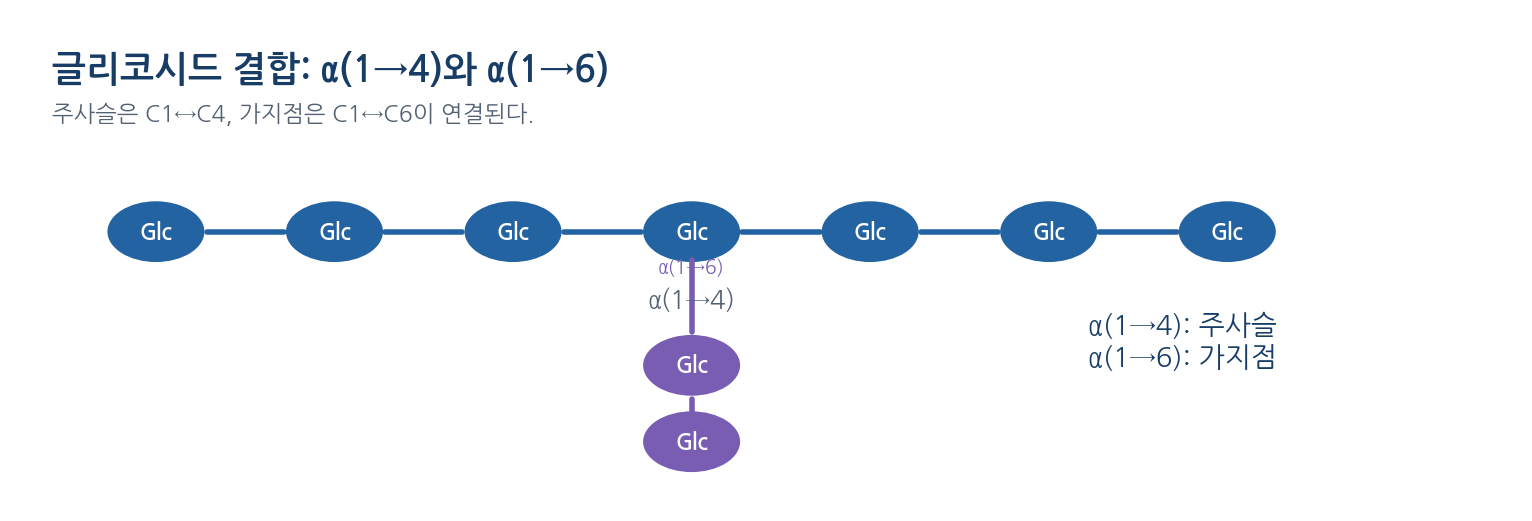
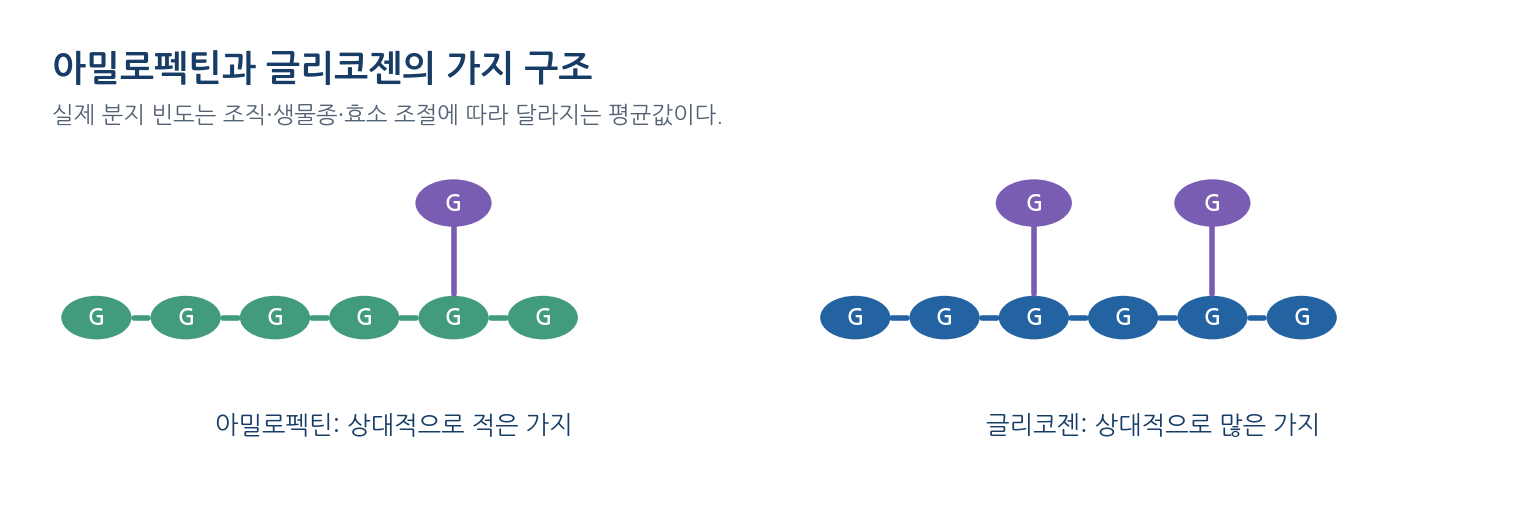
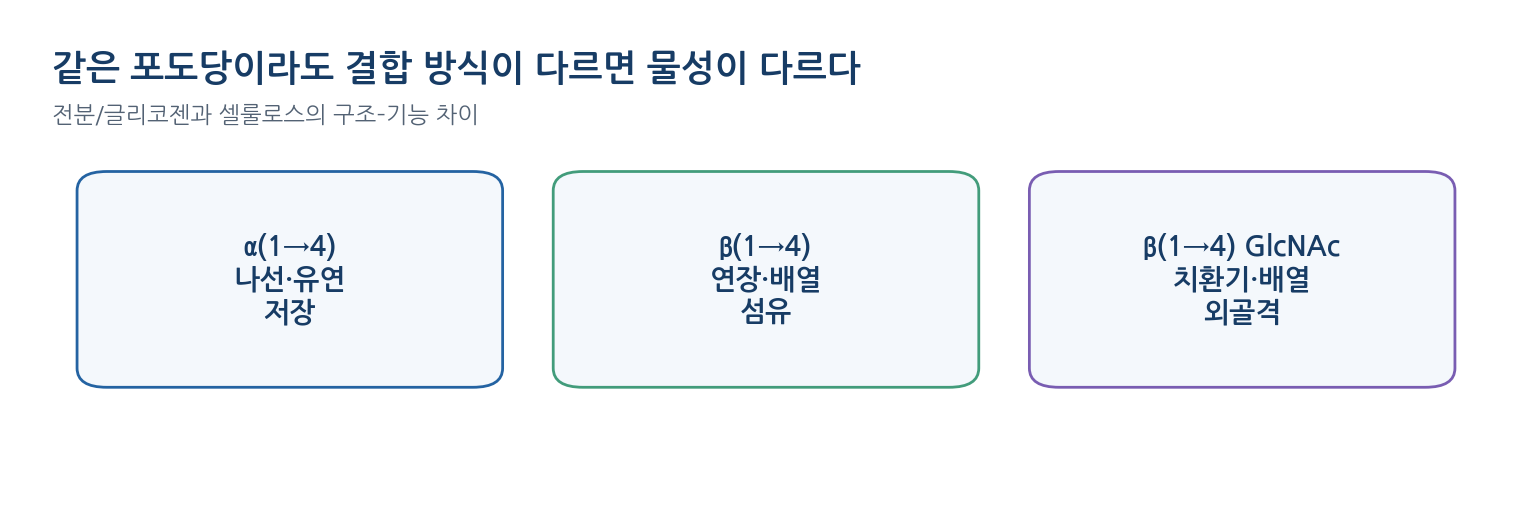
- Starch is amylose with mainly alpha(1-4) and little branching plus amylopectin with an alpha(1-4) backbone and alpha(1-6) branches
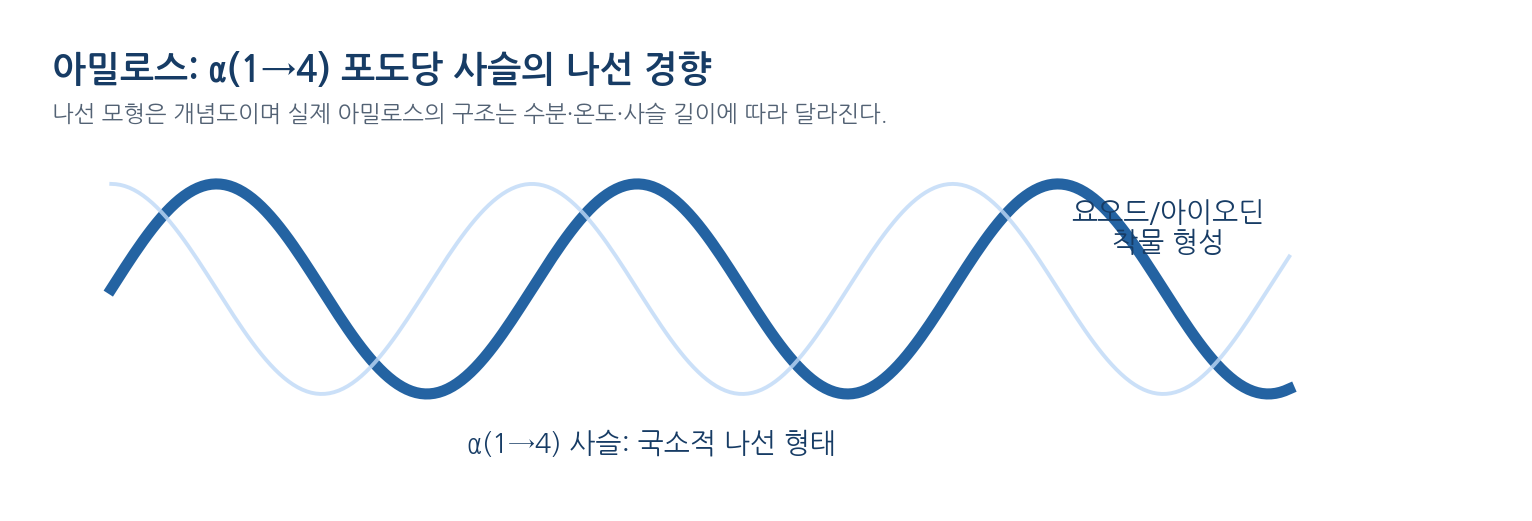
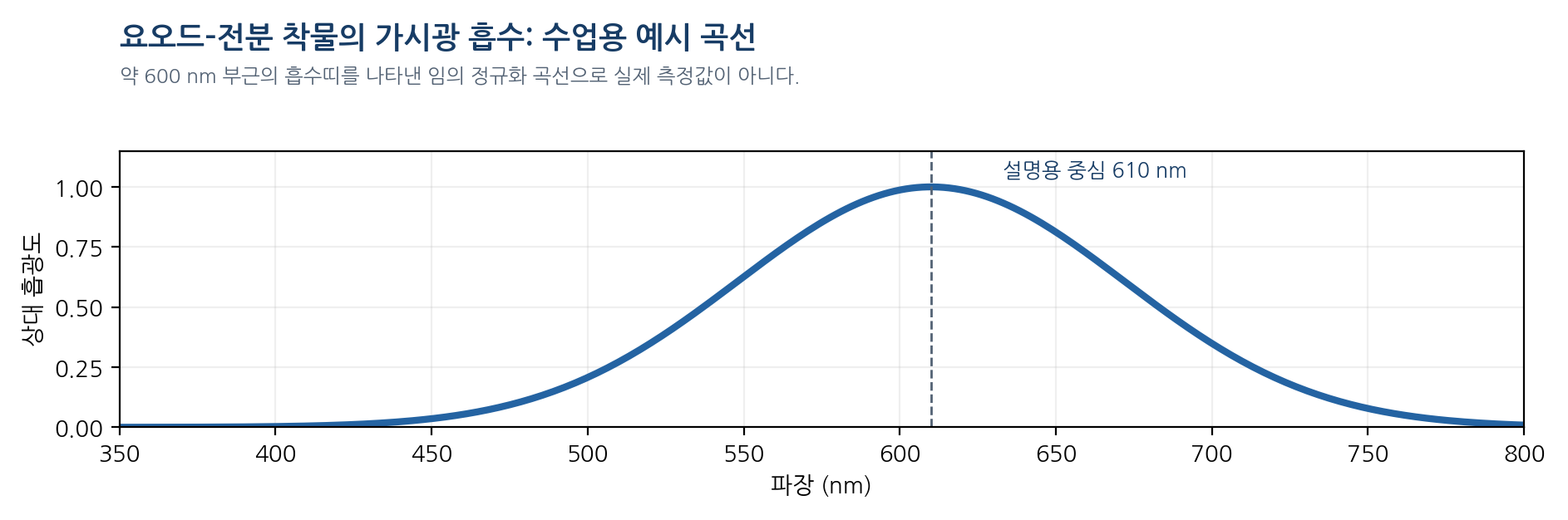
- The blue iodine colour involves iodine complexes inside the amylose helix, though it varies with chain length and temperature
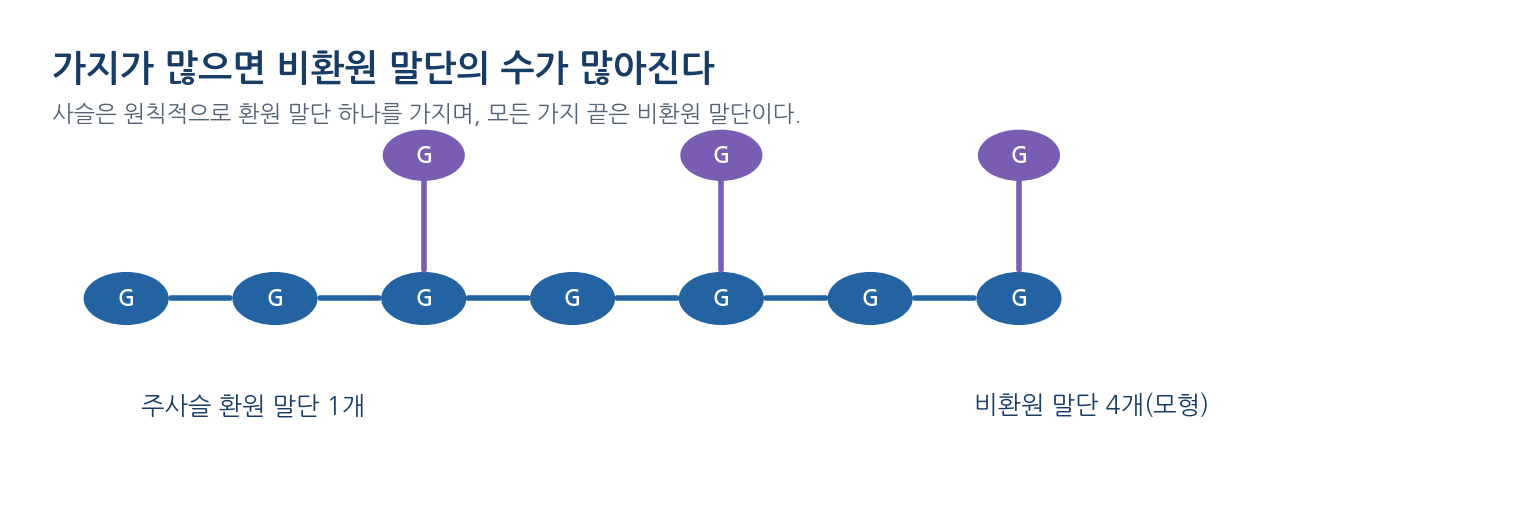
- Glycogen is more branched than amylopectin, giving more non-reducing ends, and serves blood glucose in liver and local ATP supply in muscle
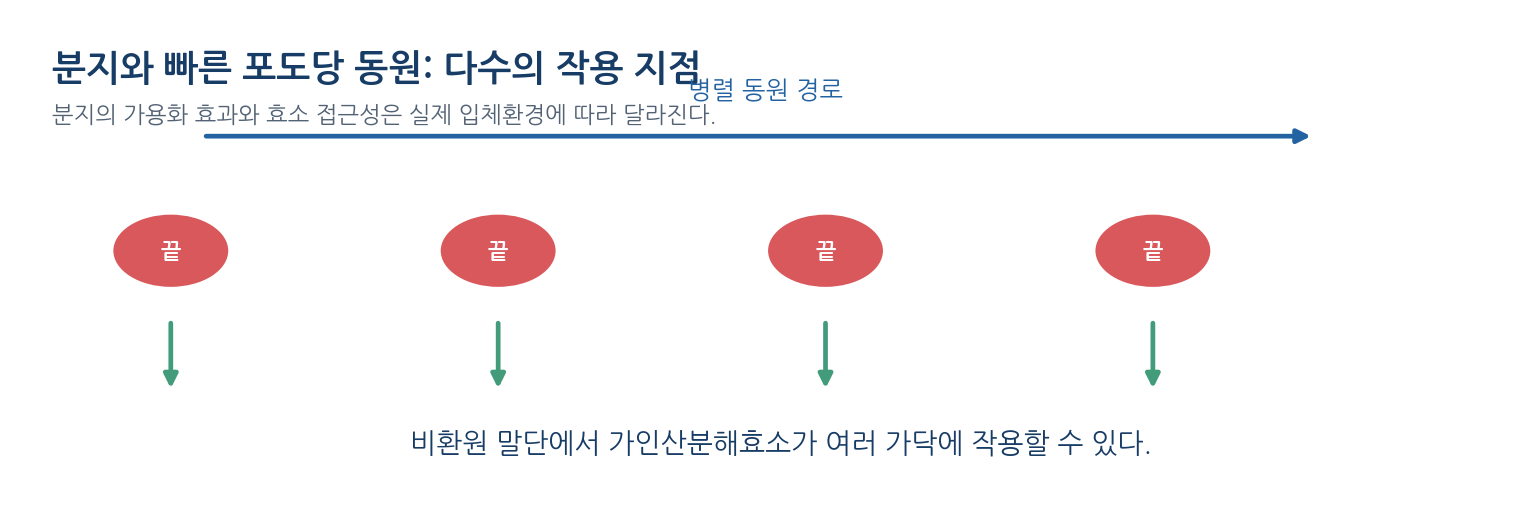
- Glycogen phosphorylase cleaves non-reducing-end alpha(1-4) bonds with Pi to give glucose 1-phosphate, while alpha(1-6) branches need a debranching enzyme
- An unbranched chain of n residues has n-1 glycosidic bonds and needs n-1 waters for complete hydrolysis
- Example: a 1,000-residue glucan has 999 bonds and a molar mass near 162,158 g/mol
02
Some homopolysaccharides are structural
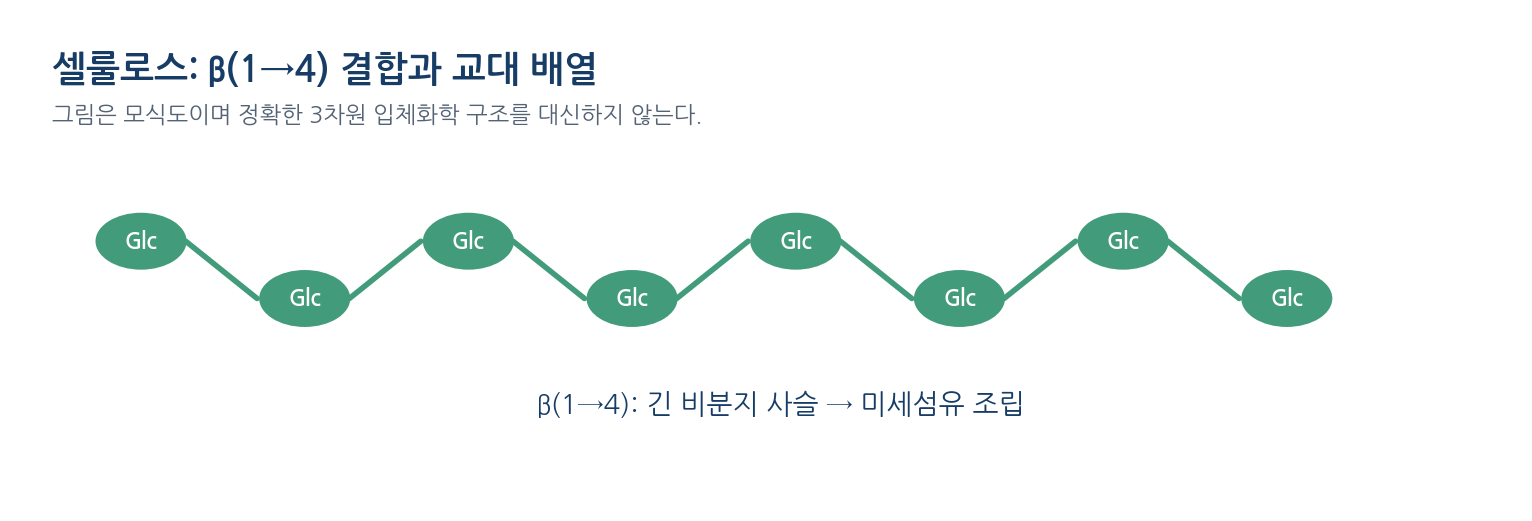
- Cellulose is unbranched beta-D-glucose joined beta(1-4), where the bond configuration changes chain shape and assembly
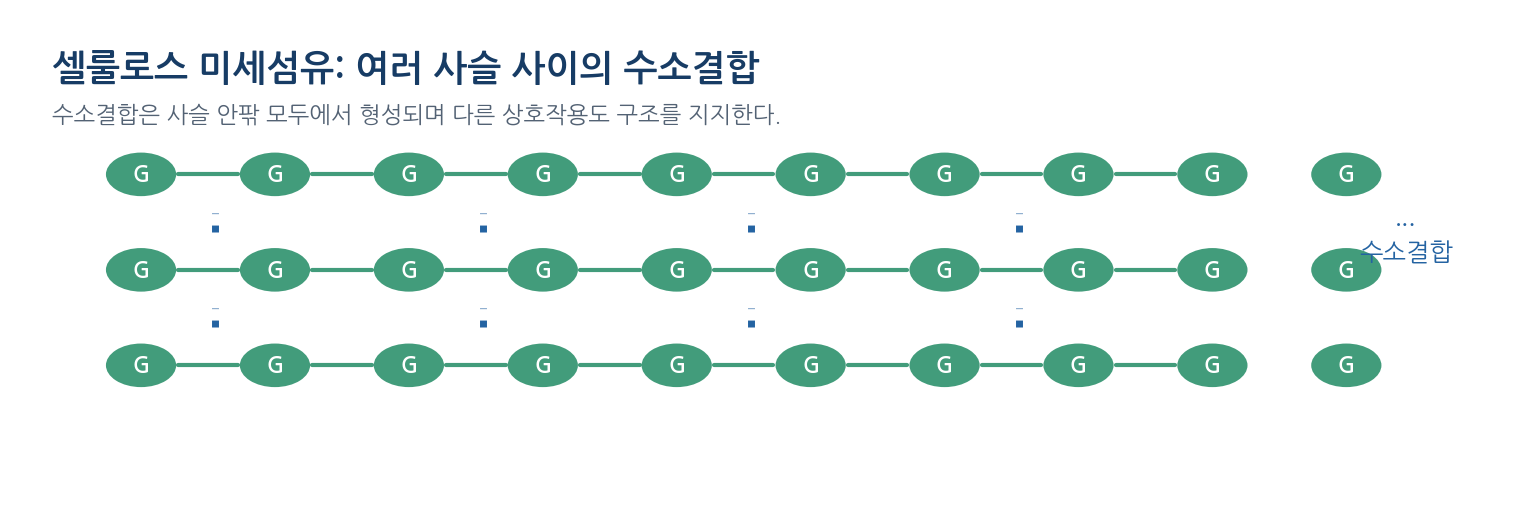
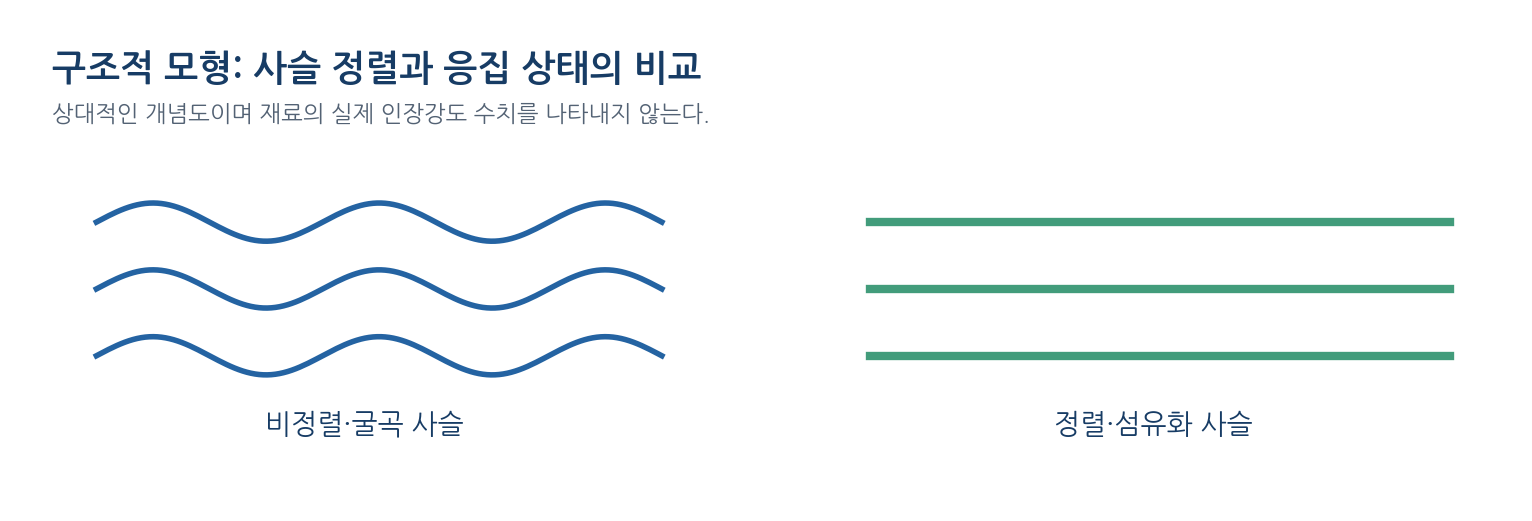
- Cellulose chains align into microfibrils held by hydrogen bonds
- Humans lack an efficient endogenous beta(1-4) hydrolase, and ruminants and termites rely on microbial cellulases
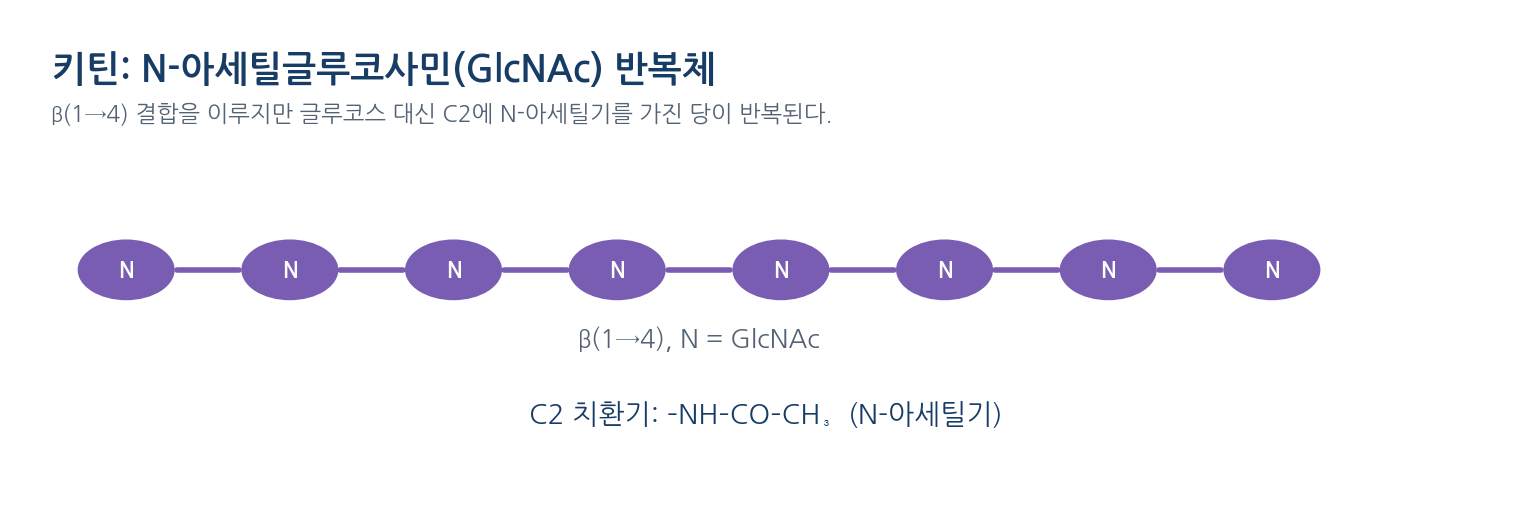
- Chitin is beta(1-4) N-acetyl-D-glucosamine and forms arthropod exoskeletons and fungal walls
- The chitin backbone resembles cellulose but carries an acetamido group at C2
- Mechanical behaviour of an exoskeleton also depends on the proportion and arrangement of proteins and minerals
- Chitosan from partial deacetylation does not have the same repeat unit as chitin
03
Steric factors and hydrogen bonds shape polysaccharide folding
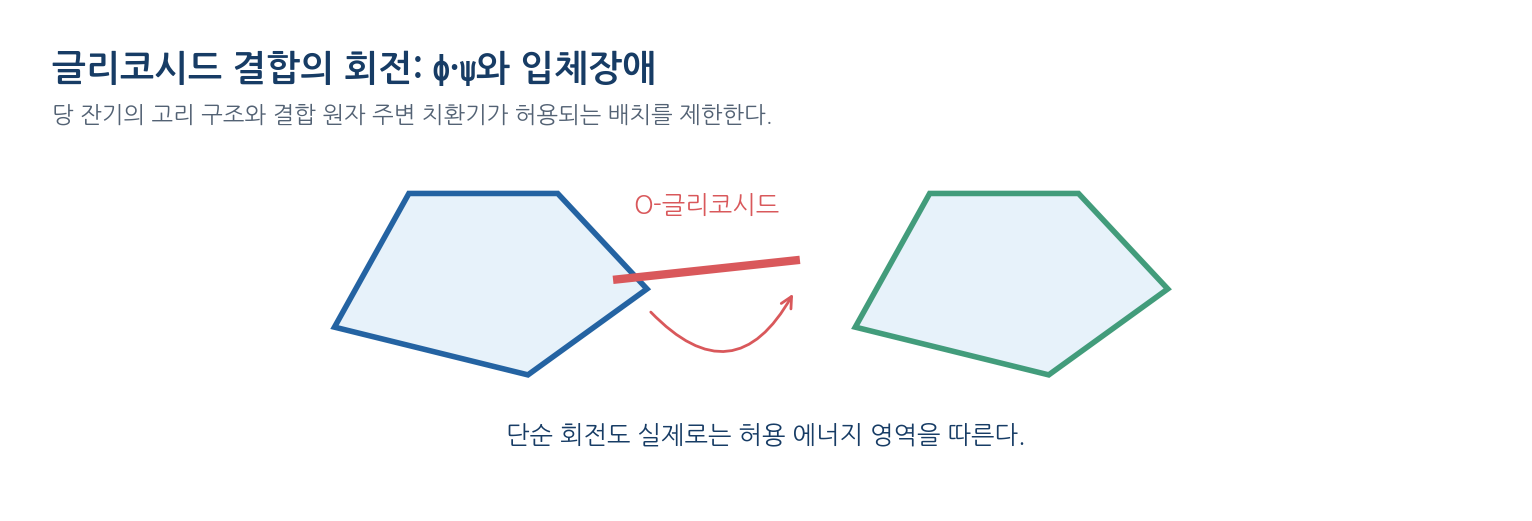
- Three-dimensional shape depends on rotation about glycosidic bonds and the geometry of the sugar rings
- Torsion angles phi and psi describe the allowed rotations, and not every combination is accessible
- The labels alpha(1-4) and beta(1-4) alone cannot establish a helix or a straight chain
- Real shape depends on intra- and intermolecular hydrogen bonds, solvent, temperature, ions, chain length and crystallinity
- In structural polysaccharides cooperative hydrogen bonds between neighbouring chains stabilise fibres and layers
- Water competes for hydroxyl groups, so hydrogen bonding alone does not settle stability
- Crystalline and disordered regions coexist, and the degree of order governs water access, enzymic digestion and mechanical behaviour
04
Bacterial and algal walls contain structural heteropolysaccharides
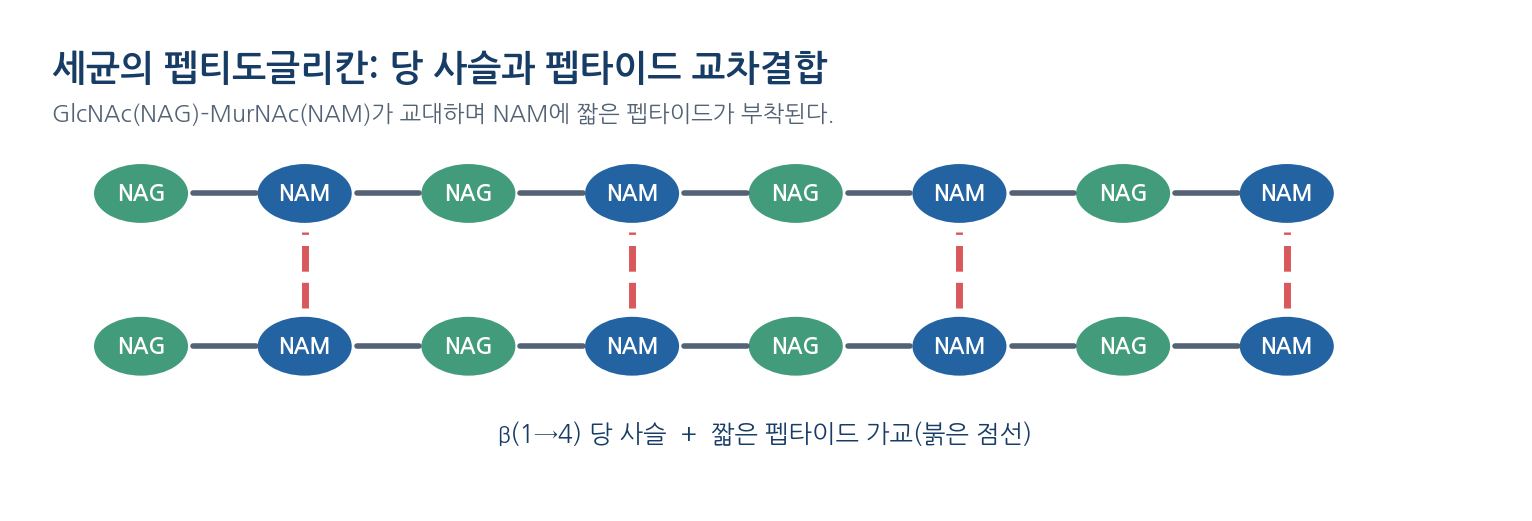
- Peptidoglycan is a chain of alternating GlcNAc and MurNAc joined beta(1-4) with short peptide cross-links on MurNAc
- Because two different sugars repeat, the glycan is a heteropolysaccharide, and the cross-links create a network with mechanical strength
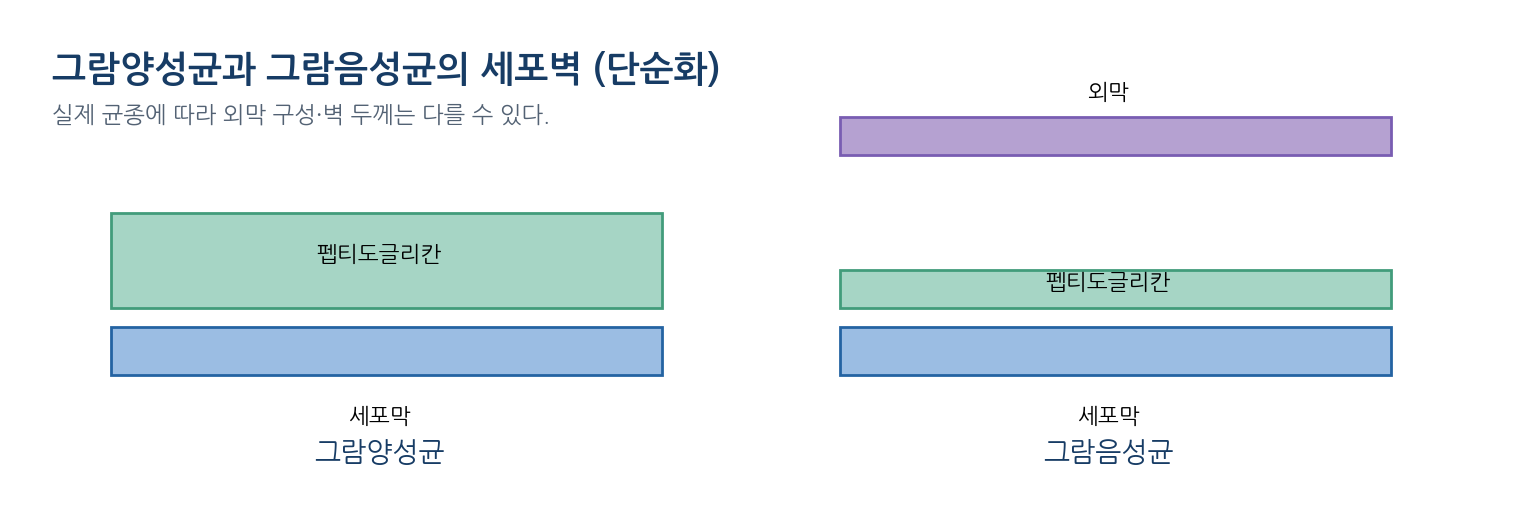
- Gram-positive bacteria have a thick peptidoglycan layer while Gram-negative bacteria have a thin layer in the periplasm plus an outer membrane
- Archaea lack typical bacterial peptidoglycan and cannot be described in the same way
- Lysozyme cleaves the NAG-NAM beta(1-4) bond while beta-lactams inhibit the PBPs that form peptide cross-links, so the targets differ
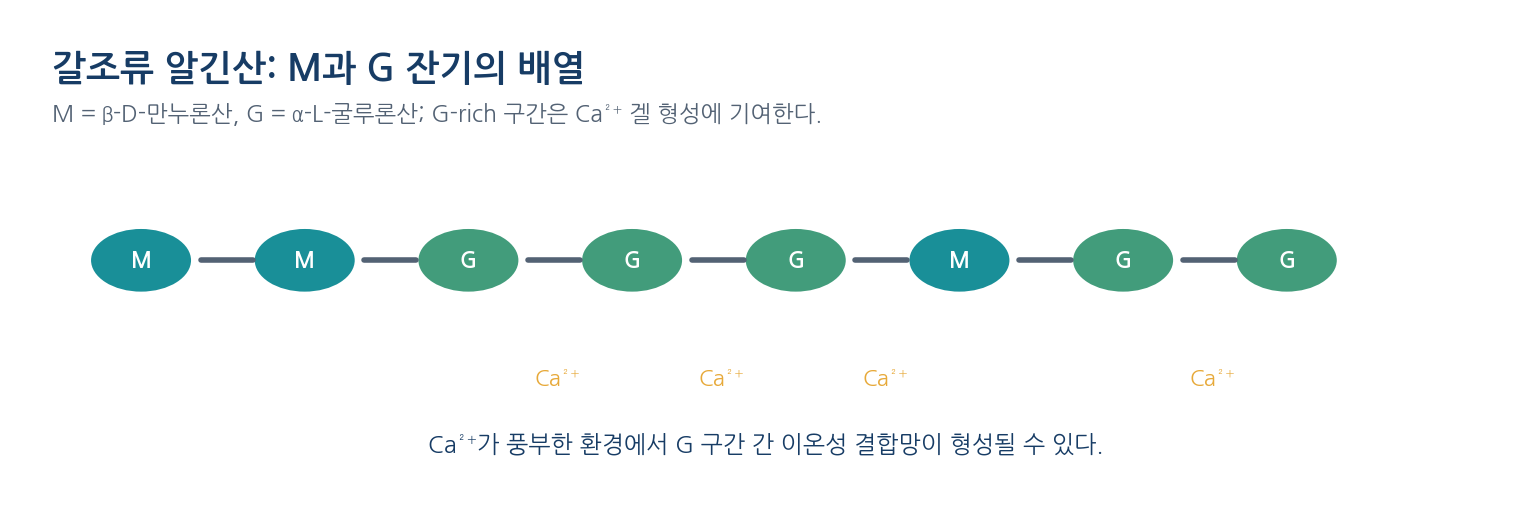
- Brown algal alginate is a heteropolysaccharide of mannuronate and guluronate, and G-rich blocks form gels through Ca2+ interactions
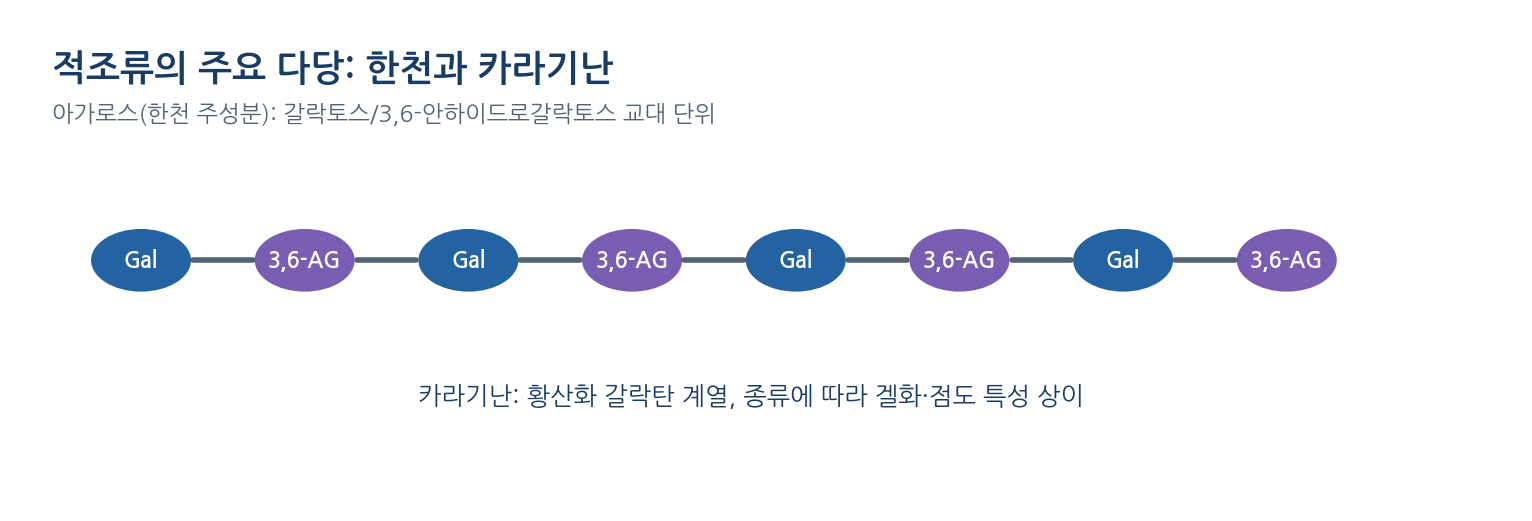
- Red algal agarose repeats galactose and 3,6-anhydrogalactose, and carrageenans differ in sulfate content
- Calcium alginate beads are a model system and not equivalent in organisation to a natural brown algal wall
05
Glycosaminoglycans are heteropolysaccharides of the extracellular matrix
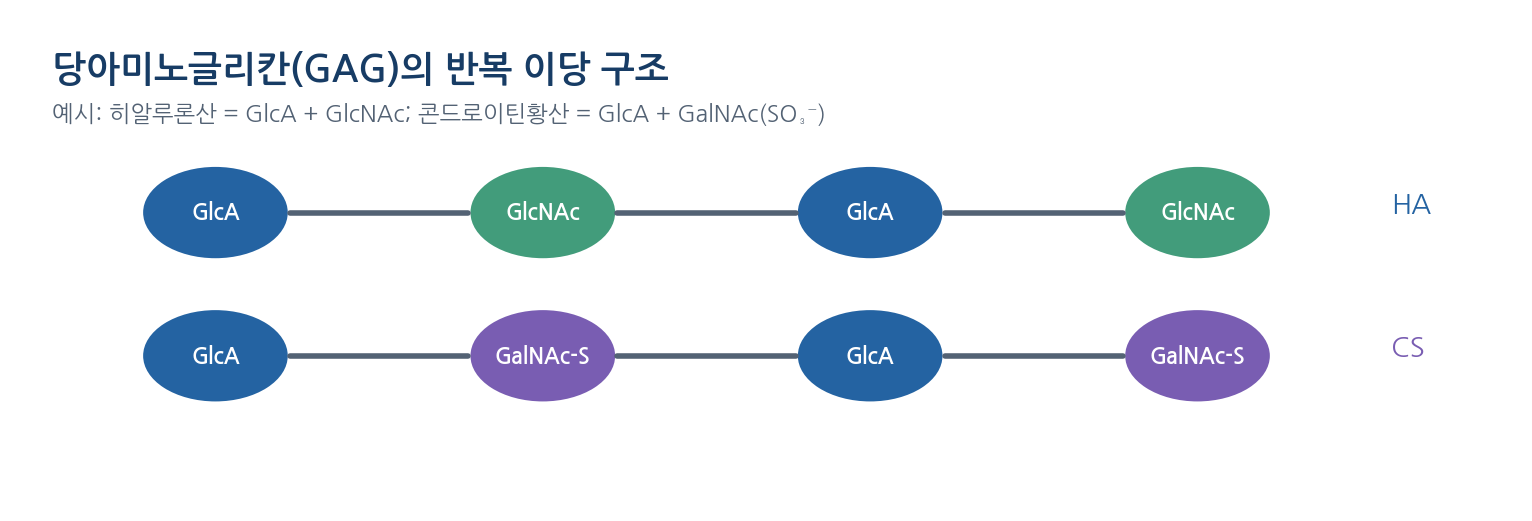
- Glycosaminoglycans are long unbranched heteropolysaccharides built mostly from repeating disaccharide units
- Amino sugars usually alternate with uronic acids, though keratan sulfate contains galactose instead
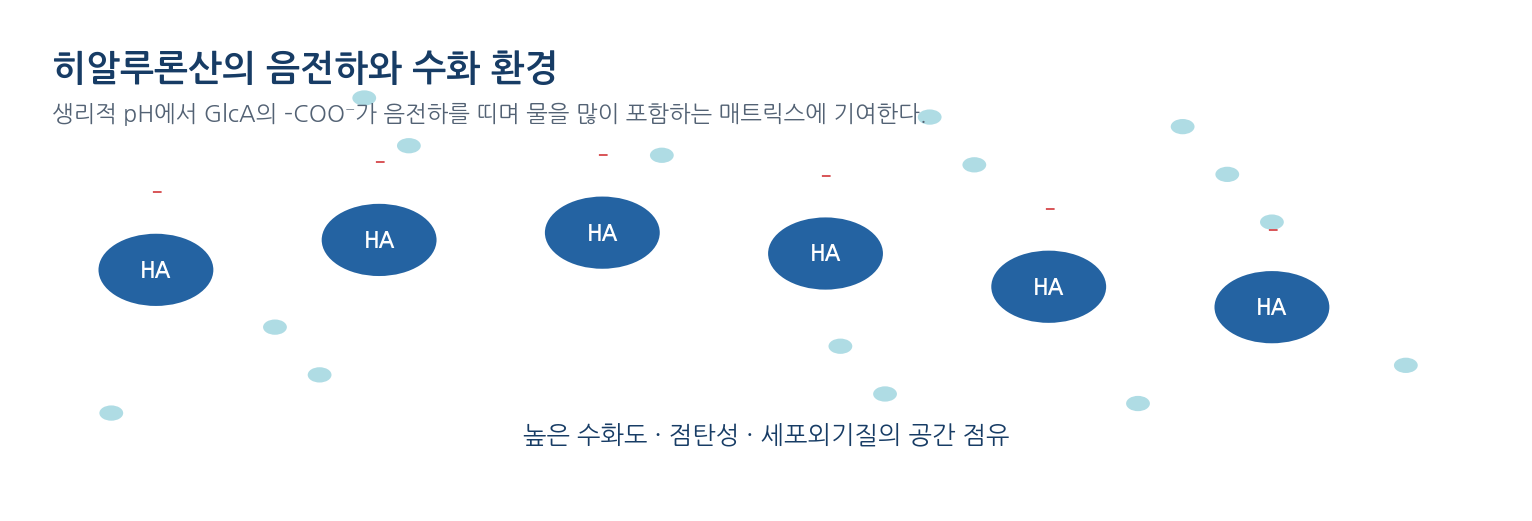
- Carboxylate dissociation and sulfate substitution give a negative charge that shapes water and cation distribution
- This contributes to matrix hydration, viscoelasticity, resistance to compression, protein binding and signalling
- Hyaluronan repeats GlcA and GlcNAc, is generally not sulfated and is not covalently attached to a core protein
- Its viscosity and water retention are not explained by charge alone, since chain occupancy, hydration, ions, molecular mass and other matrix components all contribute
- Some glycosaminoglycans are covalently attached to core proteins as proteoglycans, while hyaluronan forms large non-covalent assemblies
06
Integrated summary and worked calculations
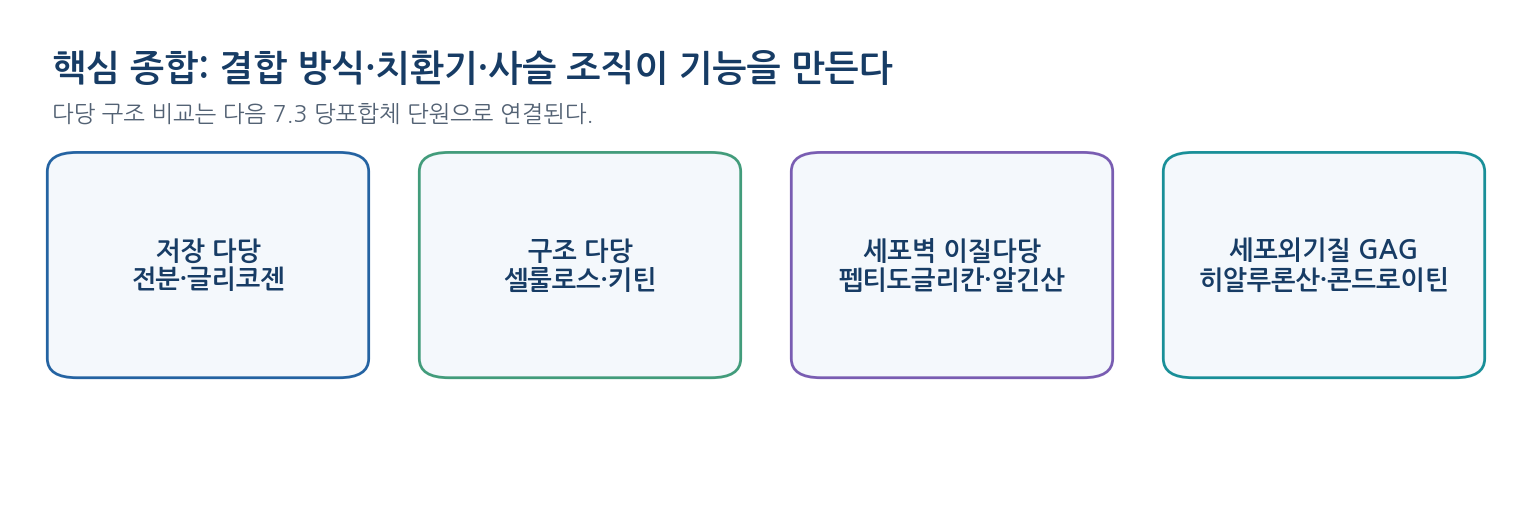
- The eight polysaccharides fall into storage forms, structural forms and one matrix polymer when arranged by residue, bond and function
- With N = 500 residues there are 499 bonds and 499 waters are needed in theory for complete hydrolysis
- For any acyclic tree structure the bond count equals residues minus one, whatever the branching
- Twelve alpha(1-6) branch points that each create a new end give 1 + 12 = 13 non-reducing ends
- The calculation is a simple chain model and does not capture real branching topology or enzyme access
References
| Storage polysaccharide | Main bonds | Branching | Main role |
|---|---|---|---|
| Amylose | alpha(1-4) | Largely unbranched | Component of plant starch |
| Amylopectin | alpha(1-4) and alpha(1-6) | Branched | Carbohydrate storage in plants |
| Glycogen | alpha(1-4) and alpha(1-6) | Rather highly branched | Carbohydrate storage in animals and fungi |
| Feature | Cellulose | Chitin |
|---|---|---|
| Repeat unit | D-Glc | GlcNAc |
| Glycosidic bond | beta(1-4) | beta(1-4) |
| Main location | Plant cell wall | Arthropod exoskeleton and fungal wall |
| Structural effect | Aligned microfibrils | Fibres combined with protein and mineral |
| Human digestion | No endogenous cellulase | Not a usual dietary carbohydrate |
| Glycosaminoglycan | Typical repeat | Usually sulfated | Main biological context |
|---|---|---|---|
| Hyaluronan | GlcA + GlcNAc | No | Hydrated matrix and synovial fluid |
| Chondroitin sulfate | GlcA + GalNAc | Yes | Cartilage and matrix |
| Heparan sulfate | GlcA or IdoA with GlcNAc derivatives | Variable | Cell surface, matrix and signalling |
| Keratan sulfate | Gal + GlcNAc | Yes | Cornea, cartilage and others |