01
Duplex DNA and RNA can be denatured
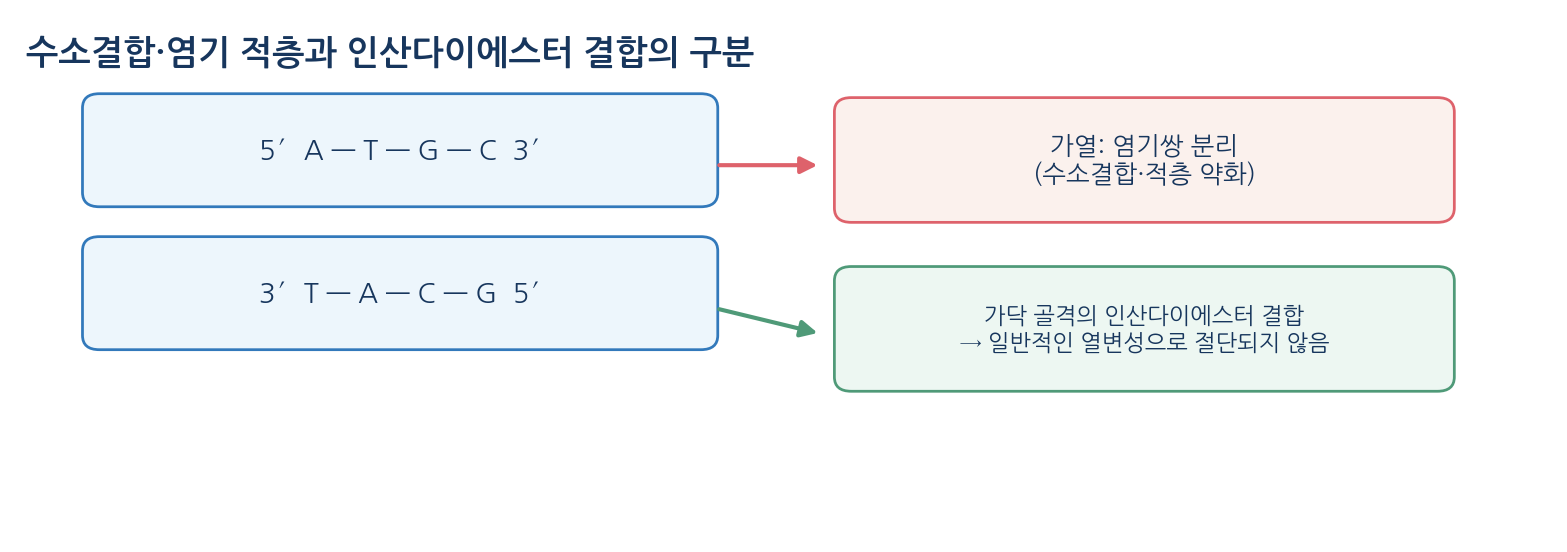
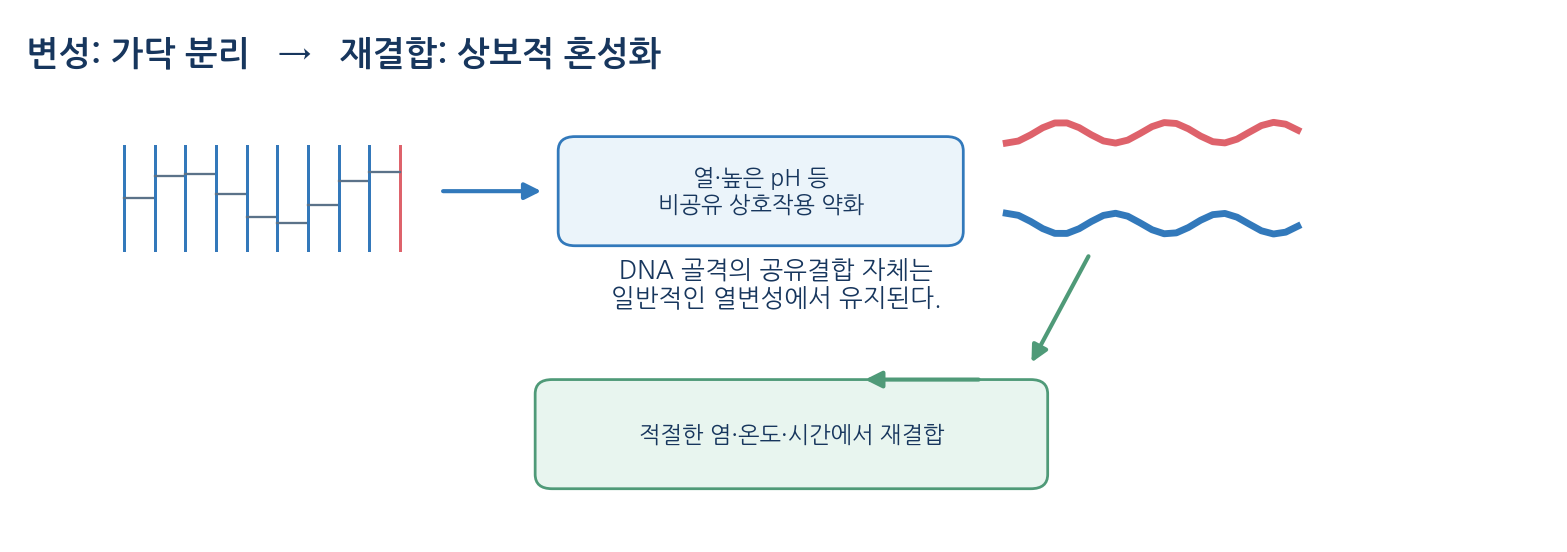
- Denaturation is the separation of complementary strands with loss of base pairing and stacking
- Heat, extreme pH and chemical denaturants all reduce duplex stability
- Phosphodiester bonds of the backbone stay intact, so denaturation and strand cleavage are different events
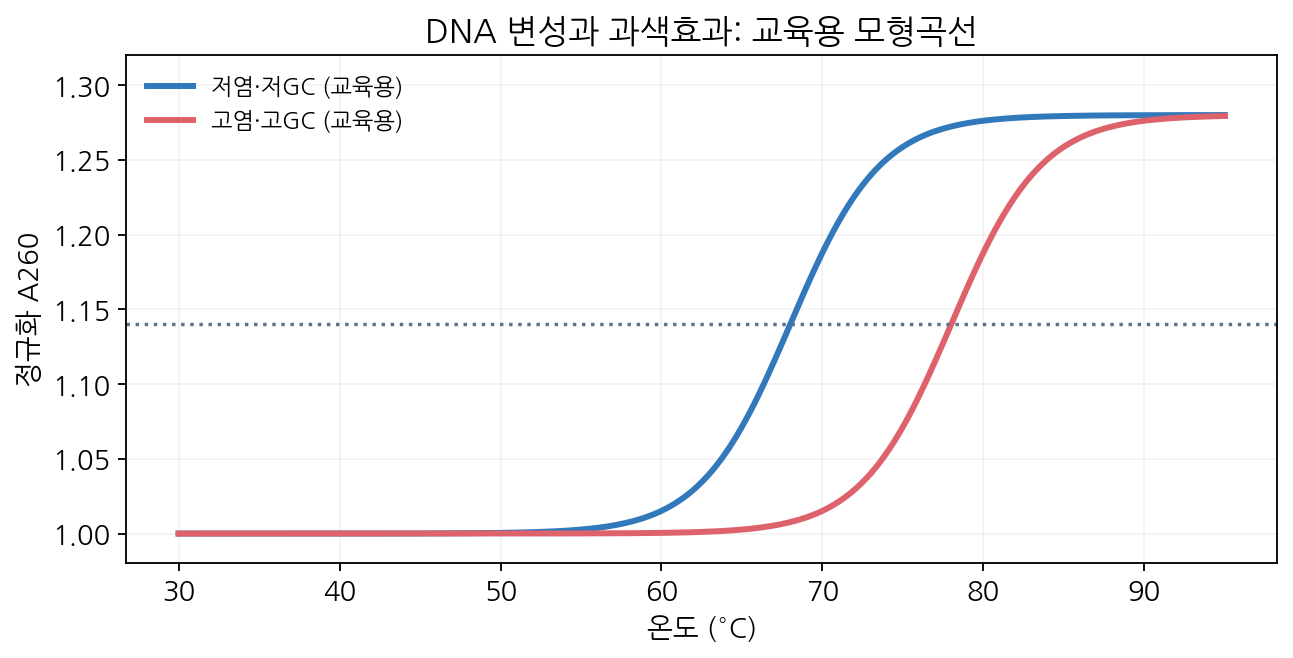
- Loss of stacking raises absorbance at 260 nm, the hyperchromic effect
- Tm is the temperature at which about half of the duplex is separated under the stated conditions
- Example: A260 rising from 1.00 to 1.28 is a 28 percent increase, and the midpoint 1.14 marks Tm for that model
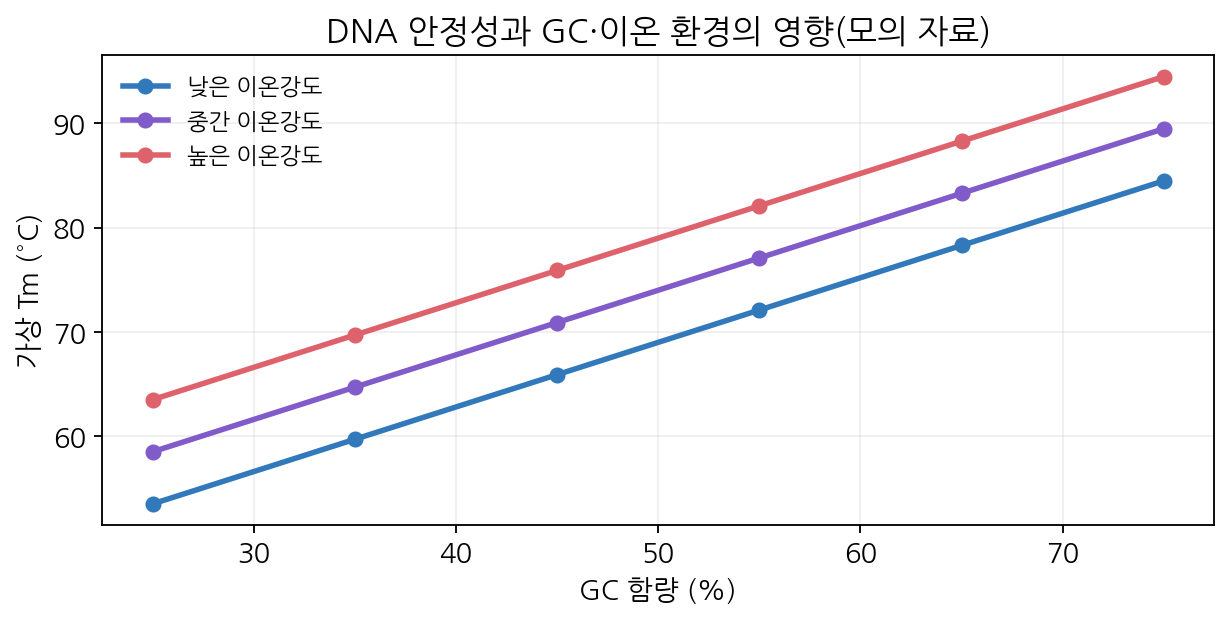
- GC content, stacking energy, base order and ionic screening of phosphates all set Tm
- Increasing ionic strength within a reasonable range tends to raise Tm
- Renaturation and hybridisation depend on complementarity, strand concentration, length, repeats and cooling rate, and cooling alone does not guarantee complete re-pairing
02
Nucleotides and nucleic acids undergo non-enzymatic change
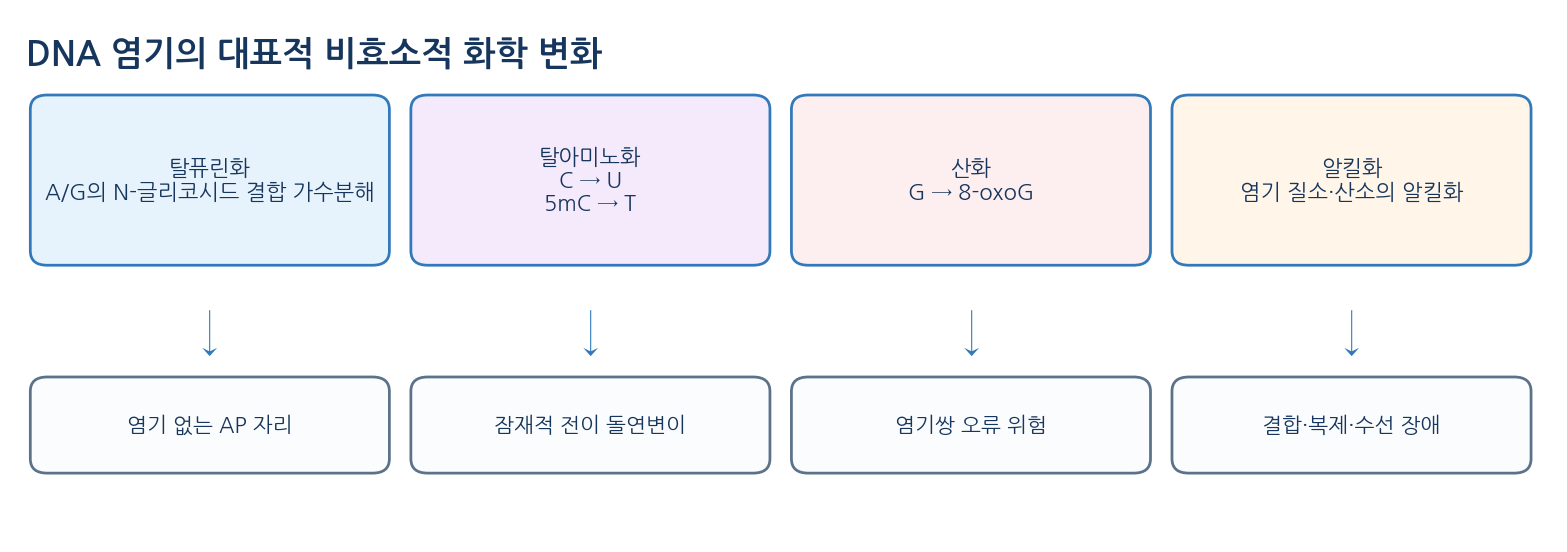
- Depurination is spontaneous hydrolysis of the N-glycosidic bond between adenine or guanine and deoxyribose, releasing the base
- The resulting AP site blocks replication and transcription and becomes a mutation if unrepaired
- Deamination of cytosine gives uracil, and failure to remove it fixes a base pair change at the next replication
- Deamination of 5-methylcytosine gives thymine, which is hard to distinguish from the normal base
- This is why methylated CpG sites are mutational hotspots in genomes
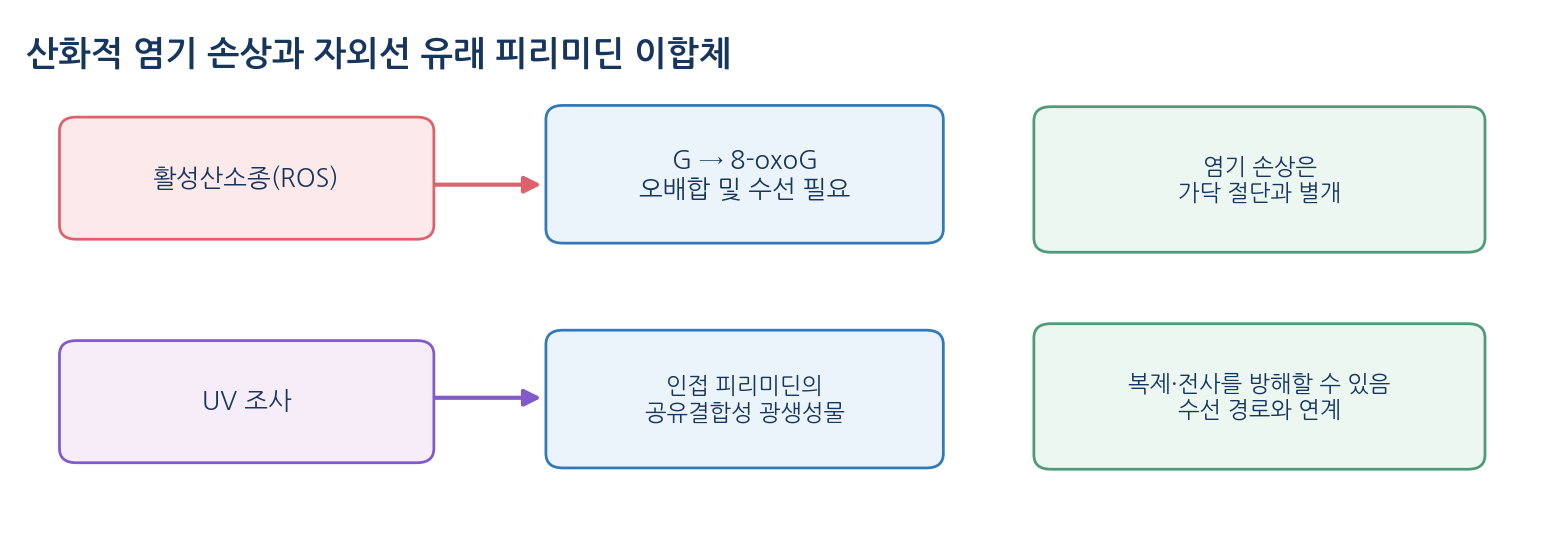
- Reactive oxygen species oxidise guanine to lesions such as 8-oxoguanine
- Ultraviolet light creates photoproducts between adjacent pyrimidines and alkylation adds groups to particular base atoms
- Damaged DNA can be repaired, but surviving damage becomes a fixed sequence change
- Base damage, a chemically altered molecular state, is not the same as a mutation, a sequence change fixed by replication
03
Some DNA bases are methylated
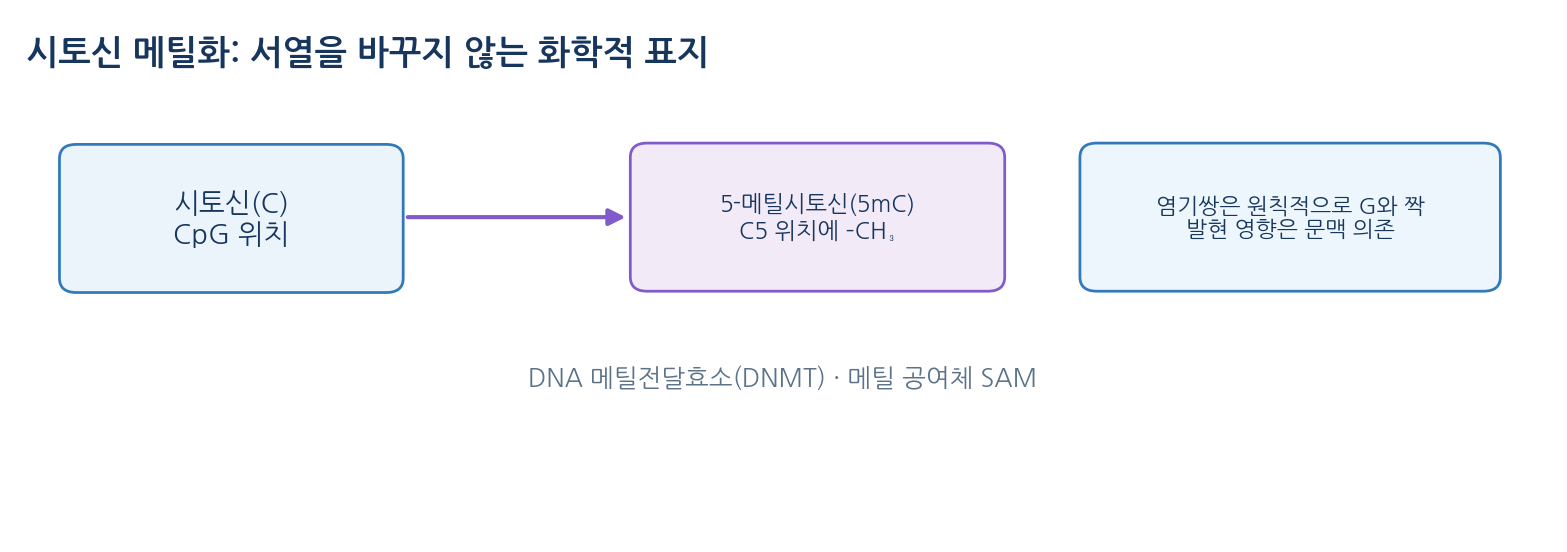
- 5-Methylcytosine carries a methyl group at C5 of cytosine, commonly at CpG dinucleotides in mammals
- DNA methyltransferases use S-adenosylmethionine as the methyl donor
- Methylated cytosine still pairs with guanine, so A, T, G, C notation alone cannot show methylation
- Methylation is linked to gene regulation, maintenance of cell identity, genomic imprinting and control of transposable elements
- Methylation does not always mean repression
- A change in expression does not prove that methylation is the direct cause without further experiments
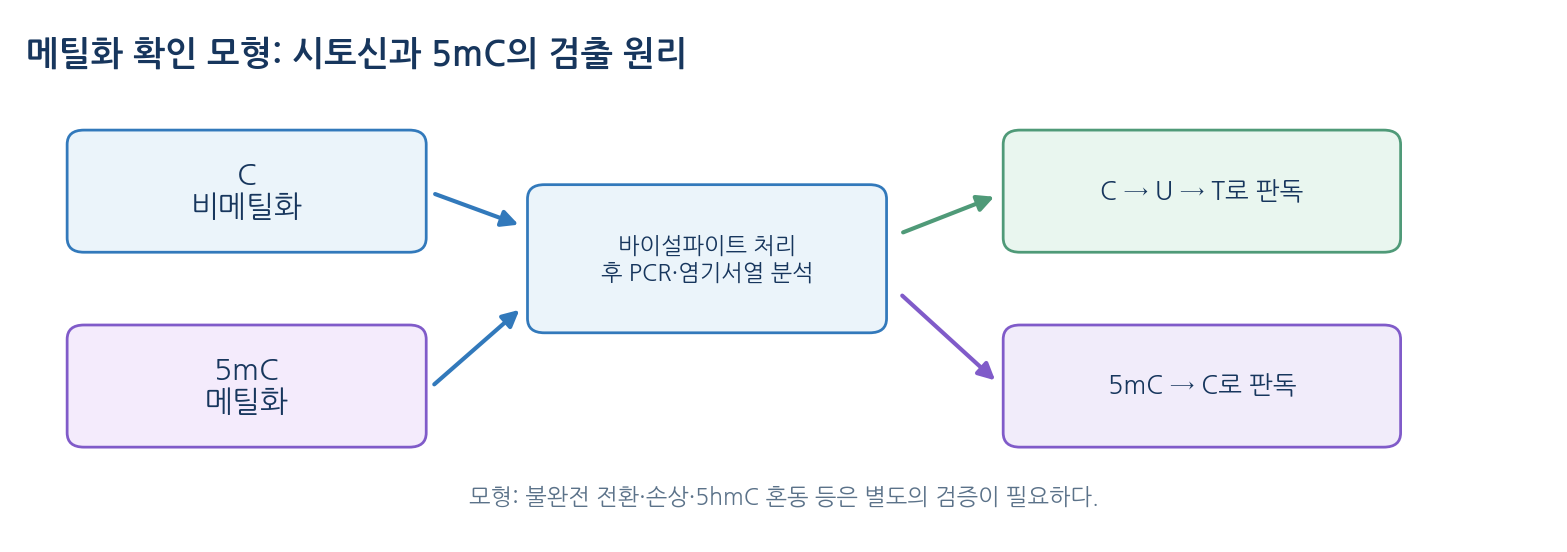
- In bisulfite treatment unmethylated cytosine is converted to uracil and read as T while 5mC is relatively preserved
- Incomplete conversion, sample damage and the distinction of 5-hydroxymethylcytosine need separate validation
- Example: 72 C and 28 T reads out of 100 give an estimated methylation fraction of about 72 percent
04
Chemical DNA synthesis is automated
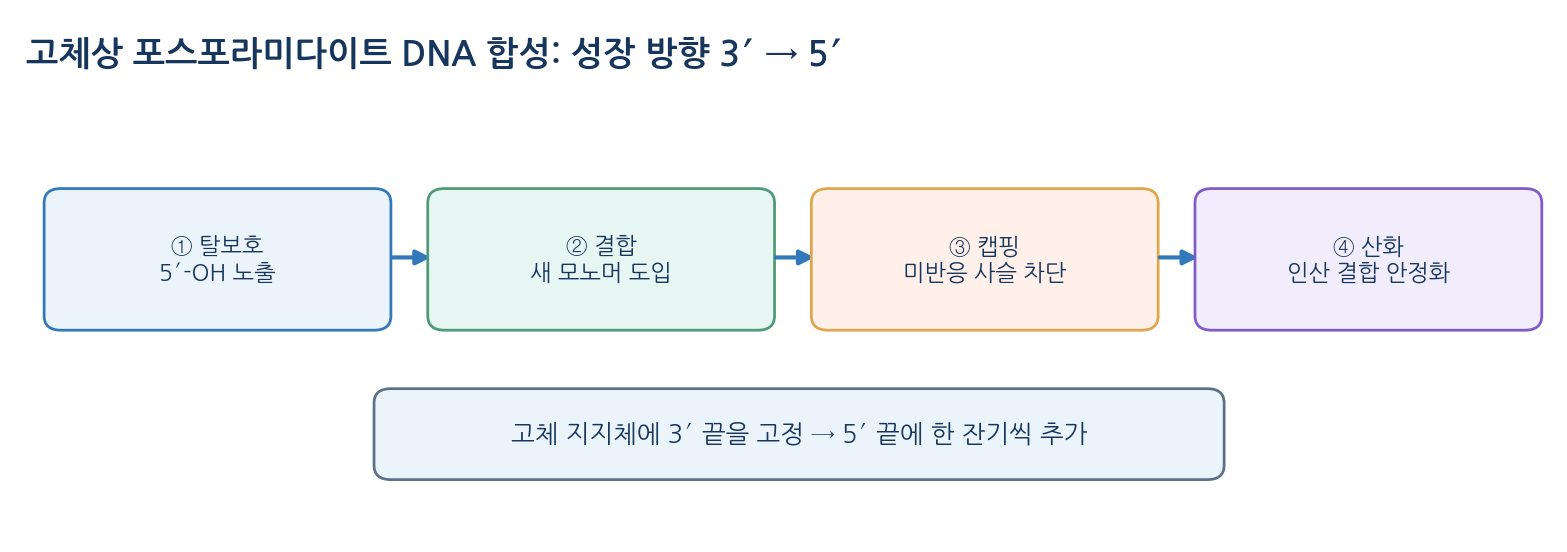
- The phosphoramidite method grows an oligonucleotide on a solid support by adding one protected monomer at a time
- Synthesis starts at the support-bound 3-prime end and grows toward 5-prime, so assembly runs 3-prime to 5-prime
- Biological DNA polymerases add nucleotides to a 3-prime OH and synthesise 5-prime to 3-prime, the opposite direction
- The cycle is 5-prime DMT deprotection, coupling of the activated monomer, capping of unreacted 5-prime OH and oxidation of the phosphite
- Capping prevents unreacted chains from being extended further
- Work-up requires deprotection, cleavage from the support, purification and quality checking
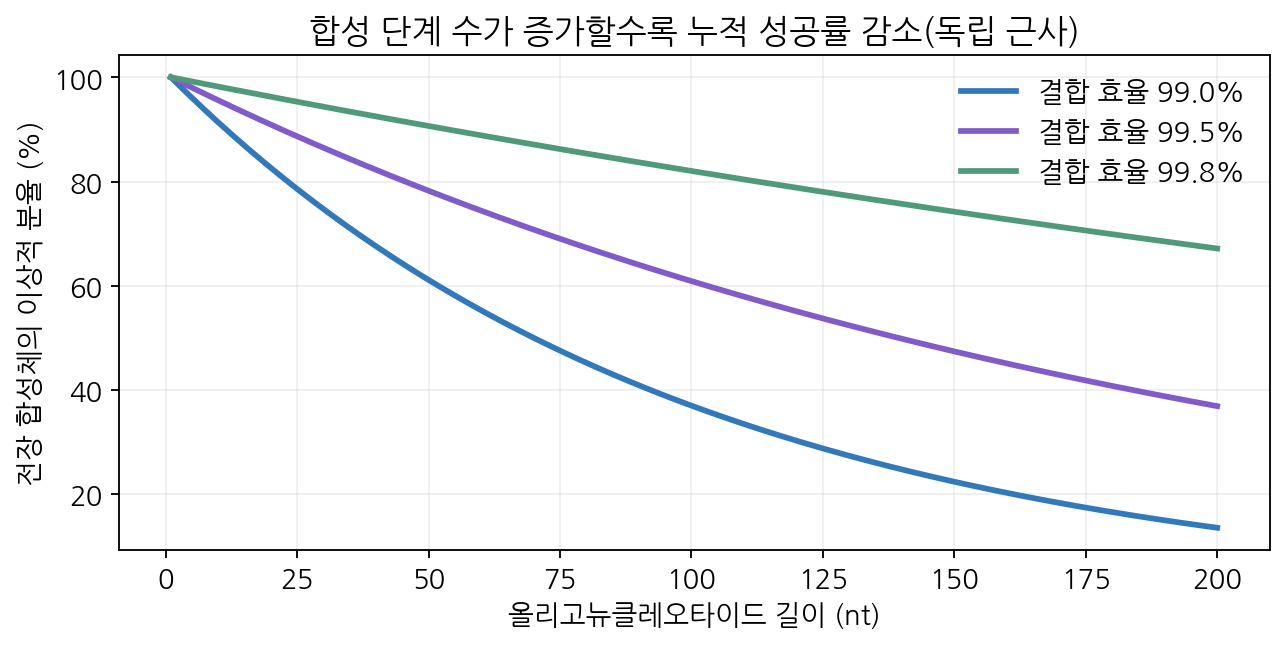
- With per-coupling success p, all n minus 1 couplings succeed with probability p to the power n minus 1
- Example: 99.5 percent over 49 couplings for a 50 nt oligo gives 0.995 to the 49th, about 78.2 percent
- That figure is an idealised upper bound that ignores losses in later steps
05
Gene sequences can be amplified by PCR
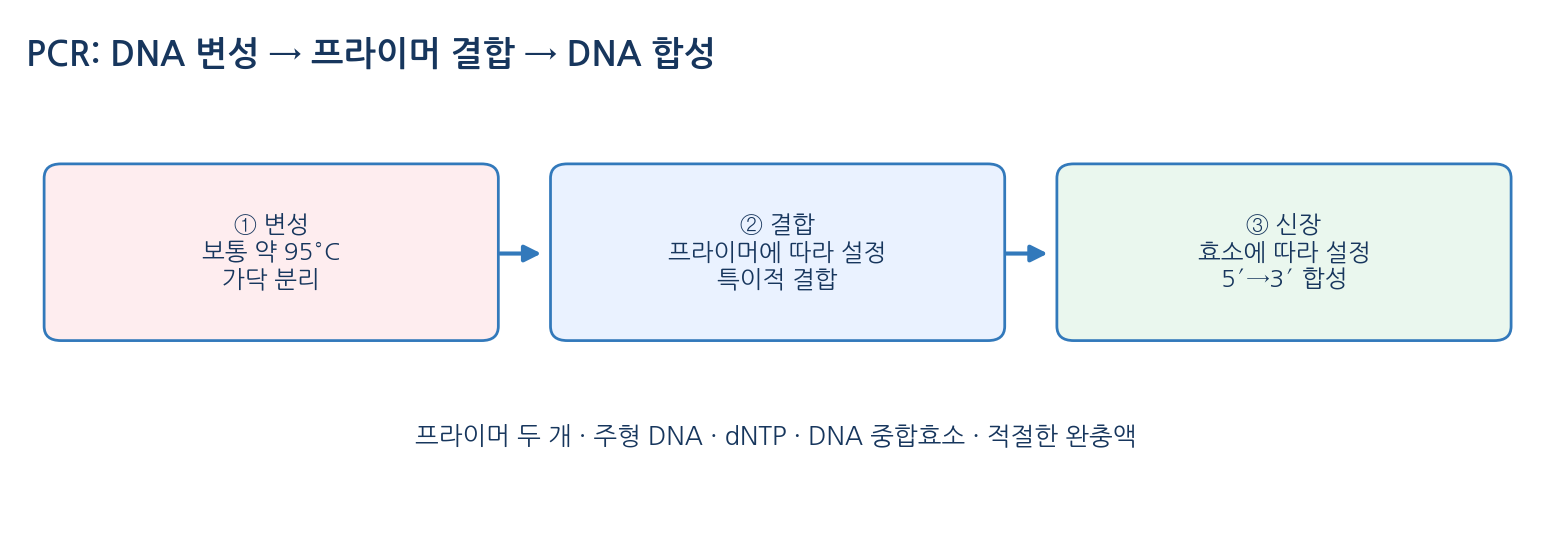
- PCR repeatedly amplifies a target region with two primers flanking it and a thermostable DNA polymerase
- The reaction needs template, primers, dNTPs, Mg2+, buffer and polymerase
- One cycle is denaturation, annealing and extension
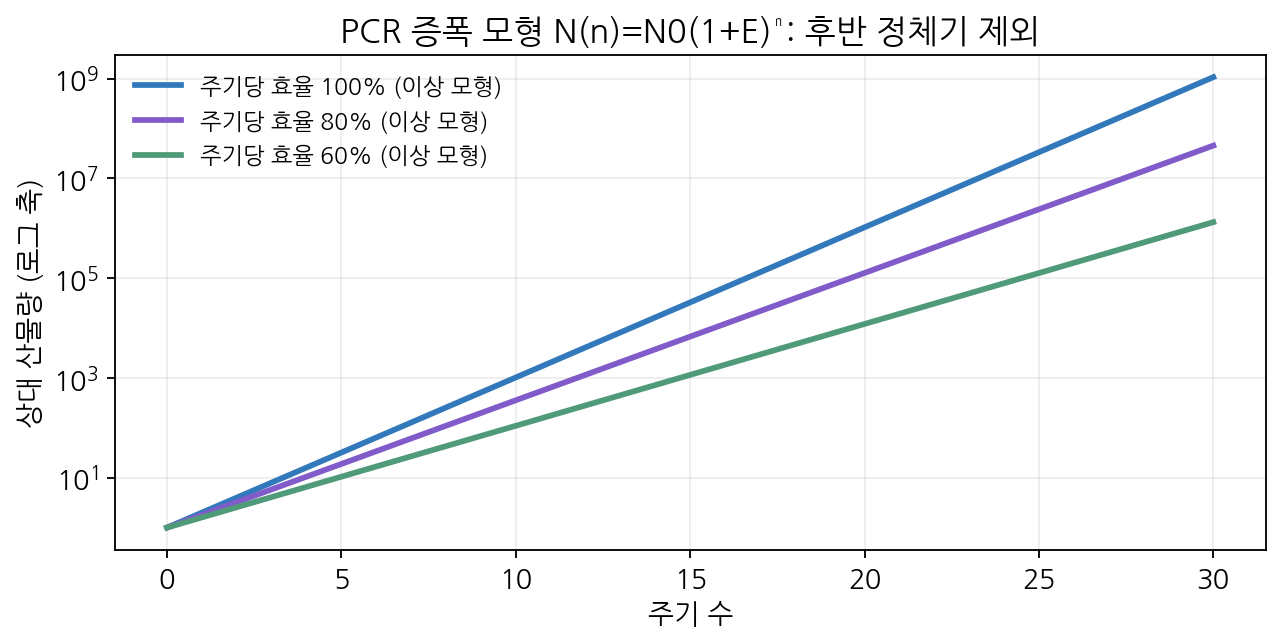
- Under ideal conditions Nn = N0 times 2 to the n, and with efficiency E the form N0(1+E) to the n applies
- Real reactions run below 100 percent efficiency and approach a plateau as product accumulates
- Example: 10 molecules over 20 cycles gives 10,485,760, and E of 0.80 gives about 1,274,823
- A positive control checks that the reaction works and a no-template control detects contamination
- A band of the expected size suggests product but does not confirm the exact sequence
- Contamination control and, when needed, product purification and sequencing are essential
06
Long DNA strands can be sequenced
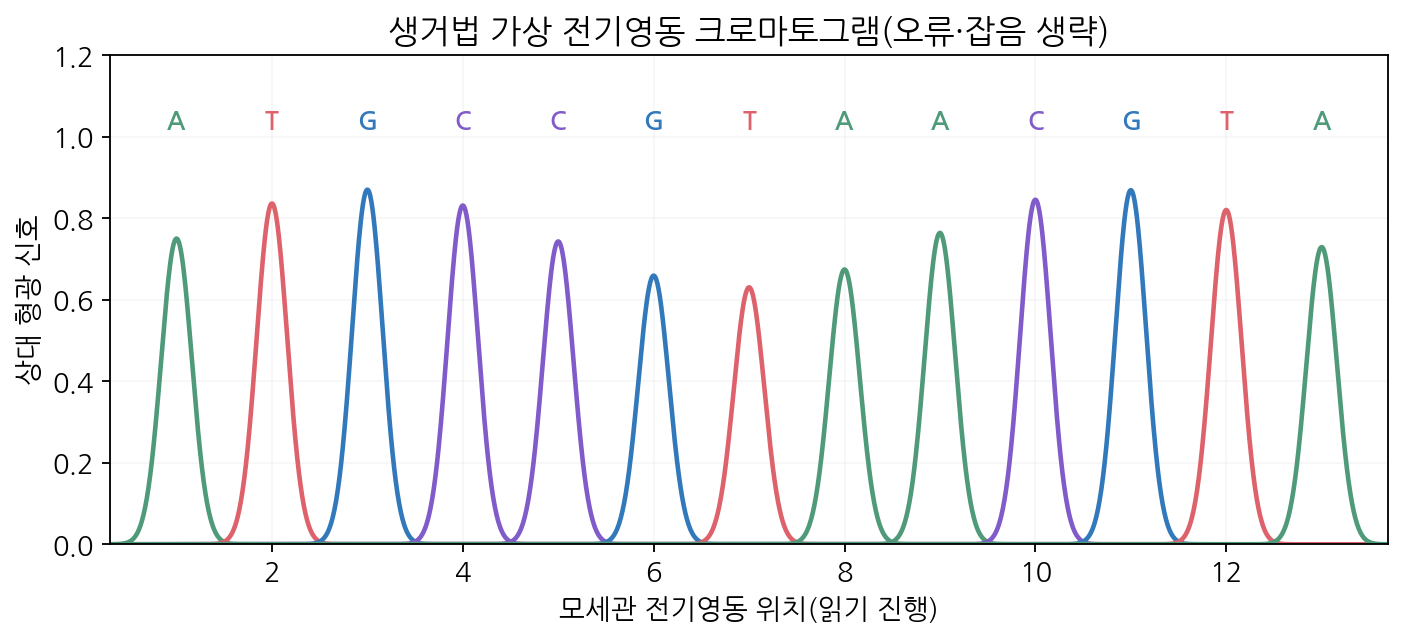
- In Sanger sequencing a ddNTP lacks a 3-prime OH, so once incorporated the next phosphodiester bond cannot form and extension stops
- Fluorescent fragments of different length are separated by capillary electrophoresis and read in signal order
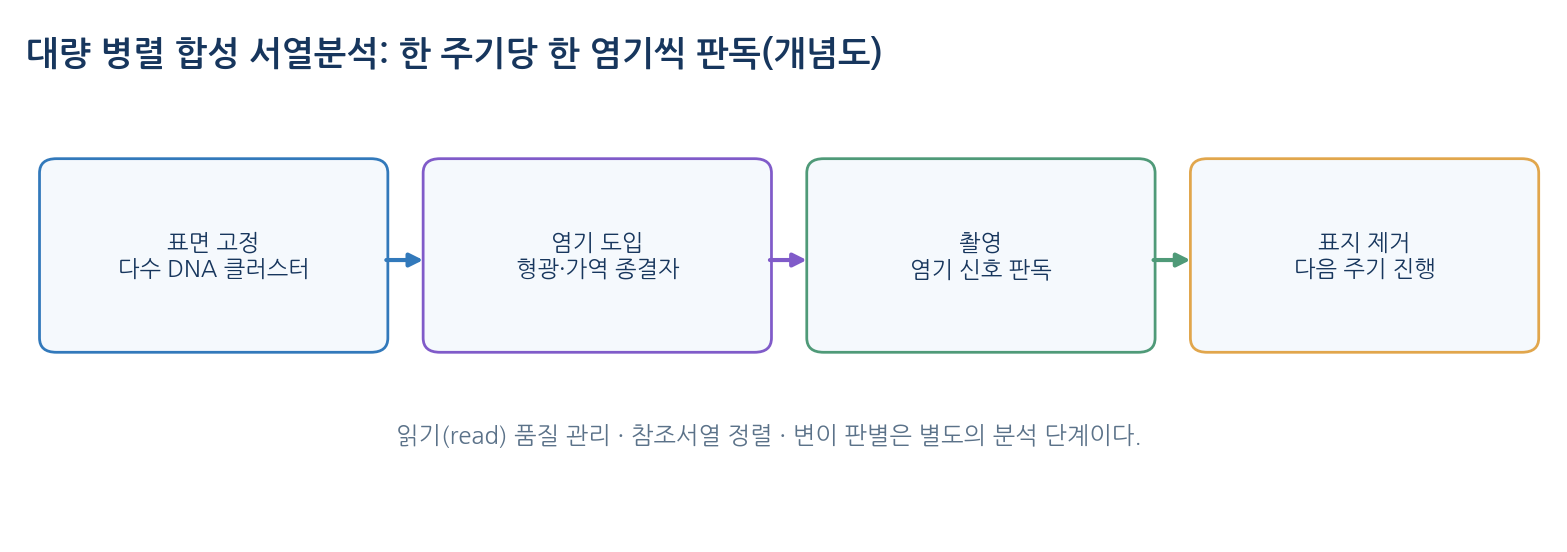
- NGS builds an adapter-ligated library and reads many surface-amplified clusters in parallel
- Reversible terminators incorporate one base per cycle, measure fluorescence, then remove label and blocking group
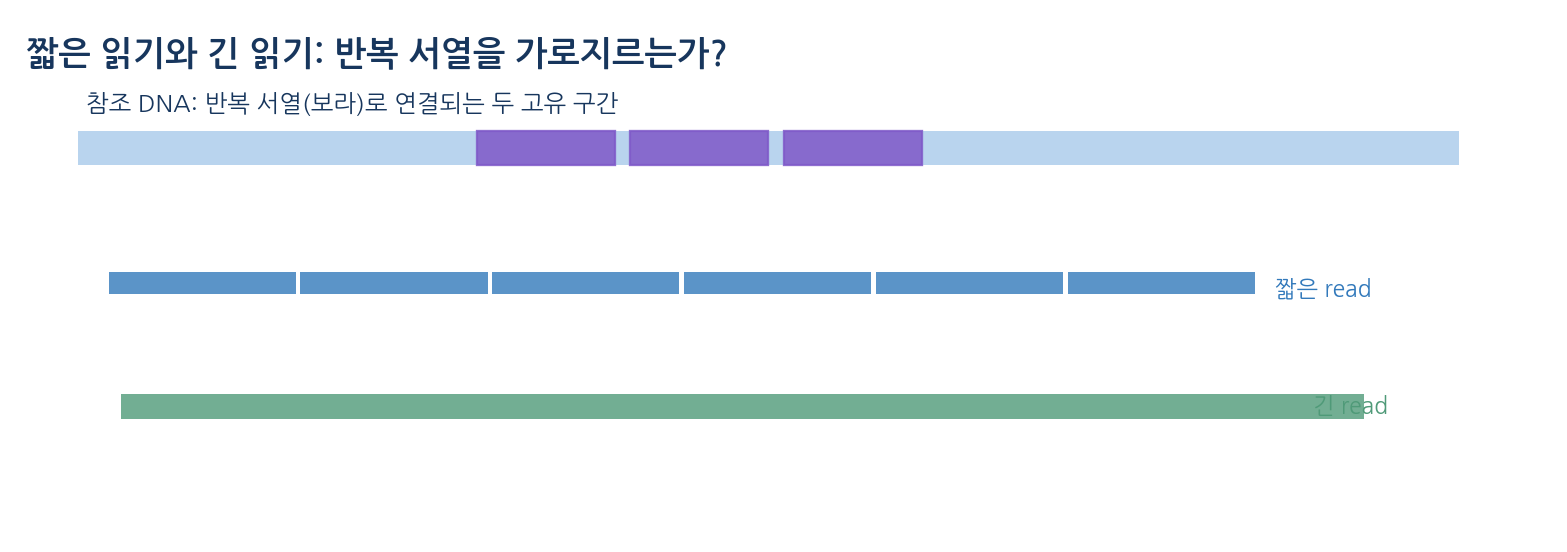
- Short reads struggle to assign position within long repeats
- Long reads span a repeat and its unique flanks, which improves assembly
- Longer reads are not automatically more accurate per base
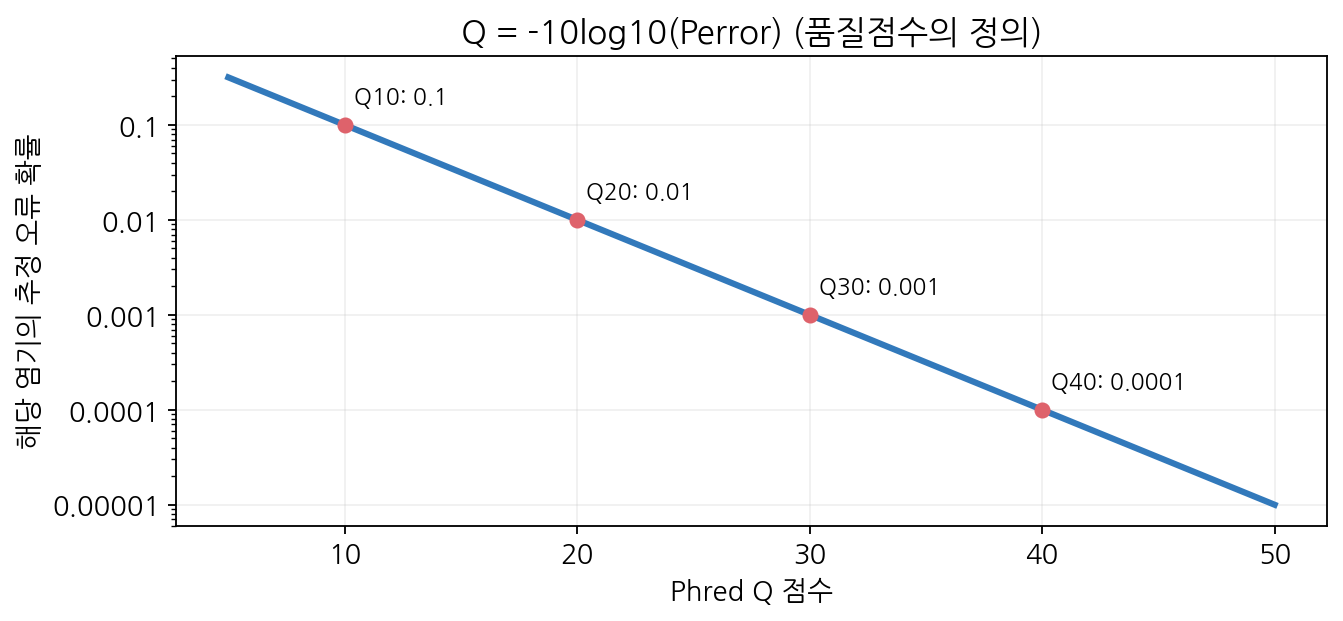
- The Phred score is Q = -10 log10 of the error probability, with Q20 at 0.01 and Q30 at 0.001
- Example: at Q30 the expected number of misreads in 1,000 bases is one, though a given read need not contain exactly one error
07
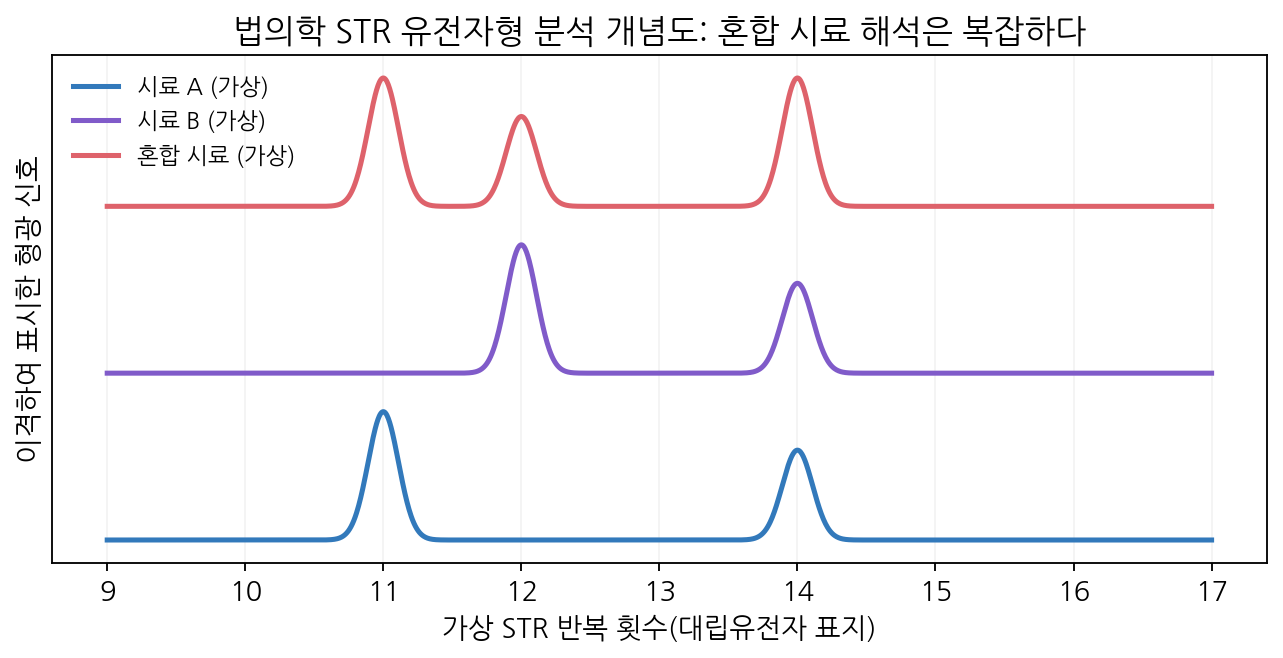
[Separate note 8-1] A powerful tool in forensic science
- A short tandem repeat is a sequence repeated several times whose count varies between individuals and gives discriminating power
- Forensic work analyses allele length by PCR amplification and capillary electrophoresis
- A match at one locus or in some peaks cannot identify an individual
- Mixtures and trace samples require attention to allele drop-out, stutter, contamination and secondary transfer
- A matching genotype does not by itself show who did what
- Courts and investigations must weigh method suitability, sample records, population allele frequencies and statistics
08
Sequencing technology continues to advance
- Scope has widened from single genes to whole genomes, transcriptomes, single cells and epigenetic marks
- Short and long reads complement rather than replace one another and are chosen by aim
- Long reads suit repeats and large structural variants while massively parallel short reads suit targeted variant screening across many samples
- Method choice balances accuracy, read length, cost and sample amount
References
| Variable | Typical effect | Condition to check |
|---|---|---|
| Higher GC content | Tends to raise Tm at similar length and conditions | Neighbouring pair order still matters |
| Higher salt concentration | Screens phosphate repulsion and tends to raise Tm | Extreme salt and specific ions need separate assessment |
| Longer strand | Strong effect on stability for short duplexes | Do not mix equations for long DNA and oligos |
| Mismatched base pair | May lower local stability | Depends on the type and position of the mismatch |
| Extreme pH | Changes base state and pairing | Strand separation differs from backbone damage |
| Chemical change | Molecular change | Potential outcome |
|---|---|---|
| Depurination | Hydrolysis of the purine-sugar N-glycosidic bond | Formation of an AP site |
| Deamination | C to U, 5mC to T | Possible base substitution at replication |
| Oxidation | Formation of 8-oxoG and related lesions | Mispairing and greater repair burden |
| Ultraviolet damage | Photoproducts between adjacent pyrimidines | Blocks to replication and transcription |
| Alkylation | Alkyl group added to a base | Altered pairing or cross-linking |
| Method | Main information obtained | Typical strength | Caution in interpretation |
|---|---|---|---|
| PCR with a gel | An amplified product of a given size | Simple target detection | Exact sequence needs separate confirmation |
| Sanger | Base order of terminated fragments by length | Confirms a single target sequence | Limited for mixtures and long complex regions |
| Short-read NGS | Many short reads in parallel | Many samples and loci at once | Repeats, bias and mapping ambiguity |
| Long-read sequencing | Relatively long connectivity information | Links structural variants and repeat regions | Data quality and sample length must be managed |
| STR profile | Allele signals from repeat number | Statistical information for identification | Mixtures and the strength of evidence |