01
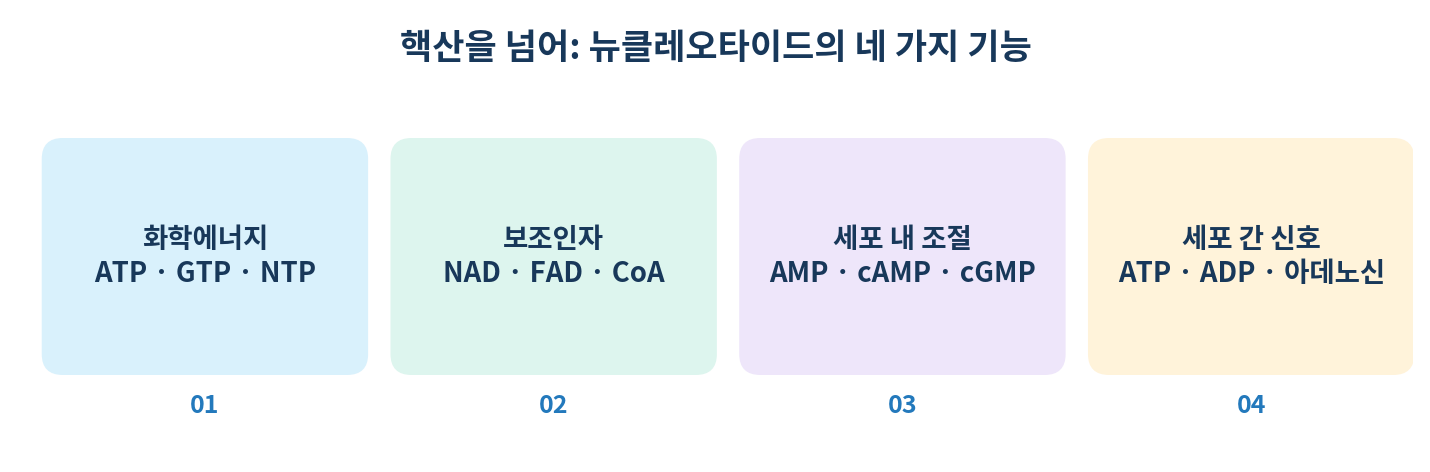
Nucleotides carry chemical energy in cells
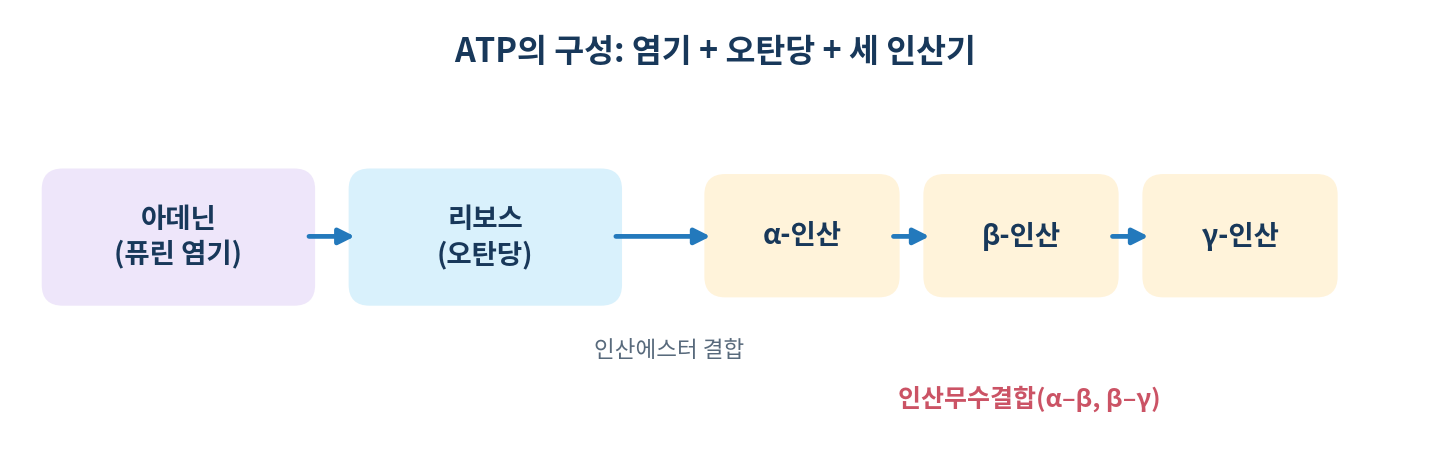
- ATP is adenine plus ribose plus three phosphates, alpha, beta and gamma
- The ribose 5-prime oxygen to alpha phosphate is a phosphoester, and alpha-beta and beta-gamma are phosphoanhydride bonds
- ATP exists as several species including Mg2+ complexes, and enzymes distinguish between them
- The phrase high-energy phosphate bond means only that hydrolysis has a large negative free energy
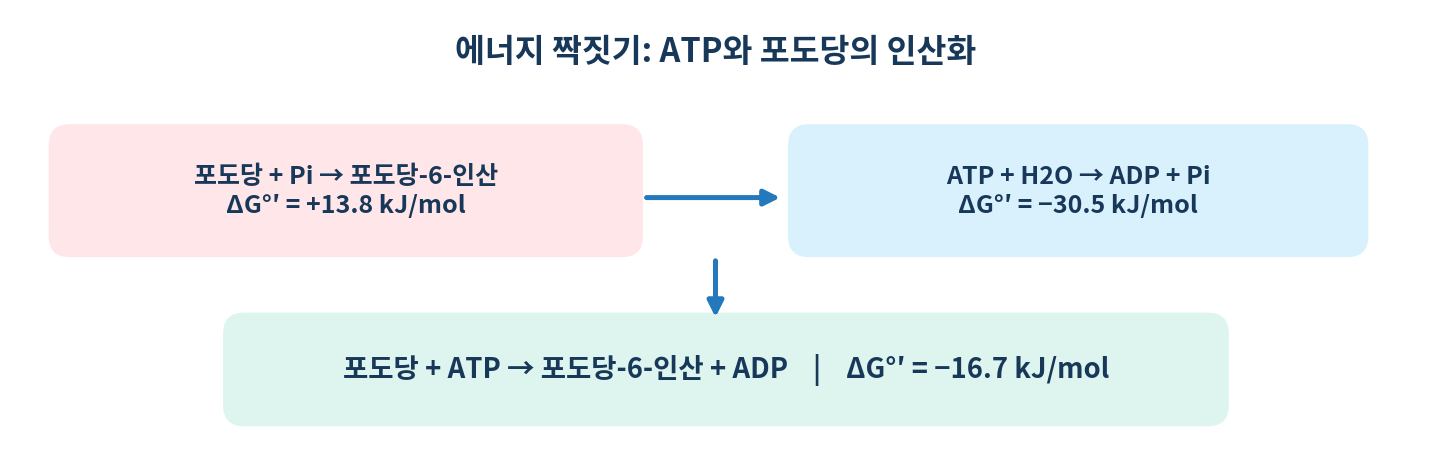
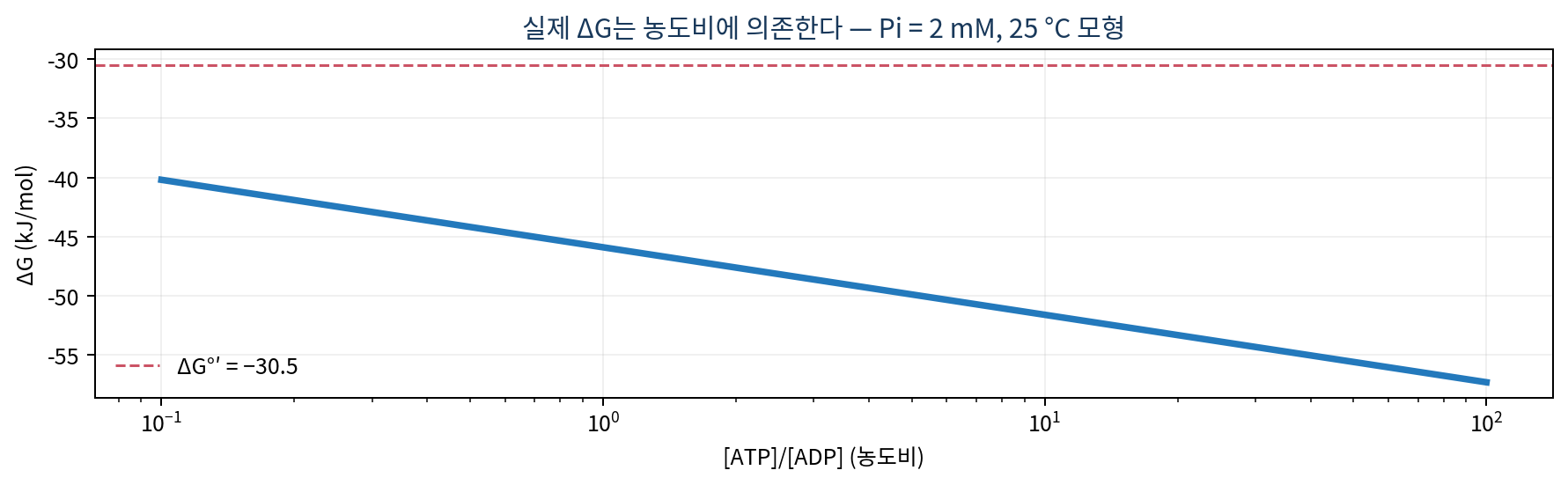
- ATP plus water to ADP plus Pi has ΔG°′ near -30.5 kJ/mol
- The actual ΔG depends on substrate and product concentrations, Mg2+, pH and ionic strength
- Glucose phosphorylation at ΔG°′ near +13.8 kJ/mol proceeds through hexokinase with ATP, giving a combined ΔG°′ near -16.7 kJ/mol
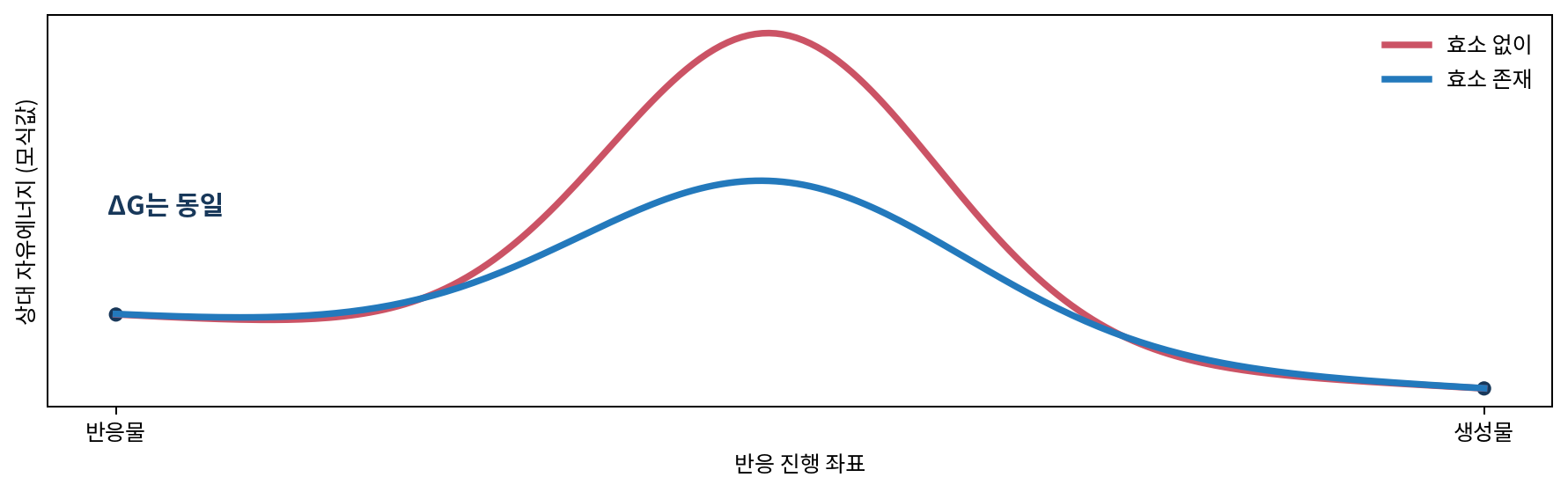
- Coupling works through a shared intermediate and an enzyme reaction, not by adding free energies in one vessel
- ΔG = ΔG°′ + RT ln Q, where Q for ATP hydrolysis is [ADP][Pi] divided by [ATP]
- Example: 3.0, 0.50 and 2.0 mM give Q near 3.33e-4 and ΔG near -50.3 kJ/mol
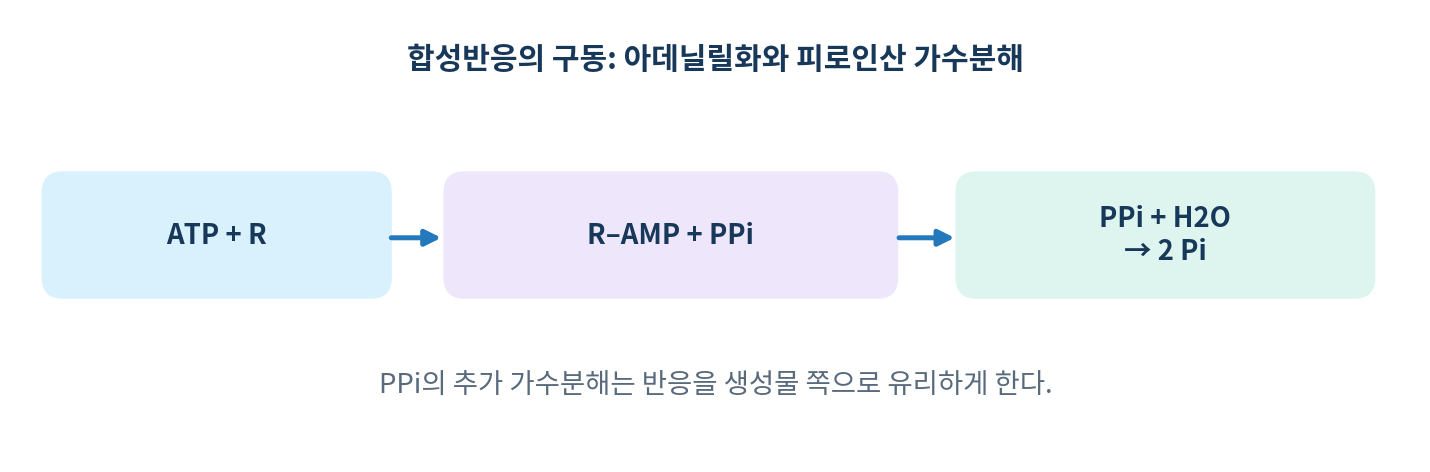
- ATP to AMP plus PPi differs from ATP to ADP plus Pi, and the following PPi hydrolysis makes the overall direction favourable
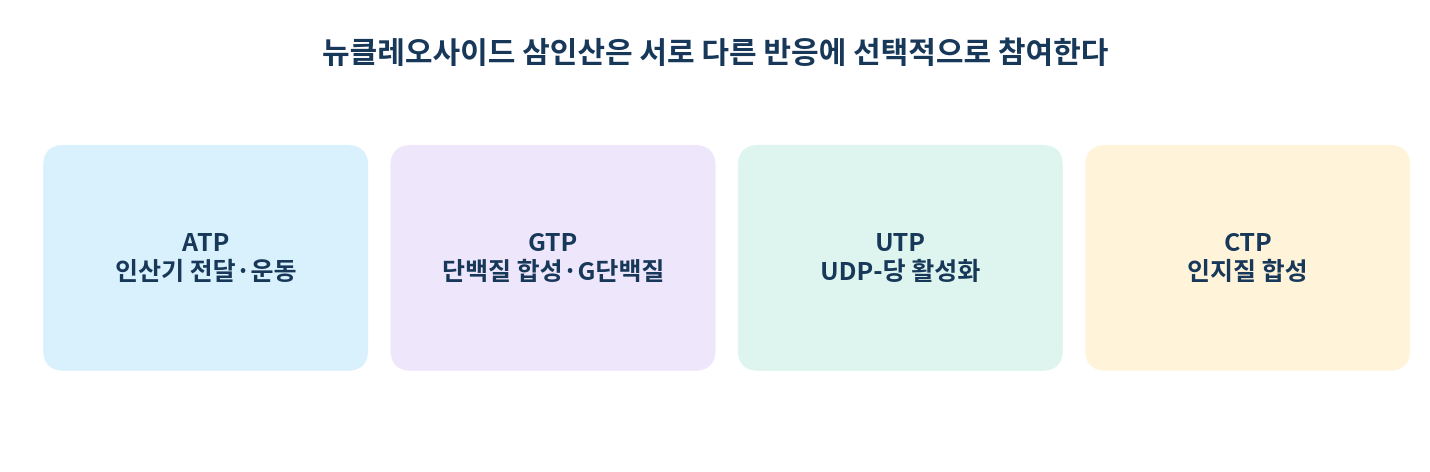
- GTP serves translation and G protein switching, UTP forms activated sugar precursors and CTP serves lipid synthesis
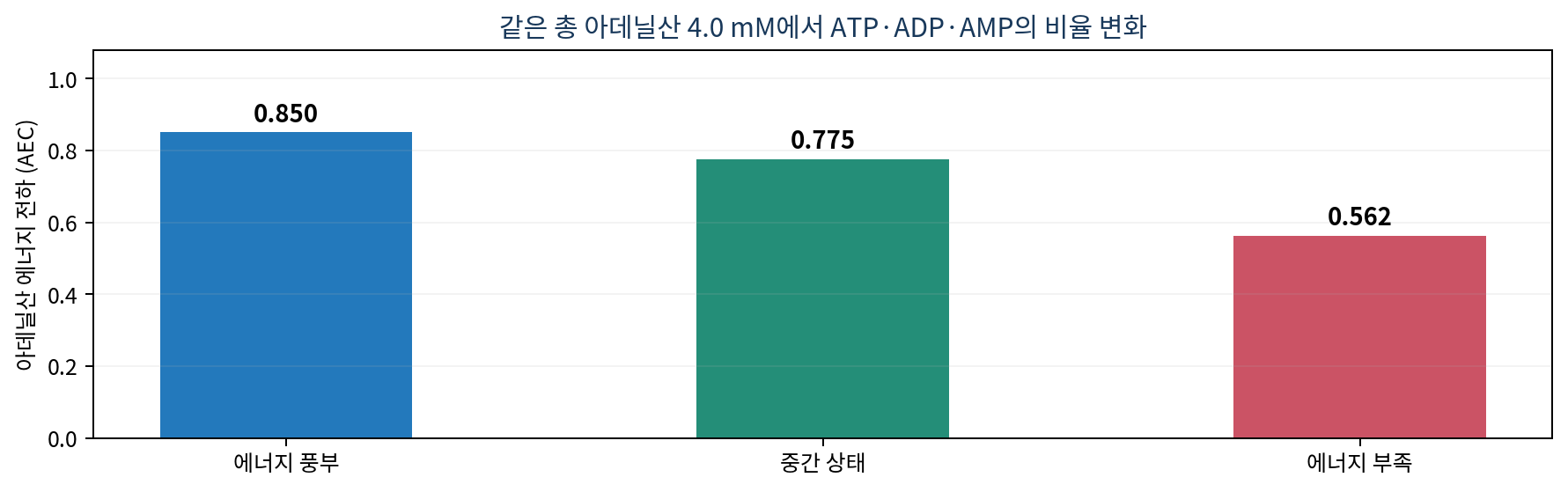
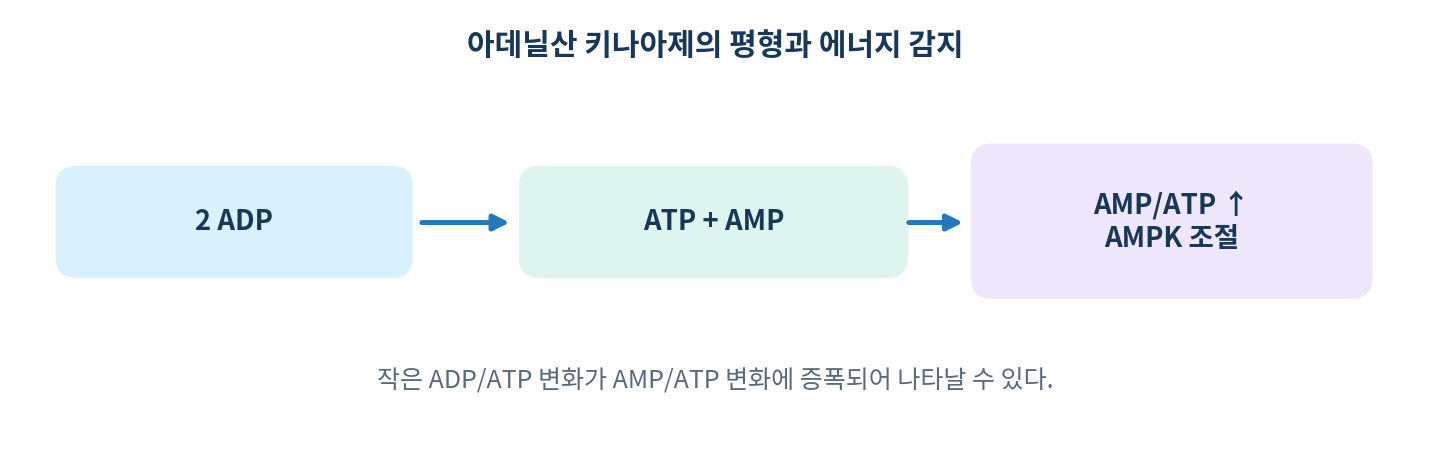
- The adenylate energy charge is ([ATP] + 0.5[ADP]) divided by the adenylate total, ranging from 0 to 1
- Example: 3.0, 0.8 and 0.2 mM give 0.85 while 1.5, 1.5 and 1.0 mM give 0.5625
- Energy charge summarises an instant of energy status and does not replace the actual flux of every pathway
02
Adenine nucleotides are components of many coenzymes
- Coenzymes are organic molecules that assist catalysis by carrying electrons, hydrogen or acyl groups
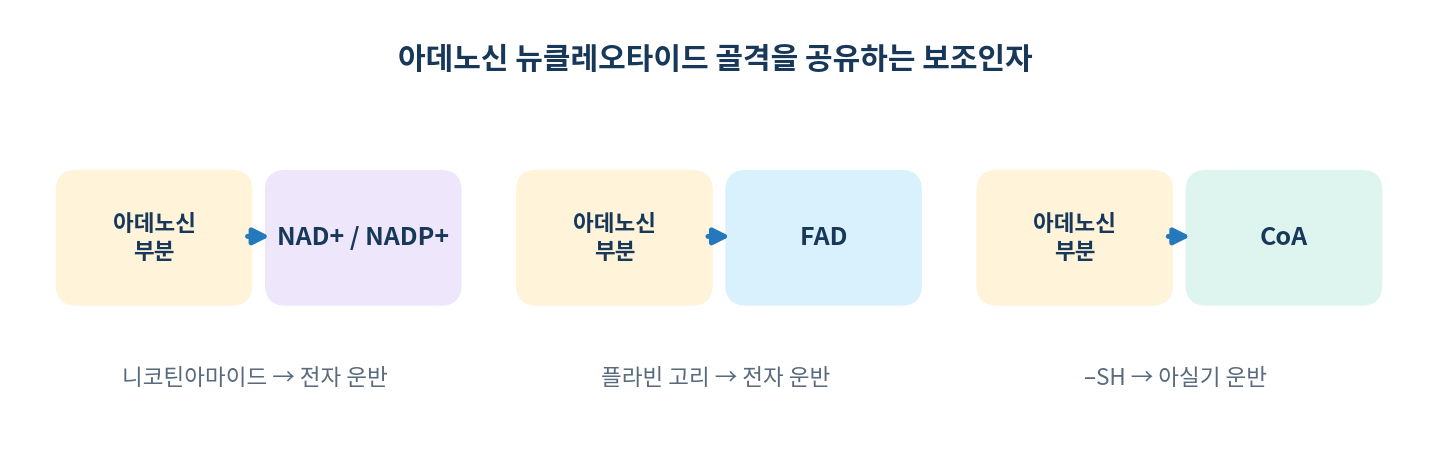
- NAD+, NADP+, FAD and coenzyme A differ in structure and role yet all contain an adenosine nucleotide portion
- The adenosine part mainly supports binding and recognition while the reactive centre is the nicotinamide, flavin or thiol
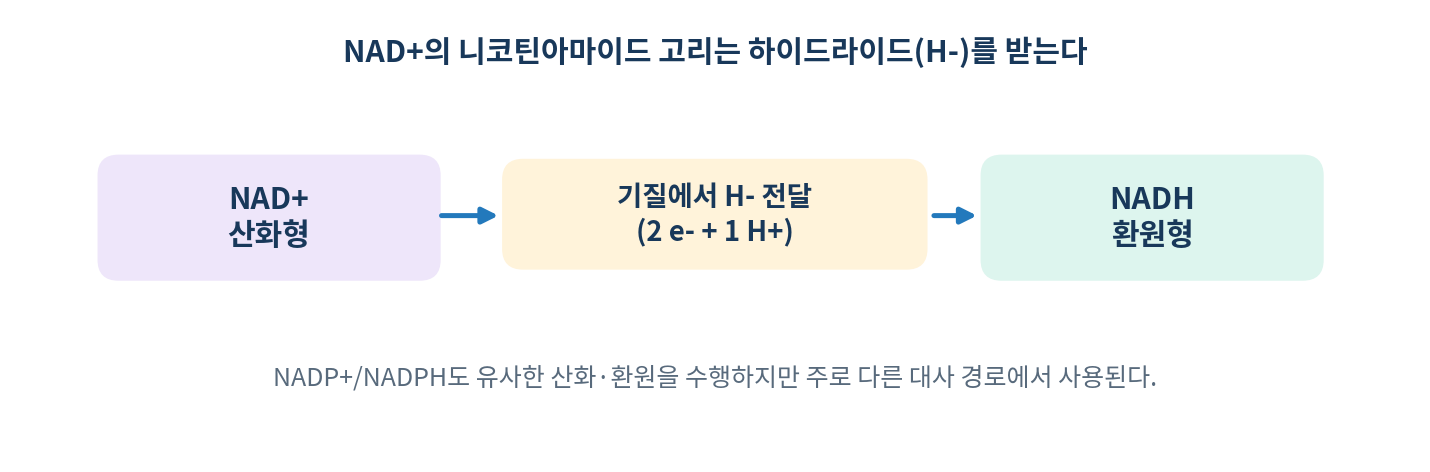
- NAD+ accepts a hydride from substrate and becomes NADH
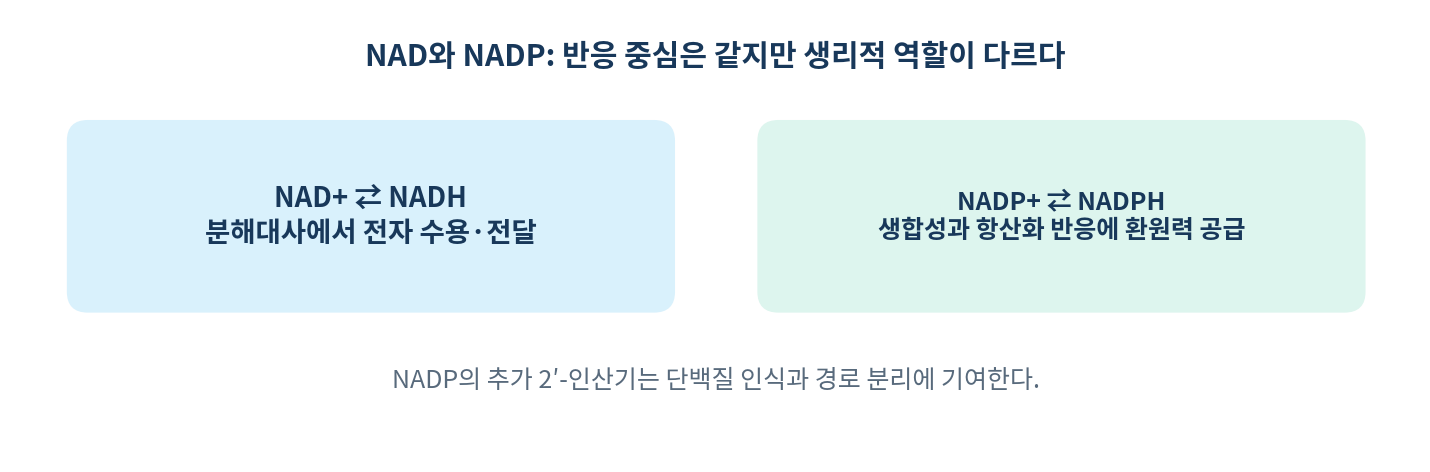
- NADP+ carries an extra phosphate on the ribose 2-prime at the adenosine end, and that phosphate does not take part in the redox step
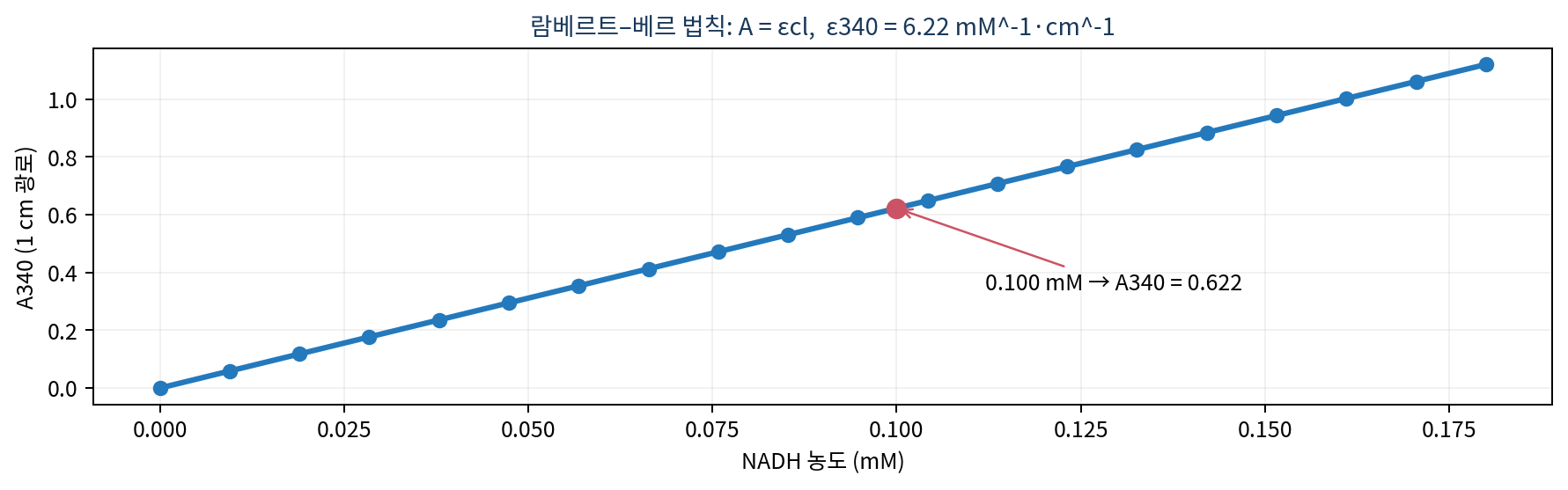
- NADH and NADPH absorb at 340 nm while the oxidised forms absorb little there
- Because 340 nm is ultraviolet, equipment and cuvettes capable of UV detection are required
- Example: A340 of 0.622 with a 1.00 cm path and epsilon 6.22 gives 0.100 mM, and a fourfold diluted sample corresponds to 0.400 mM
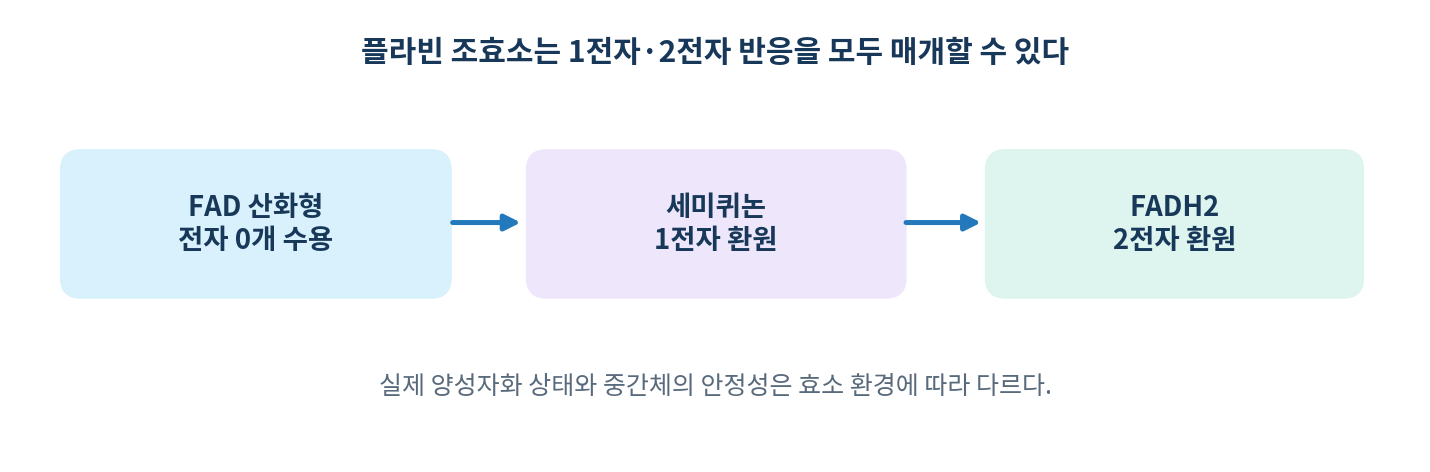
- FAD carries out two-electron, two-proton reduction through the flavin ring and can also occupy a semiquinone state
- FAD often acts as a tightly bound prosthetic group
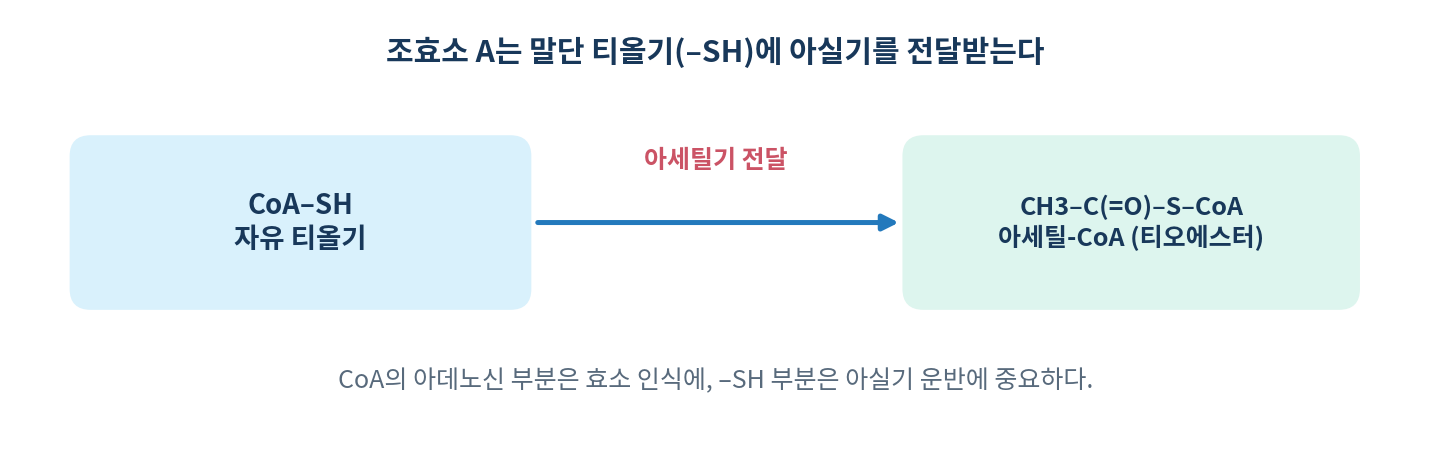
- Coenzyme A carries acyl groups as thioesters through its terminal SH
- Following NADH absorbance cannot monitor every reaction, only those in which it participates
03
Some nucleotides act as regulatory molecules
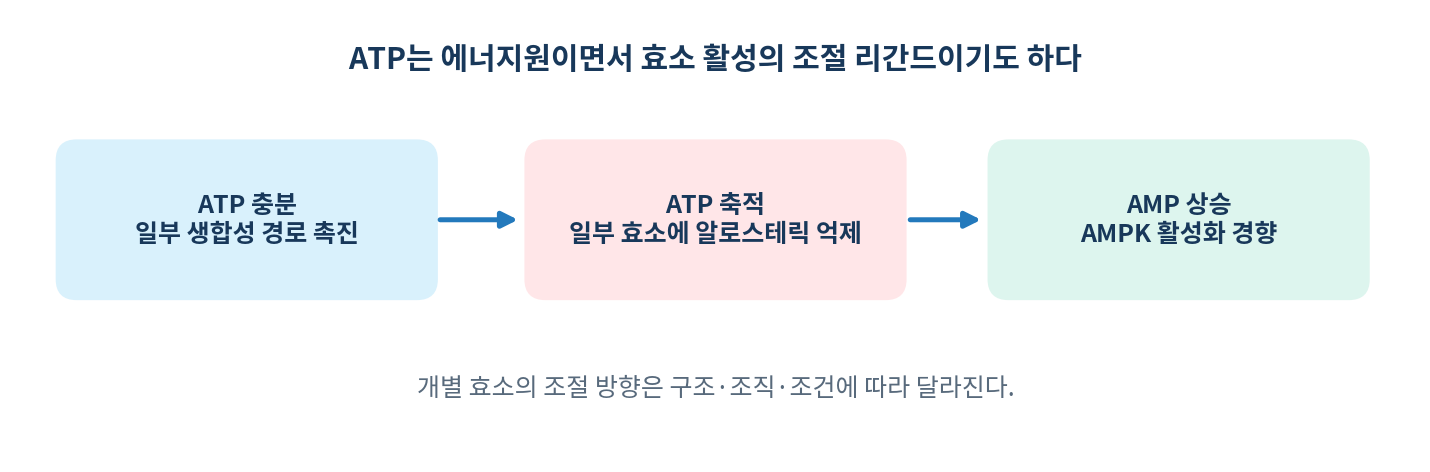
- ATP is a phosphate donor and also binds allosteric sites on some regulatory enzymes
- PFK-1 uses ATP as a substrate yet is inhibited through a separate regulatory effect when ATP is plentiful
- AMP signals metabolic status and AMPK senses AMP, ADP and ATP ratios together with phosphorylation state
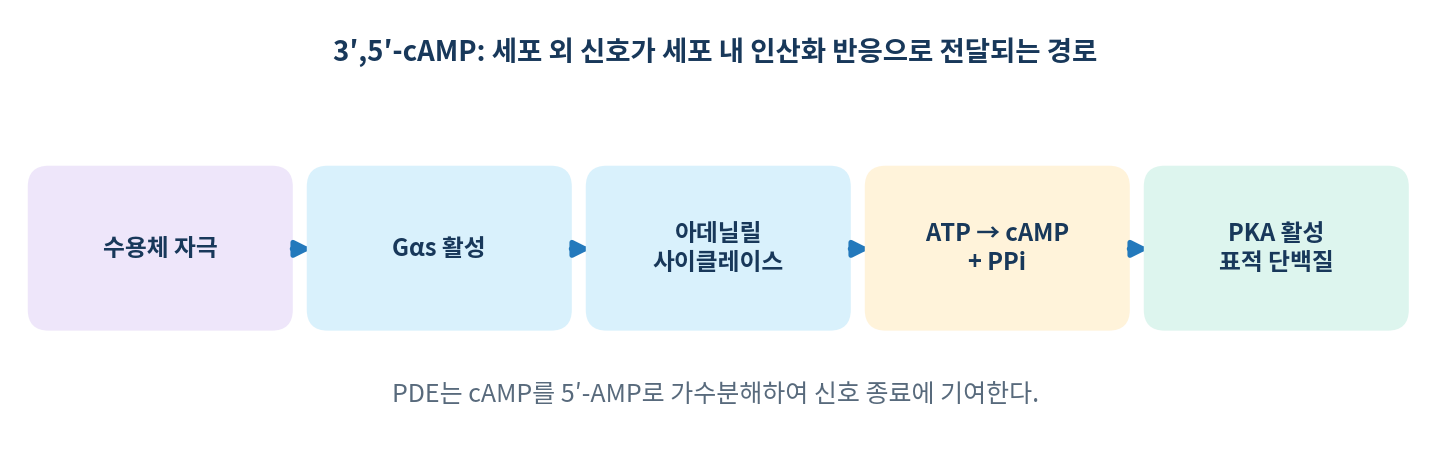
- A GPCR activates G-alpha-s, which stimulates adenylyl cyclase to make cAMP and PPi
- cAMP regulates PKA, EPAC and some ion channels
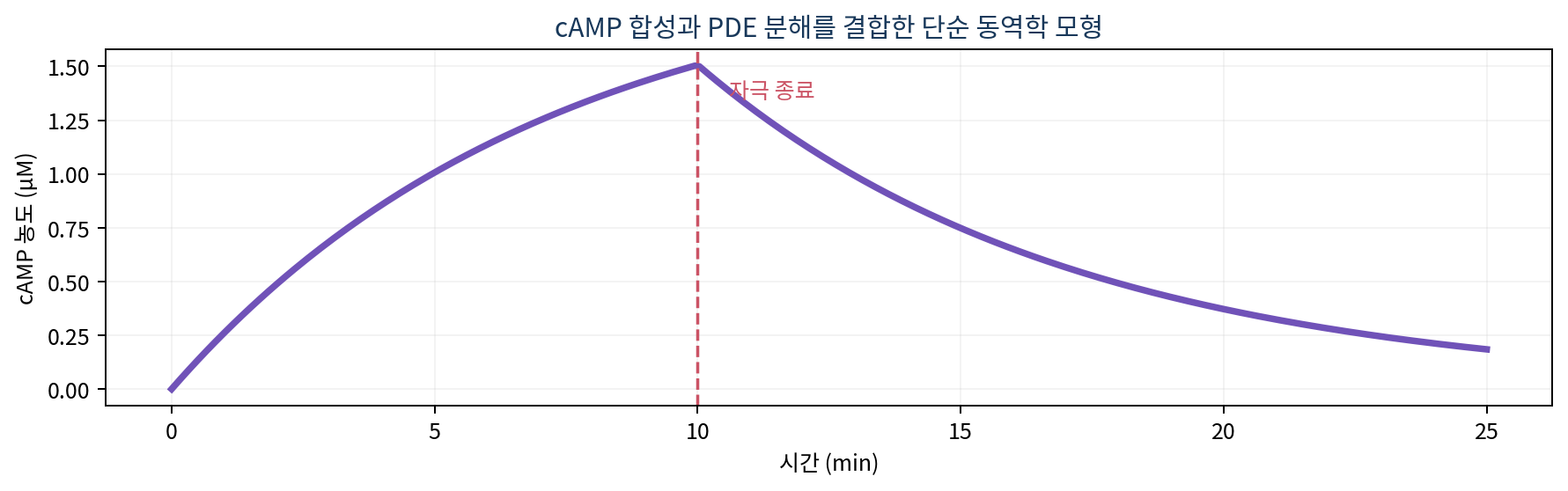
- With dc/dt = p - kc the steady state is p/k, and after the stimulus ends the level decays exponentially with half-life ln2/k
- Example: k of 0.14 per minute gives a half-life near 4.95 minutes, and 1.5 micromolar falls to about 0.370 micromolar after 10 minutes
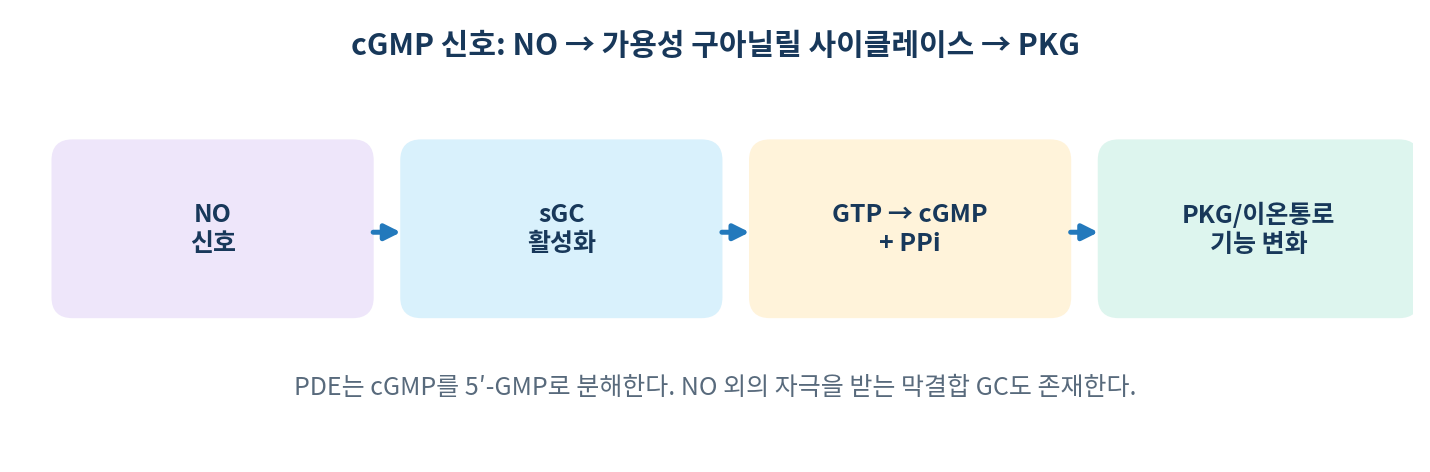
- Guanylyl cyclase makes cGMP from GTP, and nitric oxide activates the soluble form
- cGMP acts through PKG and some ion channels to change vascular smooth muscle tone
- Phosphodiesterases terminate the signal by converting cAMP and cGMP to 5-prime AMP and 5-prime GMP
04
Adenine nucleotides also act as signals
- Cells can release ATP through vesicular secretion and other routes
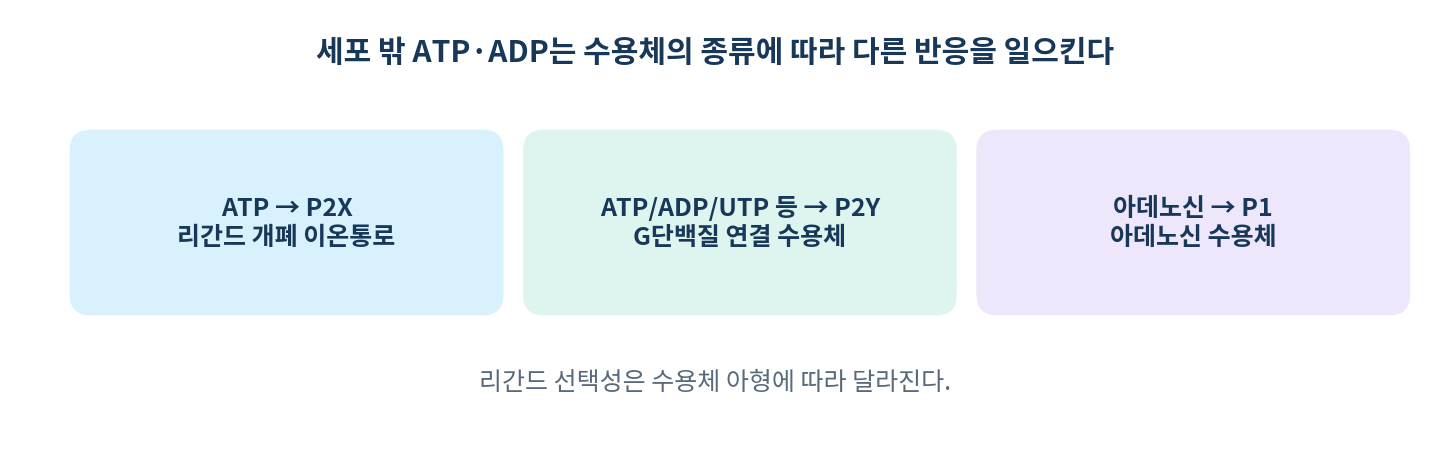
- Extracellular ATP activates P2X ligand-gated ion channels or P2Y G-protein-coupled receptors
- ADP is especially important in platelet P2Y12 signalling
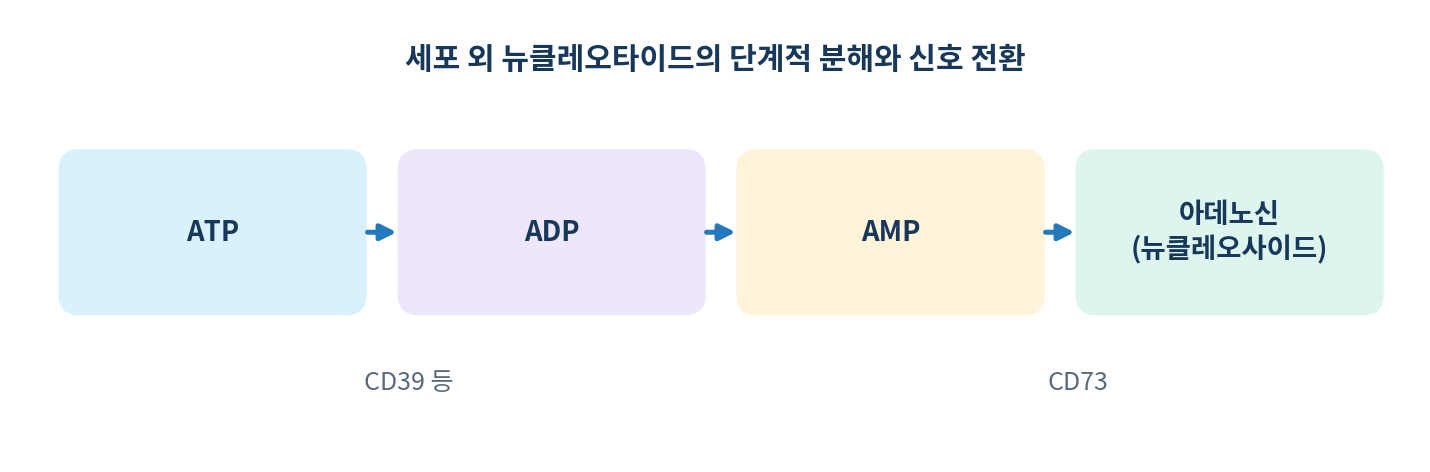
- CD39 degrades ATP and ADP while CD73 converts AMP to adenosine
- Adenosine lacks phosphate and acts on P1 receptors as a nucleoside
- Degradation therefore creates a new signal rather than only removing one
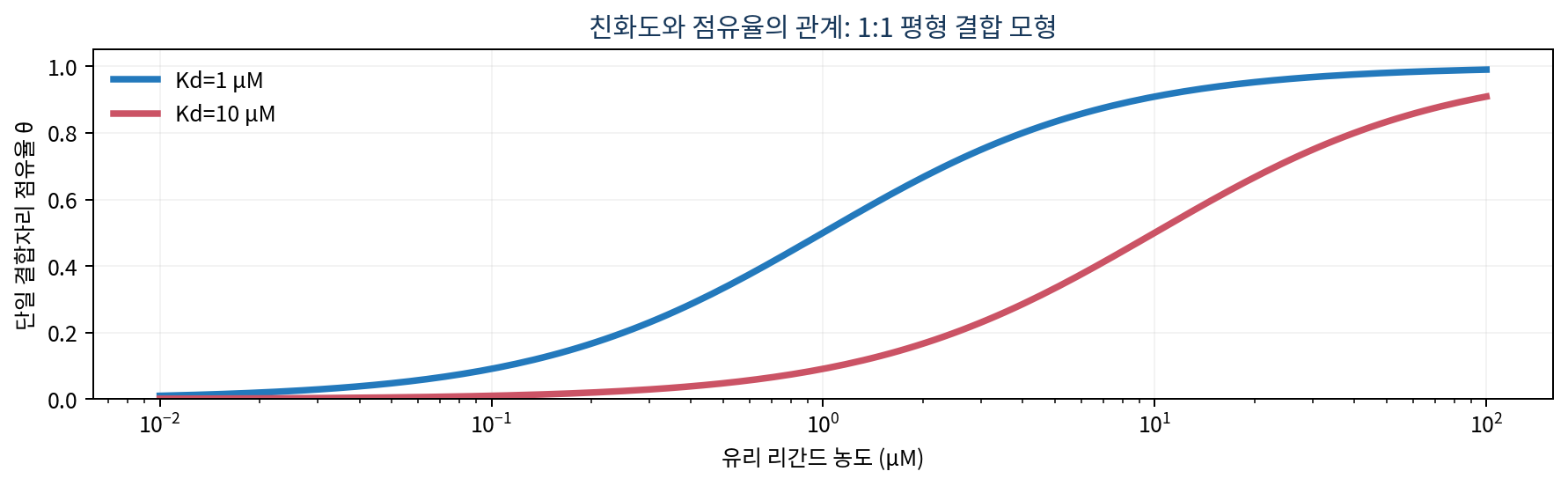
- For a single site, occupancy theta = [L] divided by Kd plus [L], and theta is 0.5 when [L] equals Kd
- Fifty percent occupancy does not mean fifty percent response, since spare receptors, amplification, desensitisation and ligand degradation shift the curve
- Example: Kd 10 micromolar with 5 micromolar ligand gives theta of 0.333
- ATP, ADP and AMP are nucleotides whereas adenosine is a nucleoside
- cAMP acts as an intracellular second messenger and extracellular ATP as a receptor ligand, so both site and receptor differ
References
| Molecule | Representative reaction or function | Point to distinguish |
|---|---|---|
| ATP | Phosphate transfer, motor proteins, adenylation | Can give ADP or AMP |
| GTP | Translation steps, GTP-binding protein switches | Hydrolysis is coupled to switching |
| UTP | Formation of activated sugar precursors such as UDP-glucose | Sugar carriage is a function of the UDP-sugar |
| CTP | Lipid synthesis through CDP-activated intermediates | Used depending on enzyme and pathway |
| Coenzyme | Reactive centre or carrier | Main role | Related vitamin |
|---|---|---|---|
| NAD+ and NADH | Nicotinamide, hydride | Oxidation and reduction in catabolism | Niacin, B3 |
| NADP+ and NADPH | Nicotinamide, hydride | Reductive biosynthesis and antioxidant defence | Niacin, B3 |
| FAD and FADH2 | Flavin, electrons and hydrogen | Enzyme-bound oxidation and reduction | Riboflavin, B2 |
| CoA and acyl-CoA | Terminal SH, acyl groups | Carriage of acetyl and fatty acyl groups | Pantothenate, B5 |
| Feature | cAMP | cGMP |
|---|---|---|
| Direct precursor | ATP | GTP |
| Synthesising enzyme | Adenylyl cyclase | Guanylyl cyclase |
| Main protein targets | PKA and EPAC | PKG |
| Termination | Phosphodiesterase gives 5-prime AMP | Phosphodiesterase gives 5-prime GMP |
| Example function | Metabolic and gene expression control | Smooth muscle relaxation and sensory signalling |
| Question | Short answer | Example |
|---|---|---|
| How do nucleotides drive work? | They couple hydrolysis or group transfer to a reaction | ATP to ADP, ATP to AMP plus PPi |
| What does adenine do in coenzymes? | It is a common structural element that aids recognition | NAD(H), FAD(H2), CoA |
| How is energy status sensed? | ATP, ADP and AMP ratios act on regulatory enzymes | AEC, AMPK |
| How do nucleotides act as intracellular signals? | Cyclic nucleotides regulate their targets | cAMP-PKA, cGMP-PKG |
| How do extracellular nucleotides act? | They become receptor ligands and are degraded to change the signal | P2X, P2Y, CD39, CD73, P1 |