01
Genes can be identified by DNA cloning
- Gene cloning isolates a DNA segment from the rest and produces many copies of it
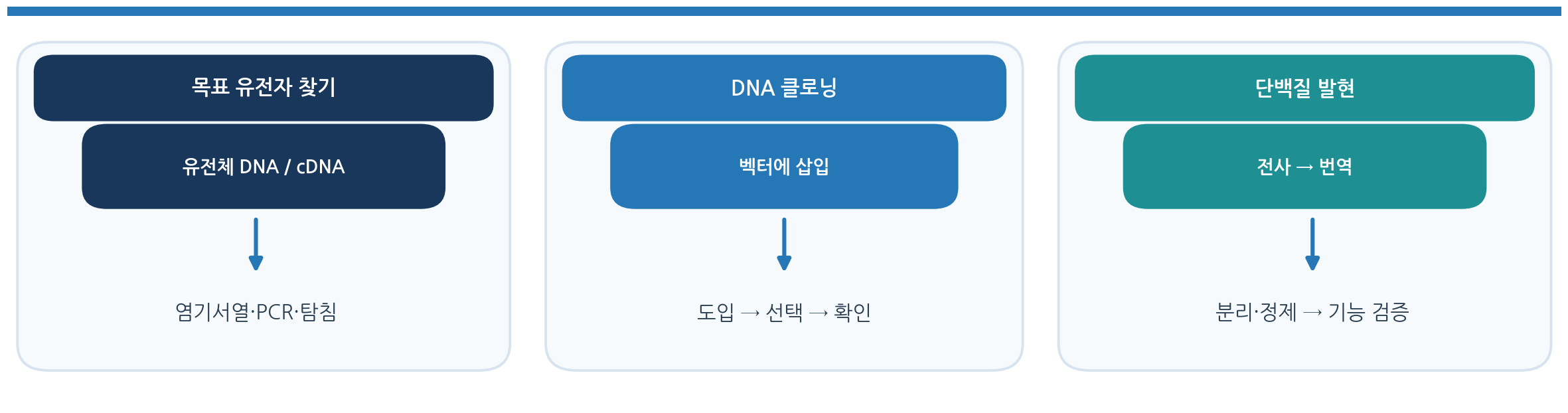
- Joining the target DNA to a self-replicating vector and introducing it into a host gives recombinant DNA
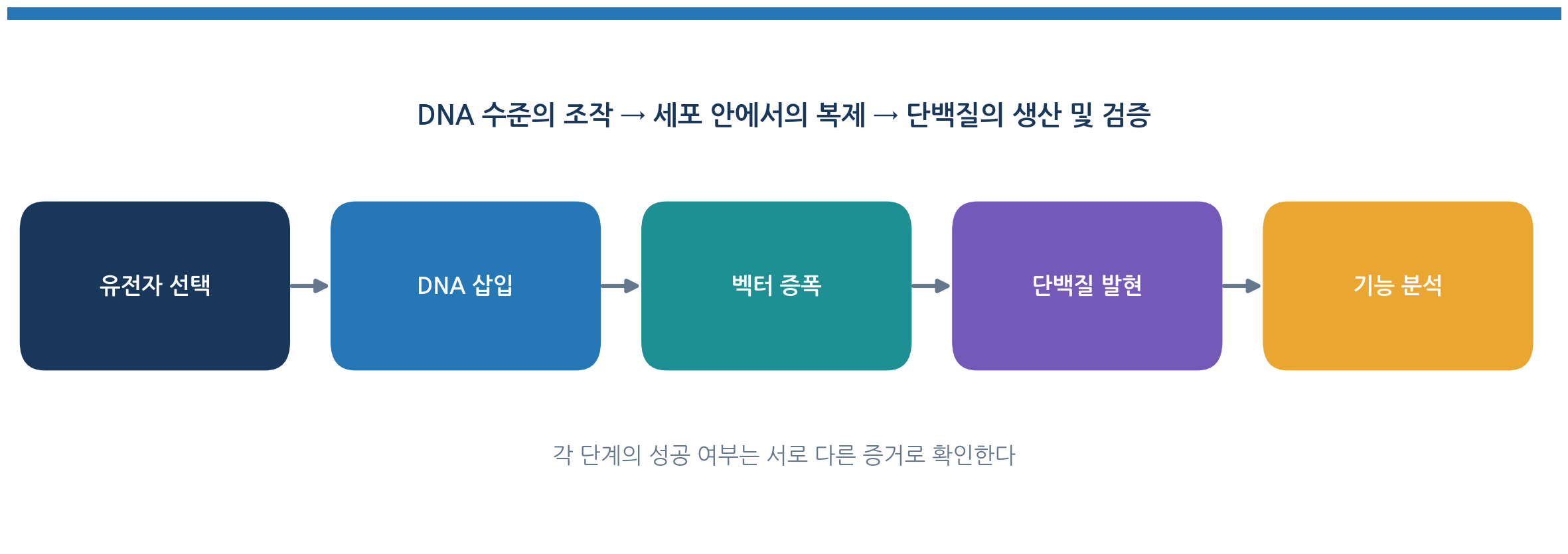
- Research aims divide into locating a gene, analysing mutations, measuring expression and producing protein, and each needs different material
- The first decision is whether to find a gene, amplify DNA or produce protein
- Having cloned DNA does not establish that the protein is expressed or correctly folded
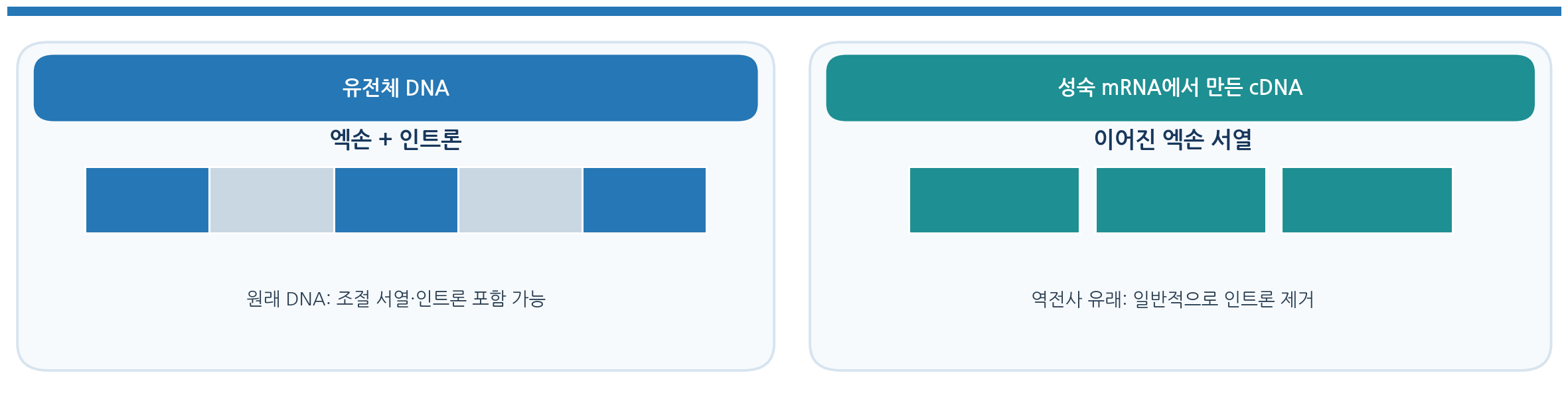
- Eukaryotic genomic DNA contains introns and regulatory regions, while cDNA lacks introns removed by splicing
- Because bacteria cannot splice, the coding sequence of a cDNA is usually the better choice for eukaryotic protein expression
- A cDNA also depends on which tissue and transcript it came from
02
Restriction enzymes and DNA ligase build recombinant DNA
- A restriction endonuclease recognises a specific sequence and cleaves the phosphodiester backbone
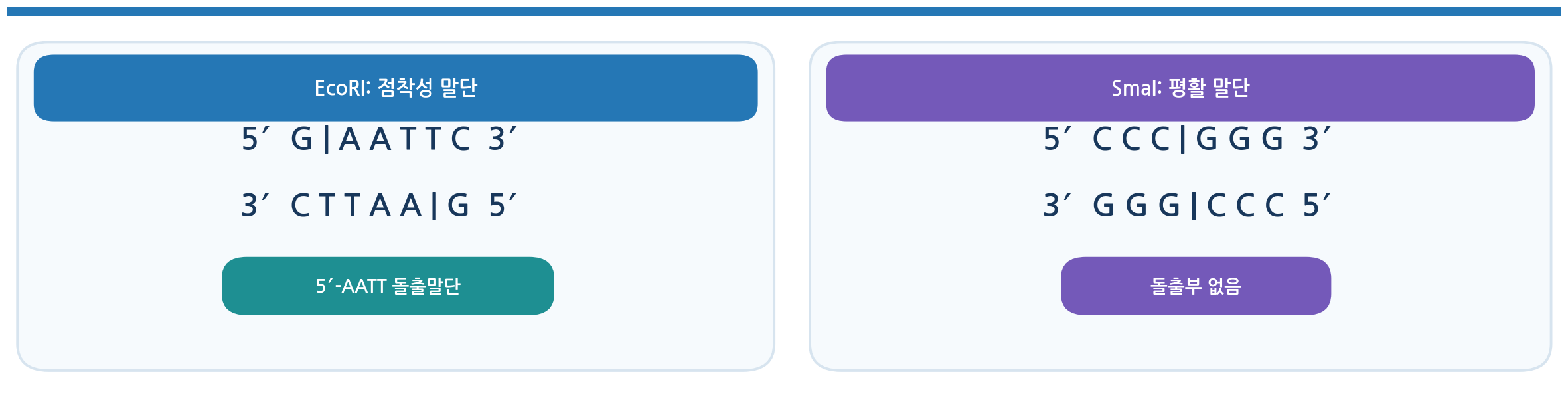
- EcoRI recognises GAATTC and leaves a 5-prime AATT overhang, while SmaI cleaves CCCGGG to give blunt ends
- A longer recognition site usually makes cleavage more specific
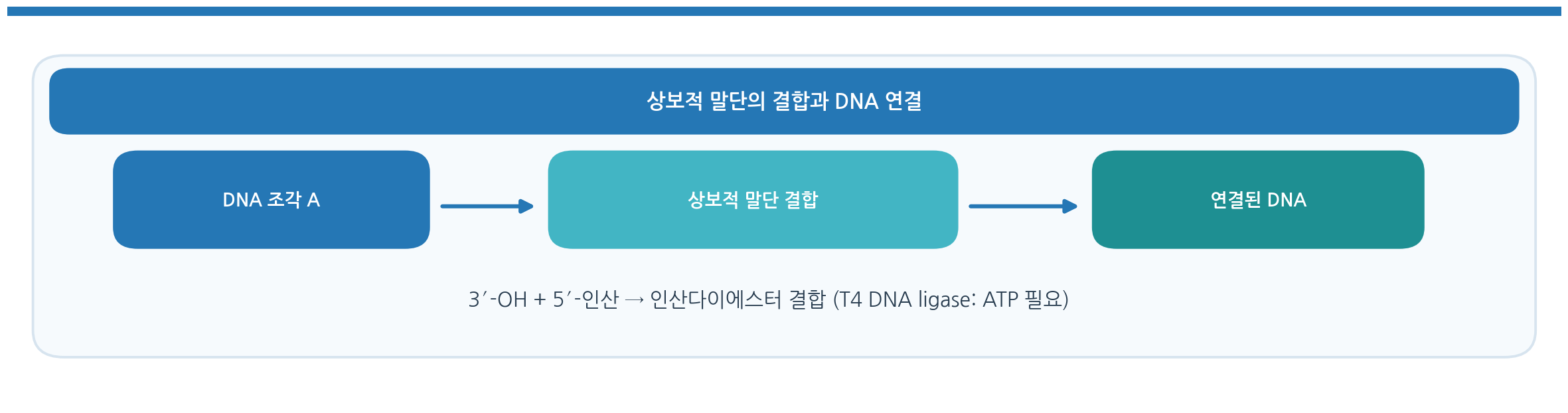
- Cohesive ends pair through complementary overhangs, but the backbone is not yet covalently joined
- DNA ligase forms the phosphodiester bond between the 3-prime OH and 5-prime phosphate of adjacent ends
- T4 DNA ligase uses ATP
- Vectors can re-ligate to themselves and inserts can enter in the reverse orientation
- Using two incompatible restriction ends allows a directional assembly to be designed
- Restriction enzymes cut and ligase joins; the two roles are not interchangeable
03
Cloning vectors amplify the inserted DNA
- The core elements of a cloning vector are an origin of replication, a selectable marker and an insertion site
- The origin allows replication in the host and the marker allows selection of cells carrying the vector
- A multiple cloning site collects several restriction sites in one region
- A marker does not establish that the desired insert is present
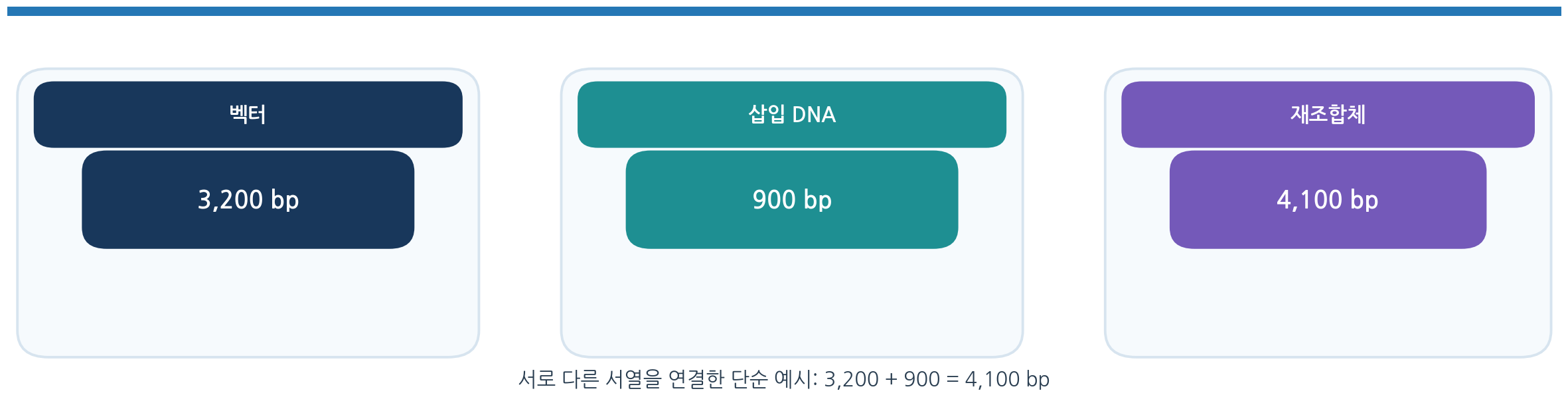
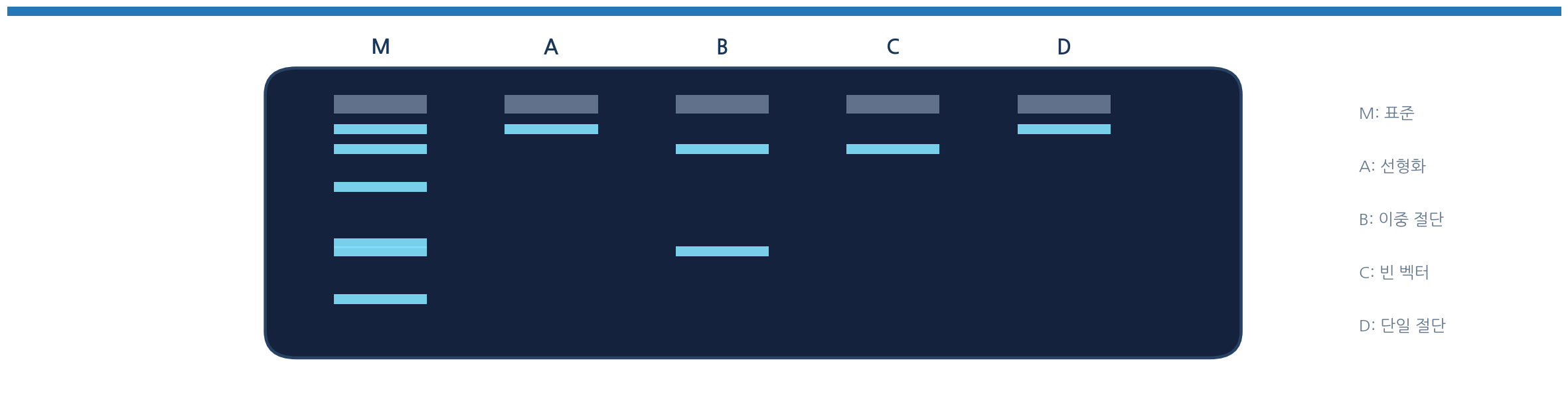
- A 3,200 bp backbone plus a 900 bp insert gives 4,100 bp when nothing else changes
- Cutting with enzymes that flank the insert should give 3,200 and 900 bp fragments
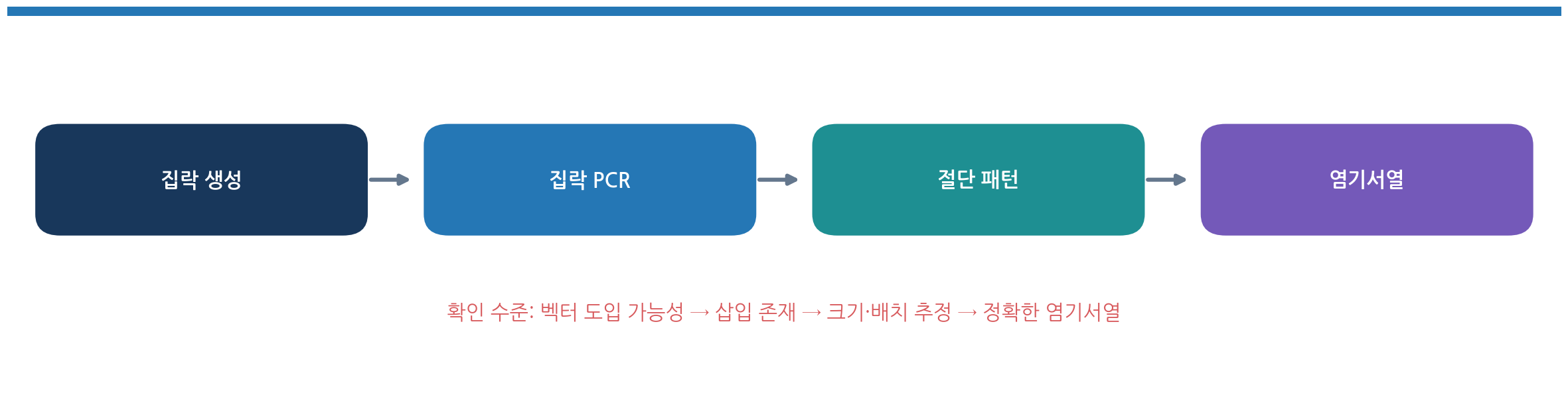
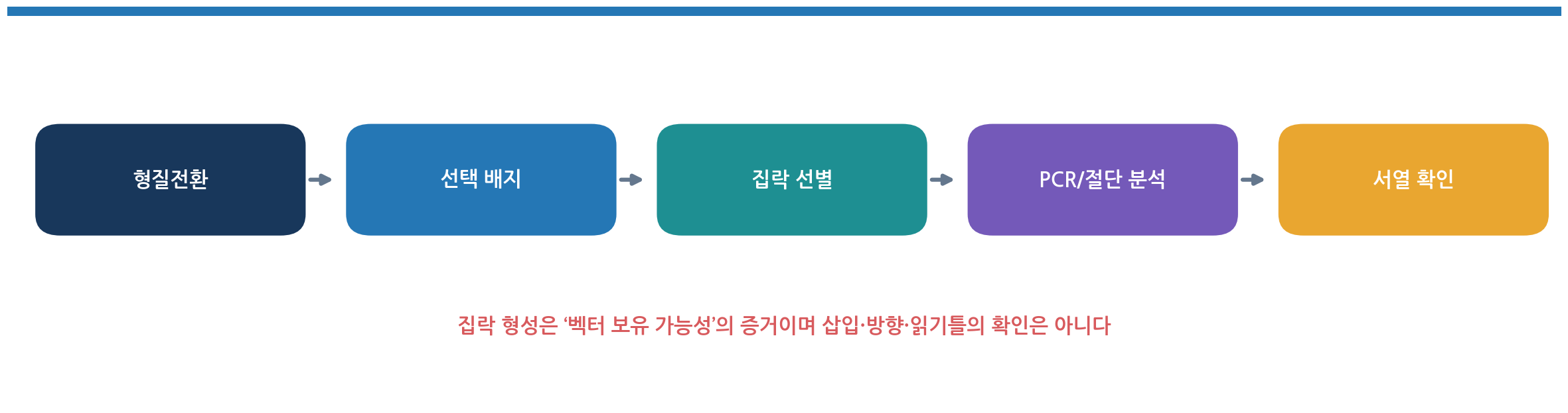
- Transformation introduces DNA, selection keeps vector-bearing cells and screening looks for the desired insert
- Colony PCR and restriction analysis show presence, length and rough arrangement but not single bases
- Final confirmation needs sequencing, and a circular plasmid migrates differently from linear DNA of the same length because of supercoiling
04
Cloned genes can be expressed to produce protein
- An expression vector adds a promoter that works in the host, a translation initiation signal, the coding sequence and a transcription terminator
- Bacteria rely on a ribosome-binding site while mammalian cells need a Kozak context and eukaryotic promoter
- A strong promoter still gives variable yield through mRNA stability, codon use and host environment
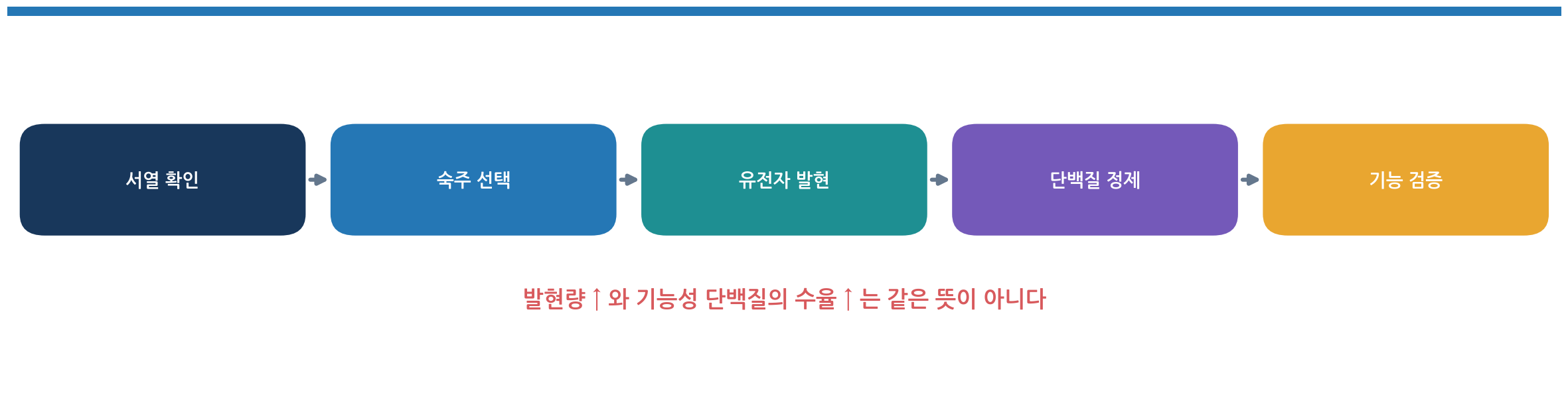
- The workflow runs from sequence confirmation through host choice, expression, extraction, purification and quality testing
- Abundant protein can still be inactive when it forms insoluble aggregates or folds incorrectly
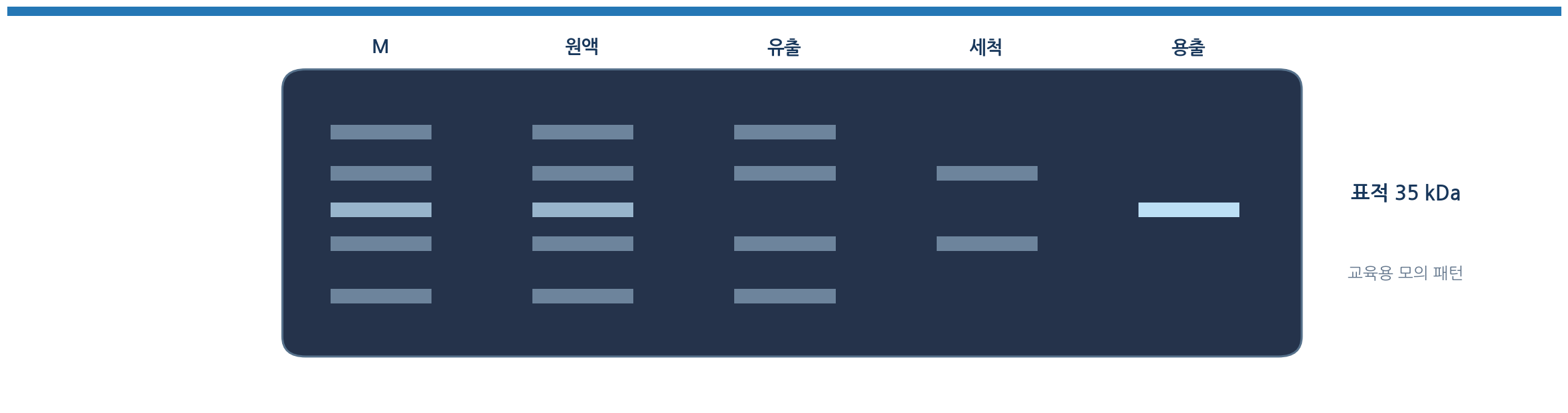
- SDS-PAGE reports apparent size and band intensity, not folding or activity
- Activity assays, binding assays and mass spectrometry provide the missing evidence
- A 900 bp coding sequence with a stop codon holds 300 codons, one of which terminates, so 299 residues
- Adding a C-terminal tag requires removing the original stop codon and terminating after the tag
05
Several systems are used to express recombinant proteins
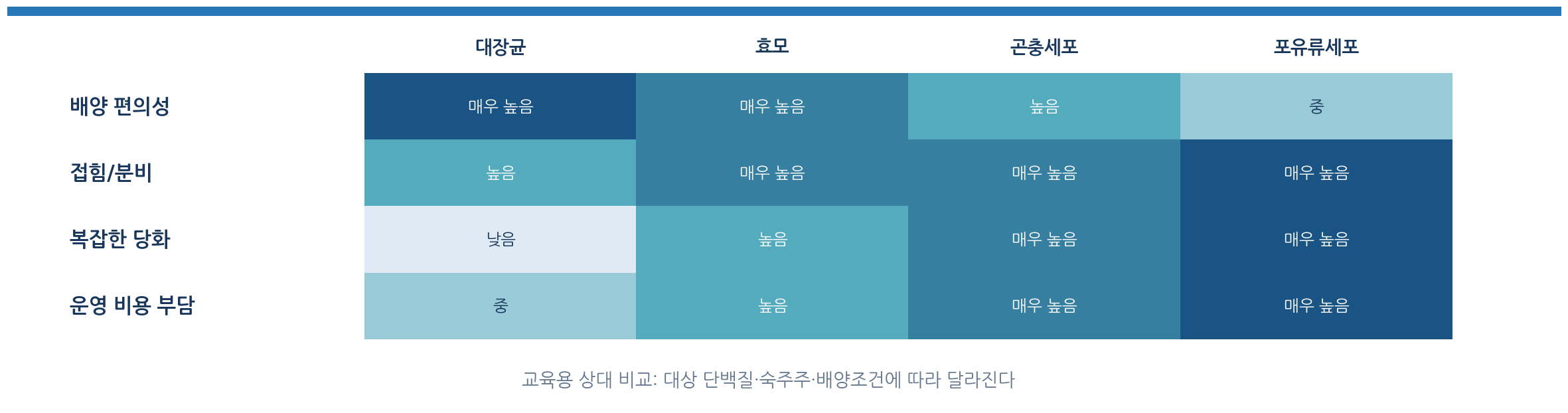
- Bacteria are often suitable for simple proteins because they grow fast and cost little
- Yeast performs secretion and some eukaryotic modification
- Insect and mammalian cells favour complex folding and post-translational modification
- Yeast and insect glycans can differ from human ones, and mammalian cells vary in yield and quality by protein
- When human-type N-glycosylation matters for activity, a band from bacteria does not establish the function
- Host choice, glycan pattern and activity measurement must be assessed together
06
Altering a cloned gene produces a modified protein
- Site-directed mutagenesis changes a specific base to test the role of a residue or region
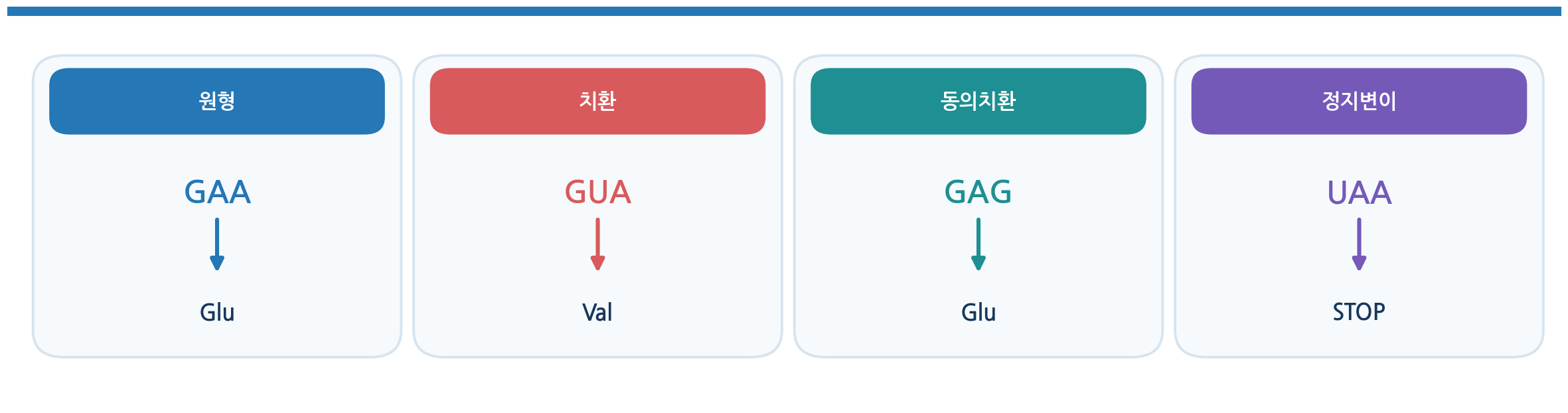
- Missense changes the amino acid, synonymous leaves it unchanged and nonsense creates a stop codon
- Sequencing confirms that the designed change is present
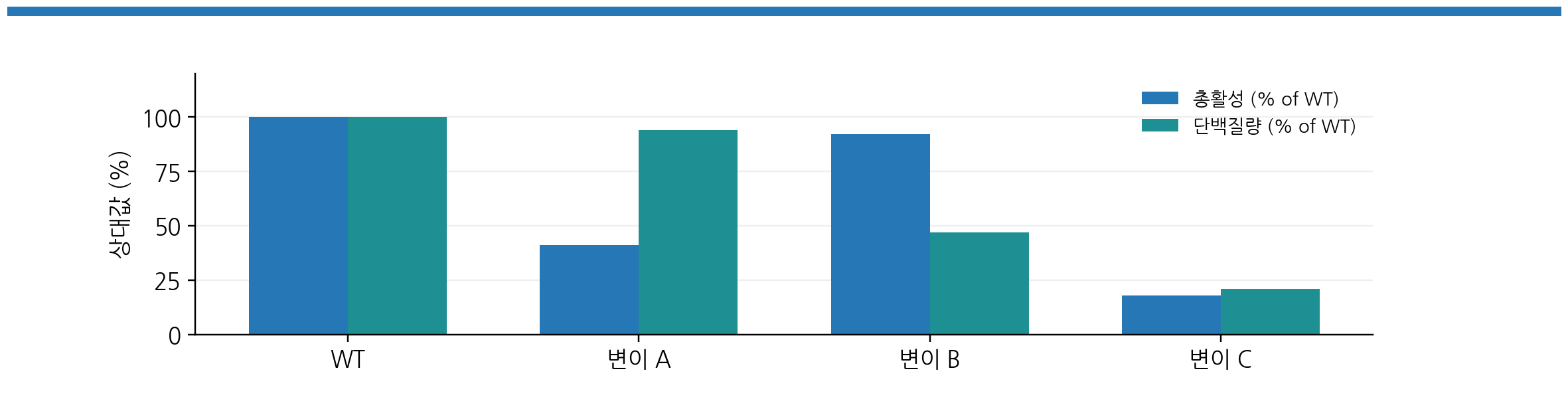
- Low total activity alone does not prove that the residue sits in the catalytic centre
- Expression level, folding, stability, solubility and localisation must all be checked
- Normalising activity to the amount of target protein allows specific activity to be compared
- Example: variant A with 41 percent activity and 94 percent protein gives 43.6 percent relative specific activity, while 92 over 47 gives about 195.7 percent
- Relative specific activity starts the investigation but is not direct evidence of a mechanism
07
Terminal tails provide a handle for affinity purification
- A fusion tag is a short peptide or protein domain attached to the target
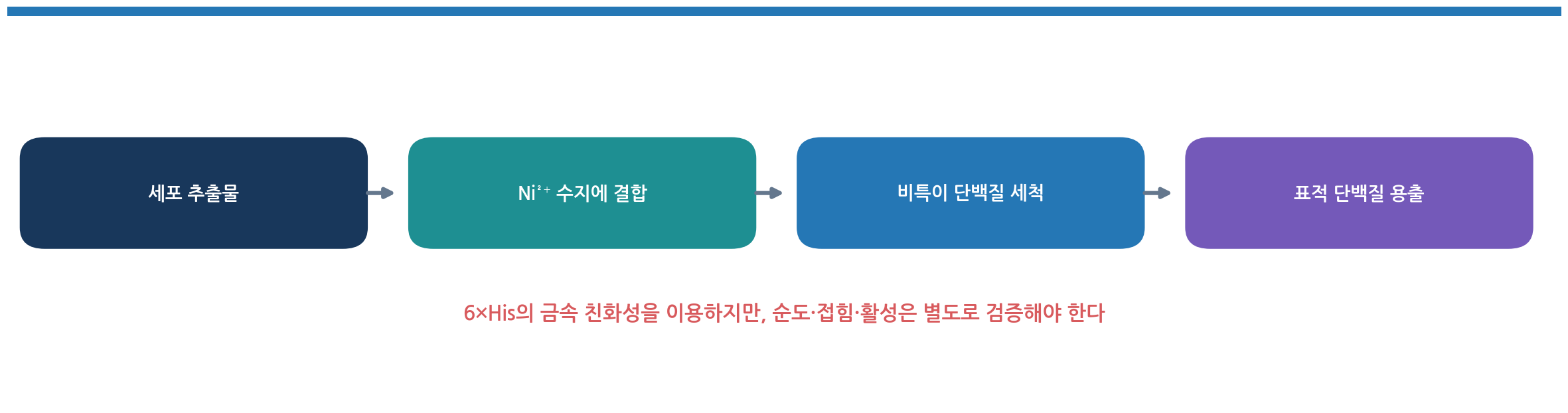
- The 6xHis tag binds immobilised metal ions such as Ni2+ and enables immobilised metal affinity chromatography
- Epitope tags such as FLAG support antibody-based detection and purification, while GST and MBP affect solubility and behaviour
- Tags can sit at either terminus but may affect folding, function or localisation
- A C-terminal tag requires handling of the stop codon and matching reading frame
- A protease site between tag and protein allows removal after purification
- A clear target band in the elution suggests enrichment, but purity, identity and activity are separate questions
- Proteins of similar size, aggregates and degradation products can all contribute
08
PCR can be used for convenient cloning
- PCR cloning starts by designing primers that flank the target gene
- The 3-prime region must match the target well, and the 5-prime region can add a restriction site or homology arm
- Vector sites, internal cleavage of the target, tag reading frame and start and stop codons are checked together
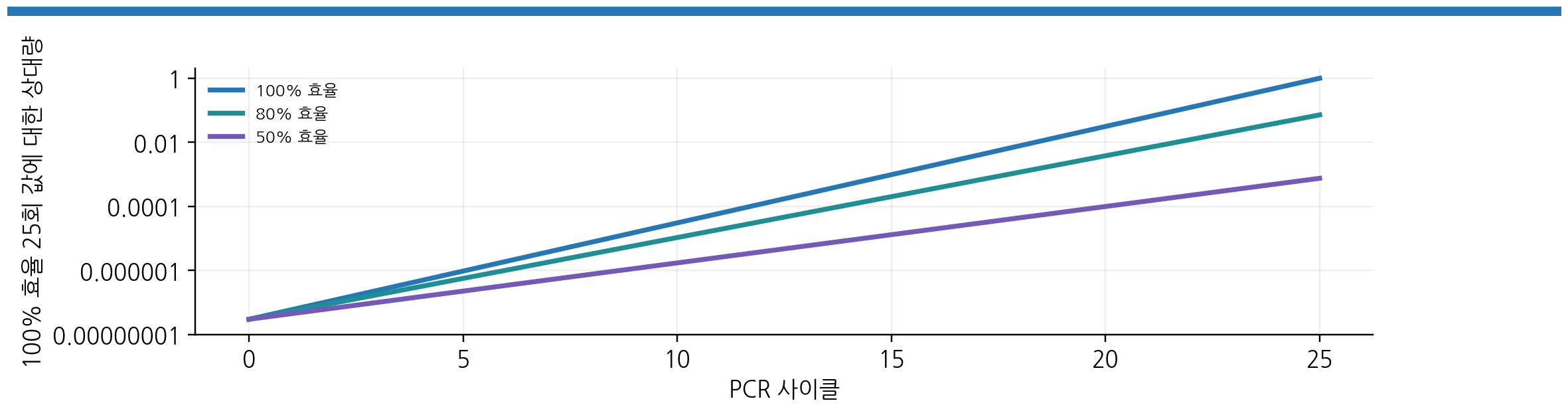
- Ideal PCR follows Nn = N0 times 2 to the n, and a constant-efficiency model uses N0(1+E) to the n
- Real reactions lose efficiency through reagent depletion, non-specific products and enzyme limits
- Example: one molecule over 20 cycles gives 1,048,576, while E of 0.8 gives about 127,482
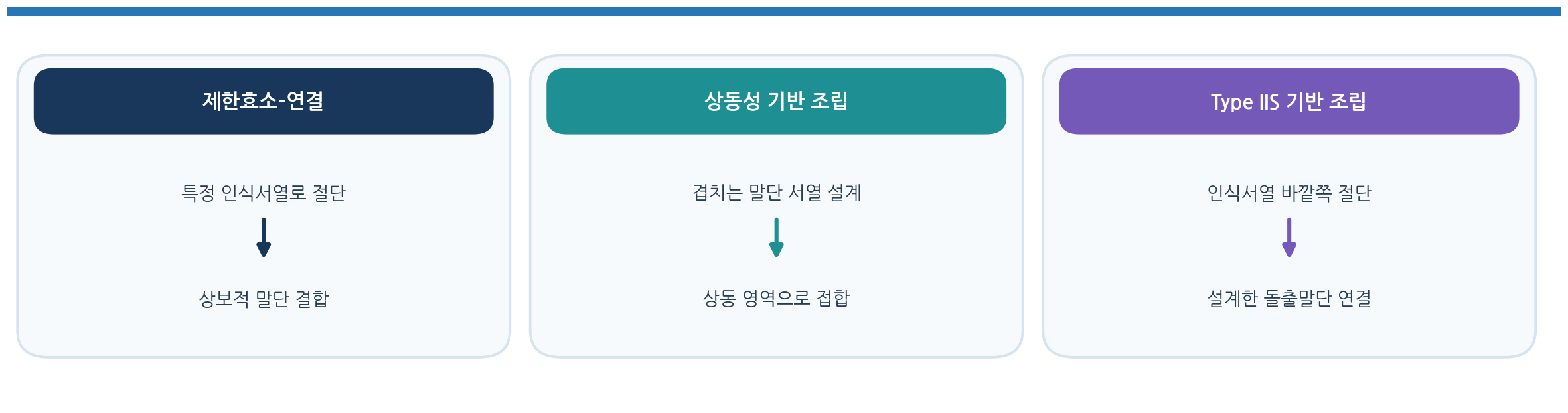
- Homology-based assembly and Type IIS Golden Gate are also common and are chosen by purpose
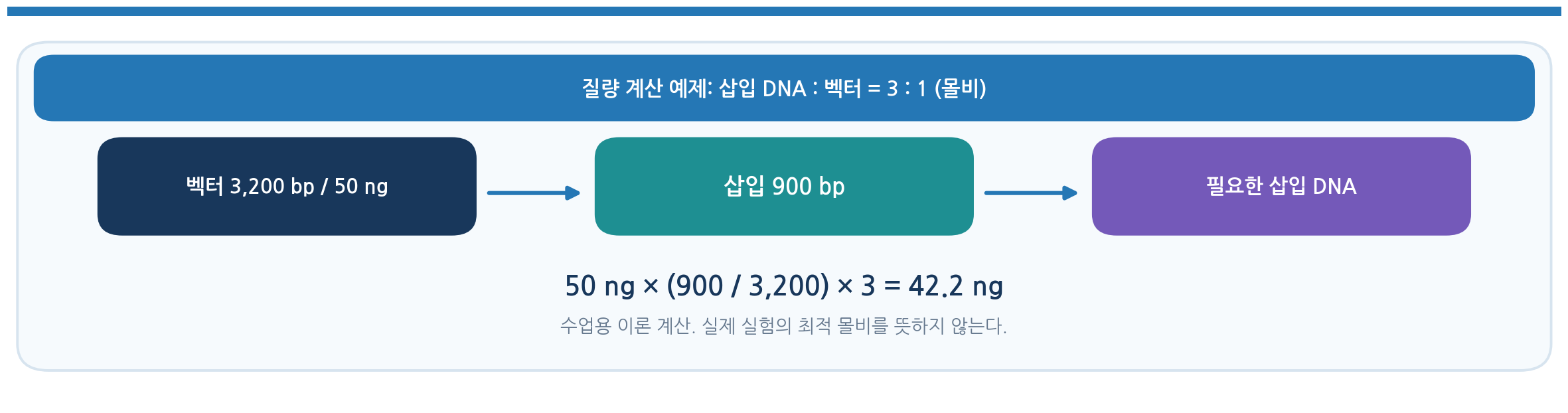
- Insert mass follows mi = mv times (Li/Lv) times r, so 50 ng times 900/3,200 times 3 is about 42.2 ng
- At equal mass, shorter DNA contains more molecules
- After assembly, colony PCR, restriction analysis and sequencing still provide evidence in stages
References
| Feature | Genomic DNA | cDNA |
|---|---|---|
| Source | Whole genome of the cell | Reverse transcription of mature mRNA |
| Introns | Included | Generally removed |
| Main use | Regulatory regions and intron studies | Expressing eukaryotic proteins in bacteria |
| Caution | Large and cannot be spliced by the host | Transcript composition varies with tissue and time |
| Step | What it establishes | What it cannot establish |
|---|---|---|
| Growth on selection | Presence of the vector marker | Insert presence, orientation or sequence |
| Colony PCR | Presence and approximate length of the target | Exact sequence or reading frame |
| Restriction analysis | Agreement with the expected map | Single-base changes or tag sequence |
| Sequencing | Final confirmation at base level | Folding or activity of the protein |


| Host | Advantage | Caution |
|---|---|---|
| Escherichia coli | Fast growth, low cost, simple handling | No human-type glycosylation; inclusion bodies possible |
| Yeast | Secretion and some eukaryotic modification | Glycosylation differs from human cells |
| Insect cells | Favourable for complex folding | Cost and culture difficulty; glycan differences |
| Mammalian cells | Post-translational modification close to human | Yield, cost and contamination control |