01
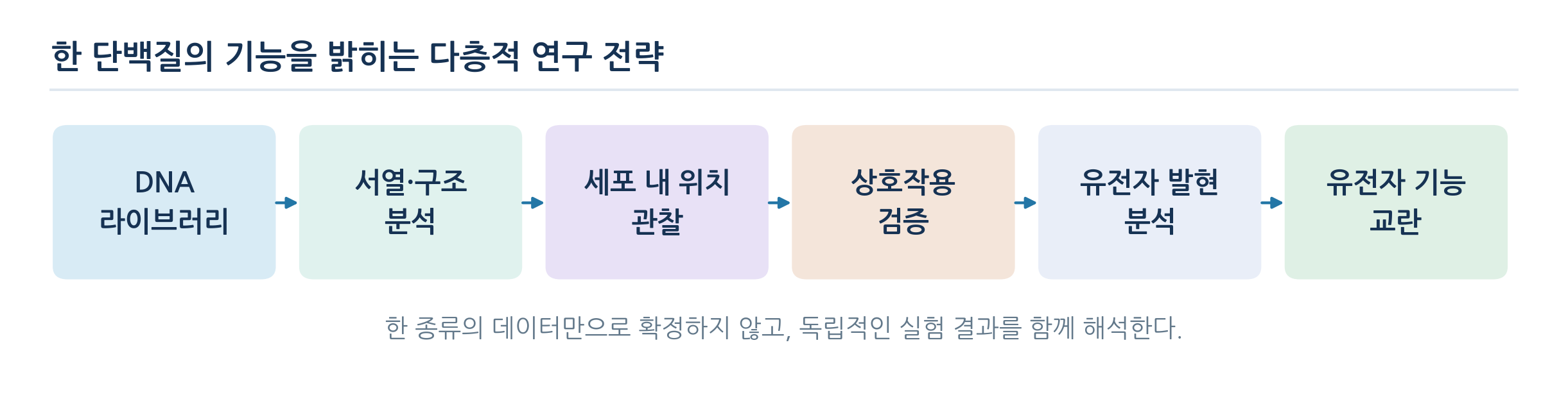
DNA libraries are organised collections of genetic information
- A DNA library is a collection in which many DNA fragments are each preserved and recoverable
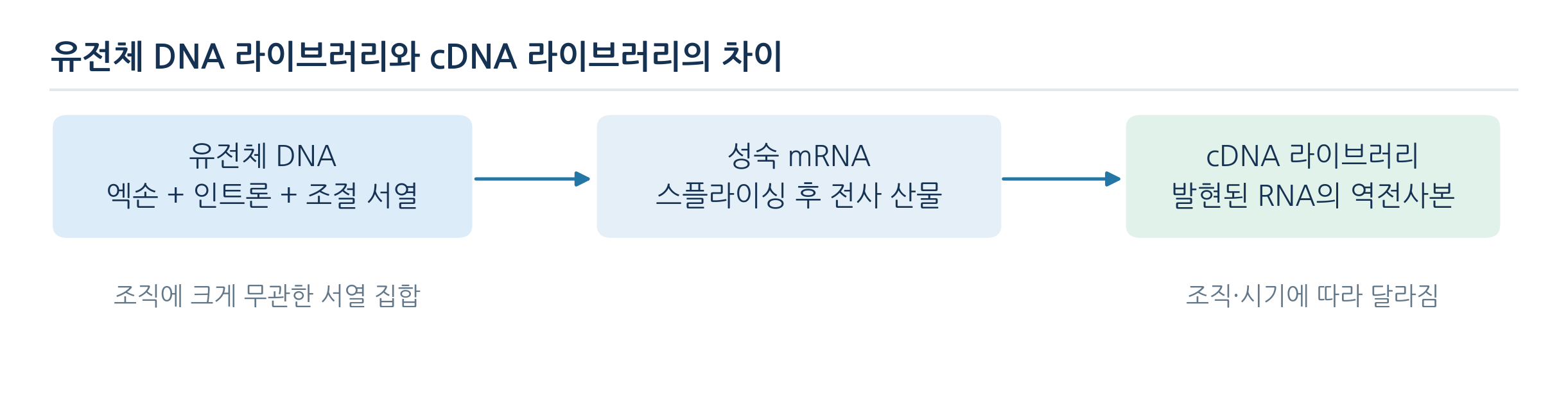
- A genomic library represents the whole genome through fragments and therefore includes introns and regulatory regions
- A cDNA library is made from mature mRNA, lacks introns and represents only expressed transcripts
- Transcripts are not equally abundant, so sample conditions, RNA extraction and reverse transcription all bias the content
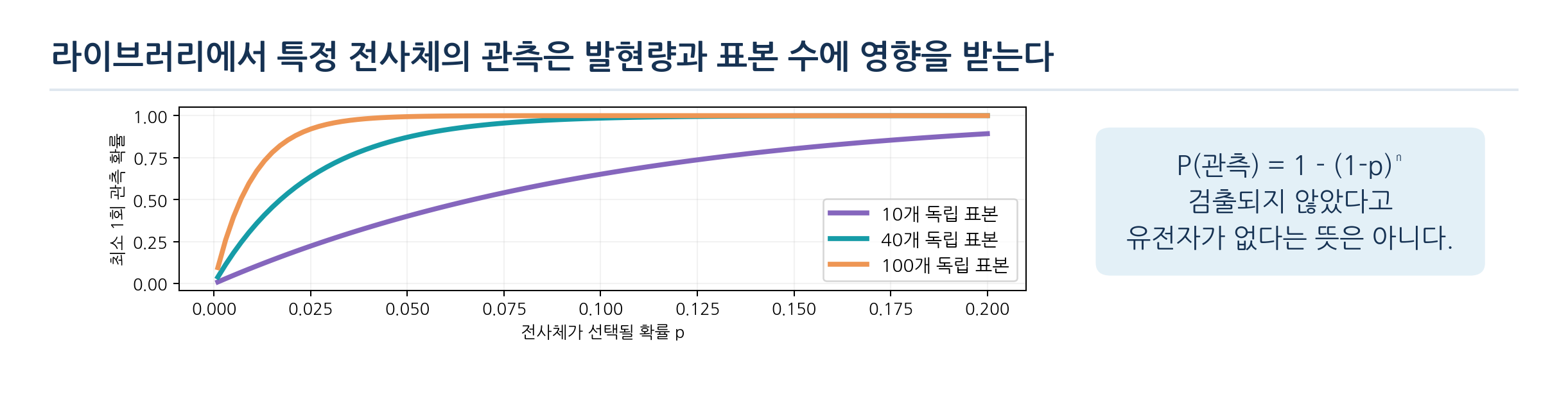
- The chance of finding a sequence depends on its relative frequency and on how many clones are examined
- With probability p per clone and n clones examined, detection is 1 minus (1 minus p) to the n
- Example: p of 0.05 with n of 40 gives about 87.1 percent, leaving 12.9 percent undetected
- A CRISPR guide library is a tool set for functional screening rather than a list of sequences
02
Sequence and structural relationships inform protein function
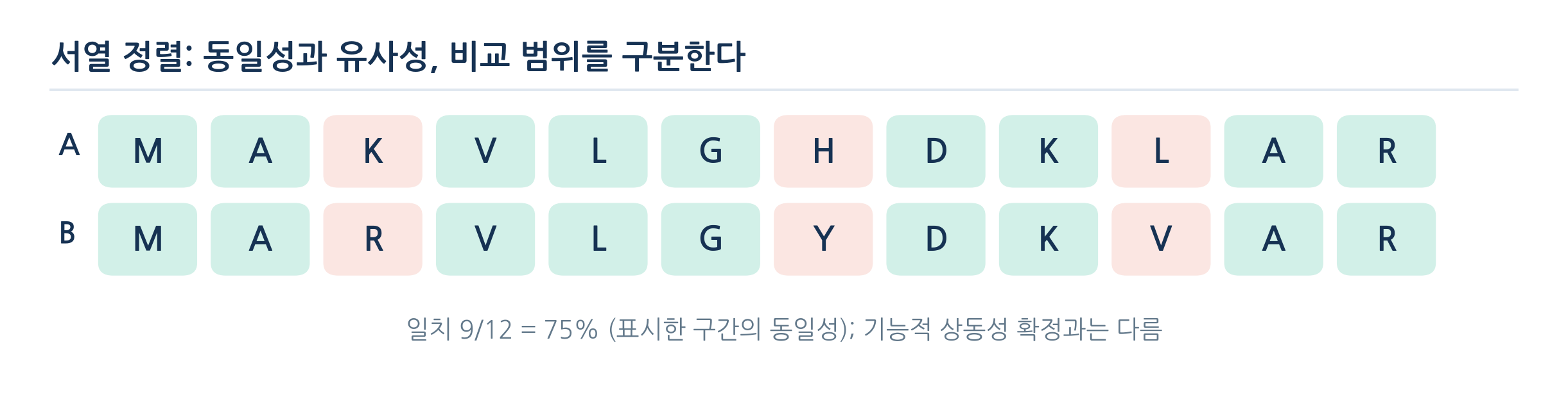
- Aligning an unknown sequence with studied proteins reveals conserved regions and variable positions
- Sequence identity is the fraction of identical residues over a stated aligned region
- Example: nine identical out of twelve gives 75 percent for that region only
- An identity figure alone cannot establish whole-protein identity or equal activity
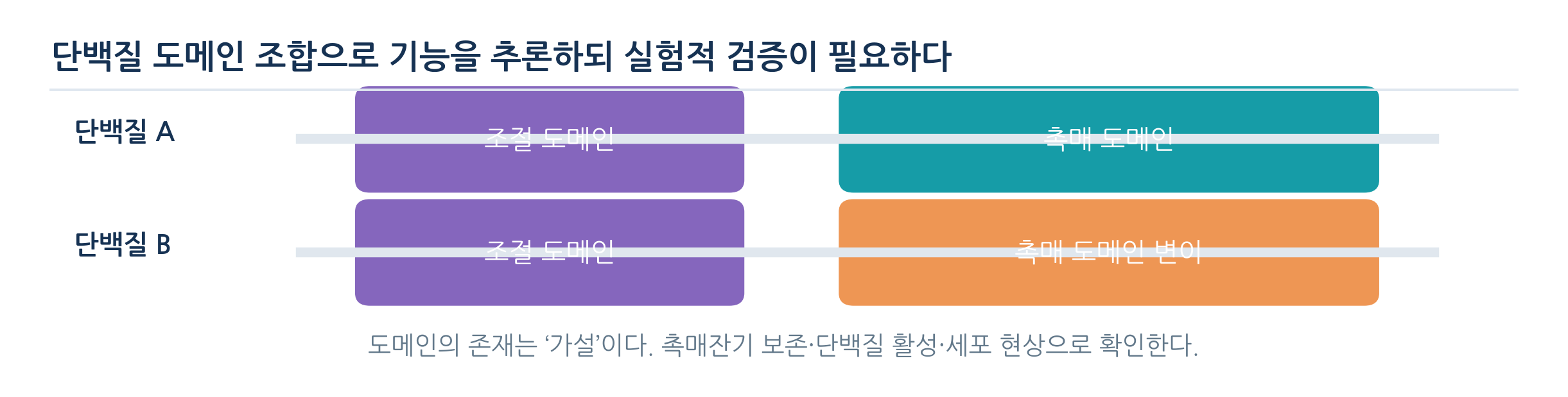
- A domain folds independently or performs a defined function and is a strong clue to role
- Known DNA-binding, ATP-binding or catalytic domains allow the role of an unknown protein to be inferred
- Similar structures can still differ in substrate specificity or regulation
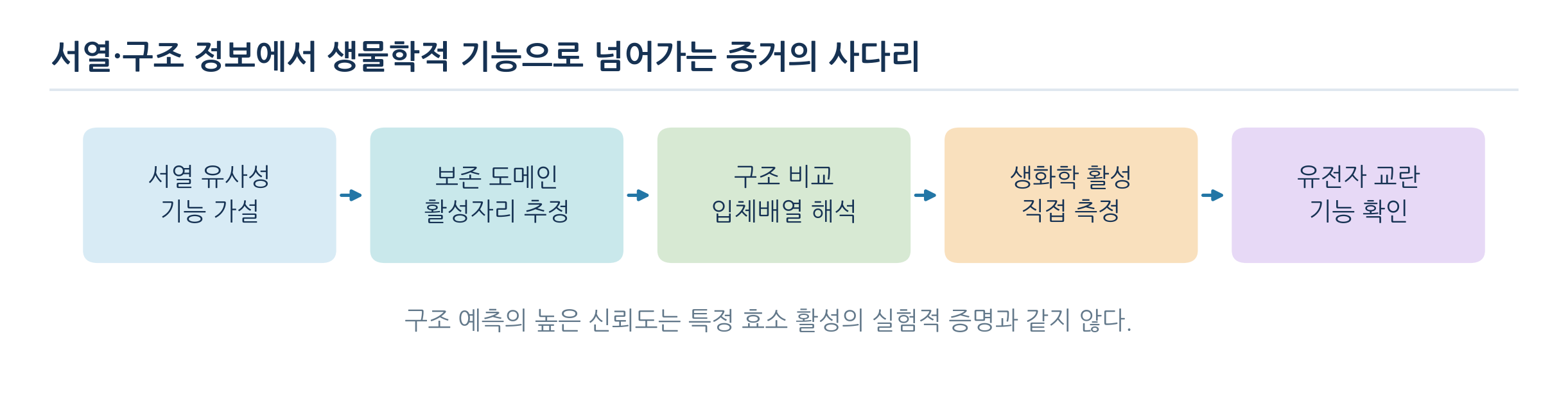
- High local confidence in a predicted structure does not replace experimental proof of function
03
Fusion proteins and immunofluorescence reveal localisation
- Joining the coding sequence of a gene in frame with GFP lets the fluorescence report the location of the protein
- Whether to tag the N or C terminus needs review because either can affect structure or function
- Immunofluorescence uses antibodies, with indirect methods employing a primary antibody and a labelled secondary
- Antibody specificity, secondary-only controls and fixation and permeabilisation must be validated
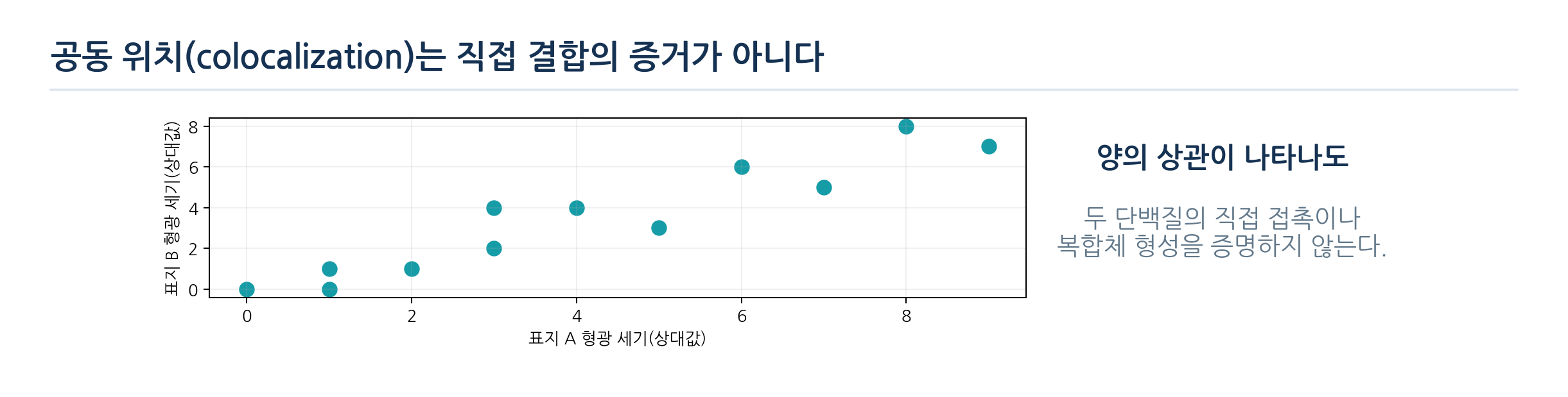
- Colocalisation means the proteins share a compartment or lie closer than the resolution limit
- It is not evidence of direct binding, which needs Co-IP, FRET or binding assays with purified protein
- Overlap of GFP signal with nuclear staining supports a nuclear localisation
04
Protein interactions reveal how molecular functions connect
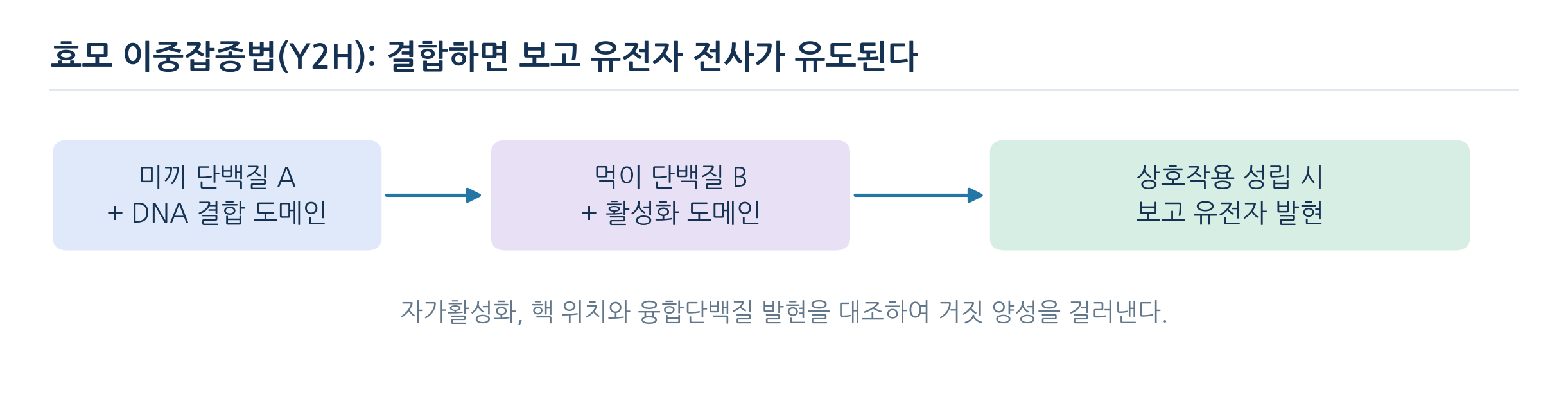
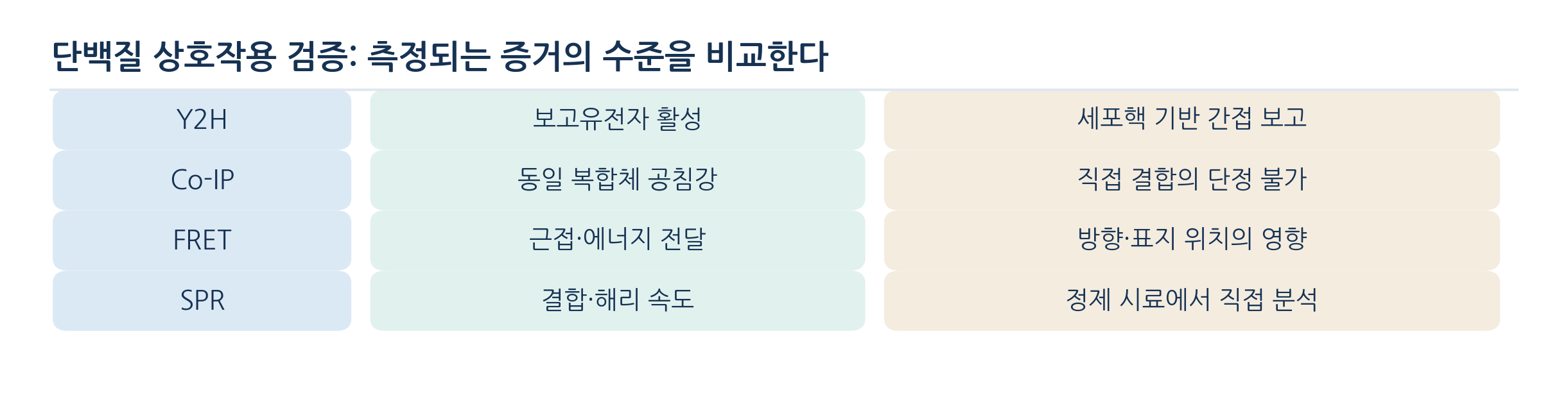
- Yeast two-hybrid uses the principle that a bait fused to a DNA-binding domain and a prey fused to an activation domain bring transcription of a reporter when they interact
- It preserves interaction in a cell but autoactivation and false positives must be excluded
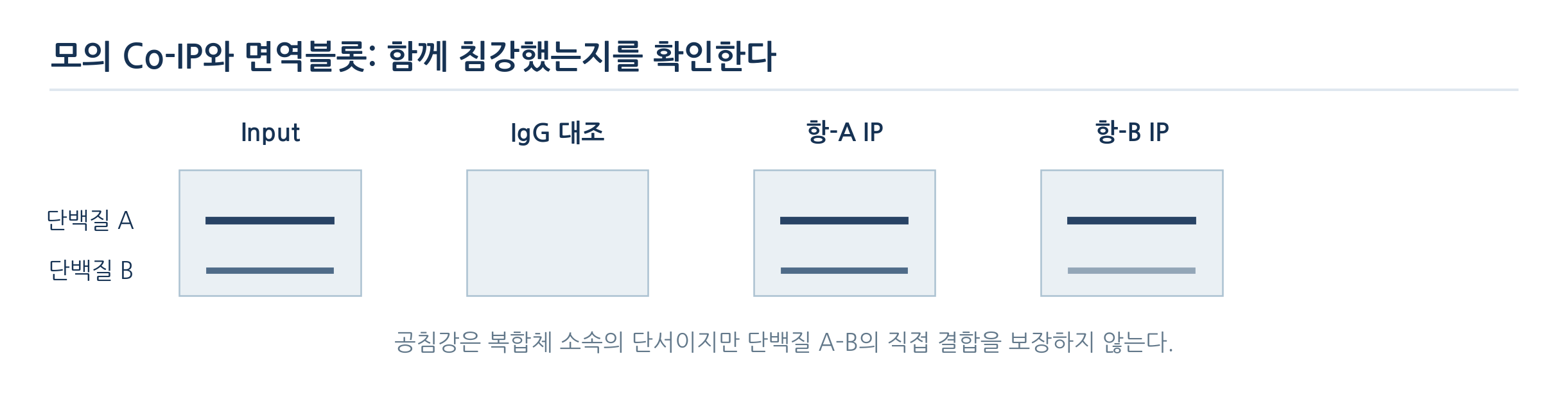
- Co-immunoprecipitation asks whether protein B is recovered when A is precipitated with an antibody
- It raises the likelihood of a shared complex, though bridging proteins or nucleic acids can also cause recovery
- A band in the IgG control changes the interpretation
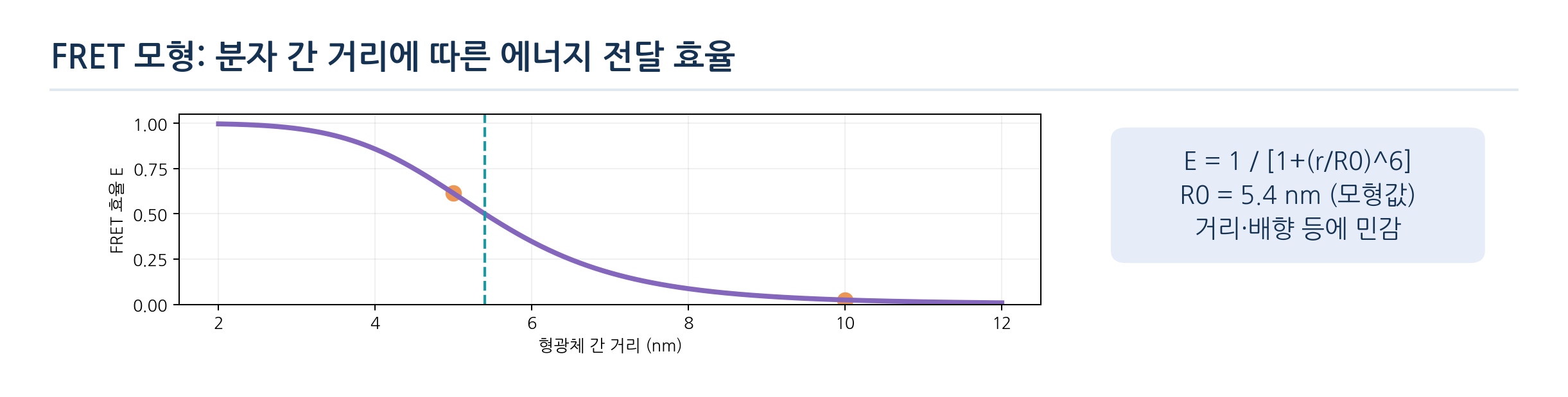
- FRET is energy transfer sensitive to the proximity and orientation of donor and acceptor
- A simple model gives E = 1 over (1 plus (r/R0) to the sixth), where R0 is the half-efficiency distance
- Example: with R0 of 5.4 nm, r of 5.4 nm gives E of 0.5 and r of 10 nm gives about 2.4 percent
- Methods with different evidence levels should be combined to strengthen the conclusion
05
DNA microarrays report RNA expression patterns
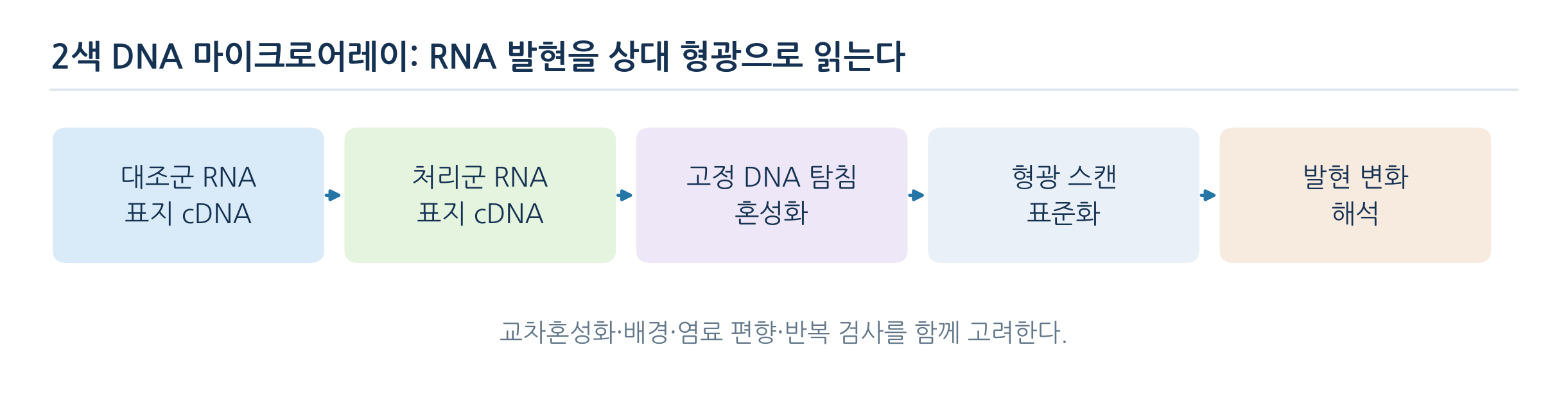
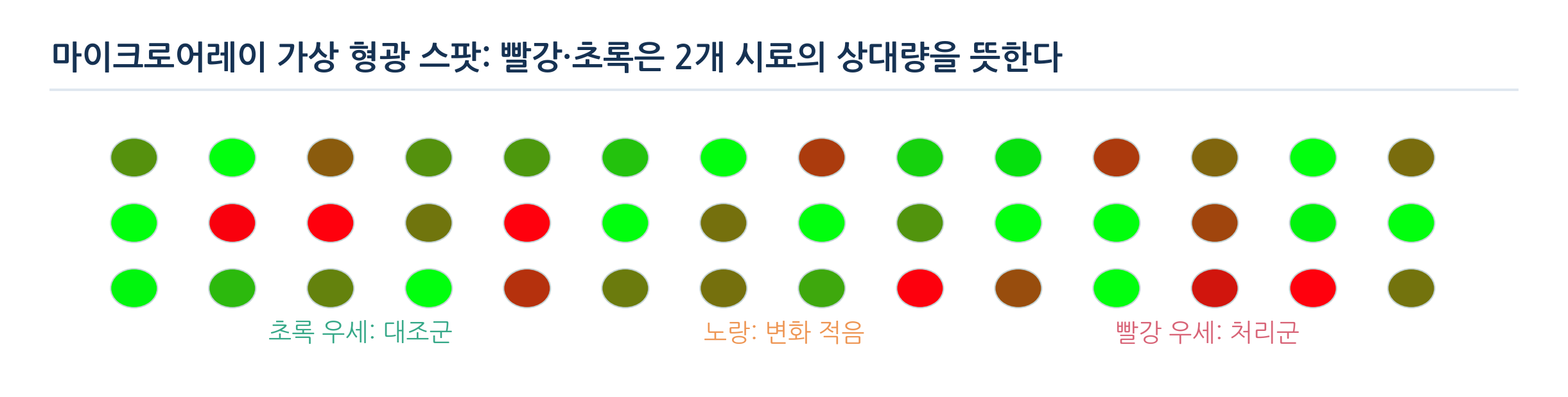
- A microarray immobilises known probes on a chip and measures hybridisation of labelled nucleic acid
- Transcript analysis reverse-transcribes and labels RNA, sometimes with an amplification step
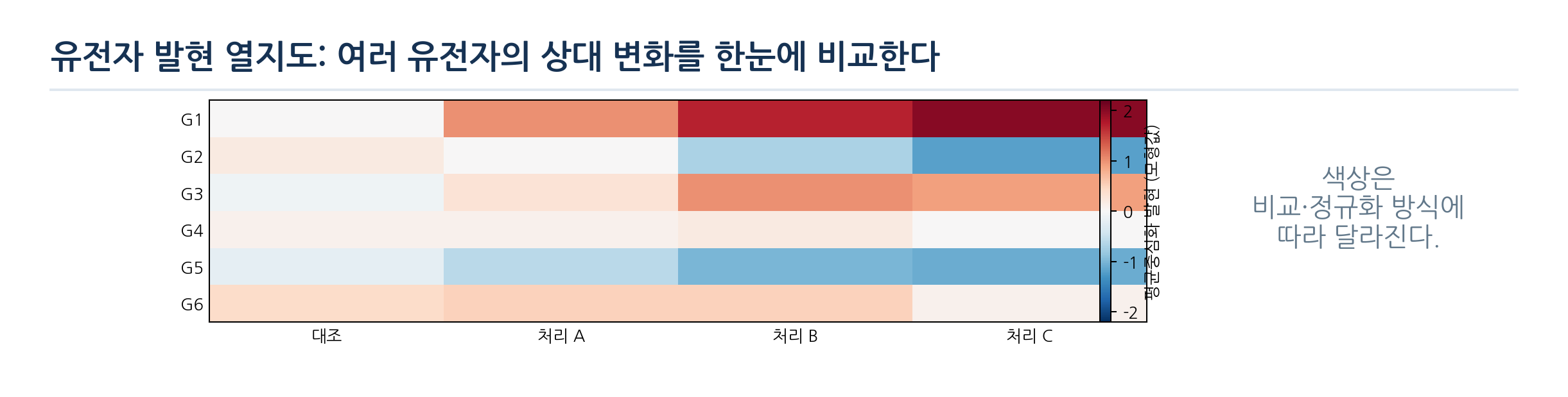
- Signal intensities are compared only after background correction and within- and between-experiment normalisation
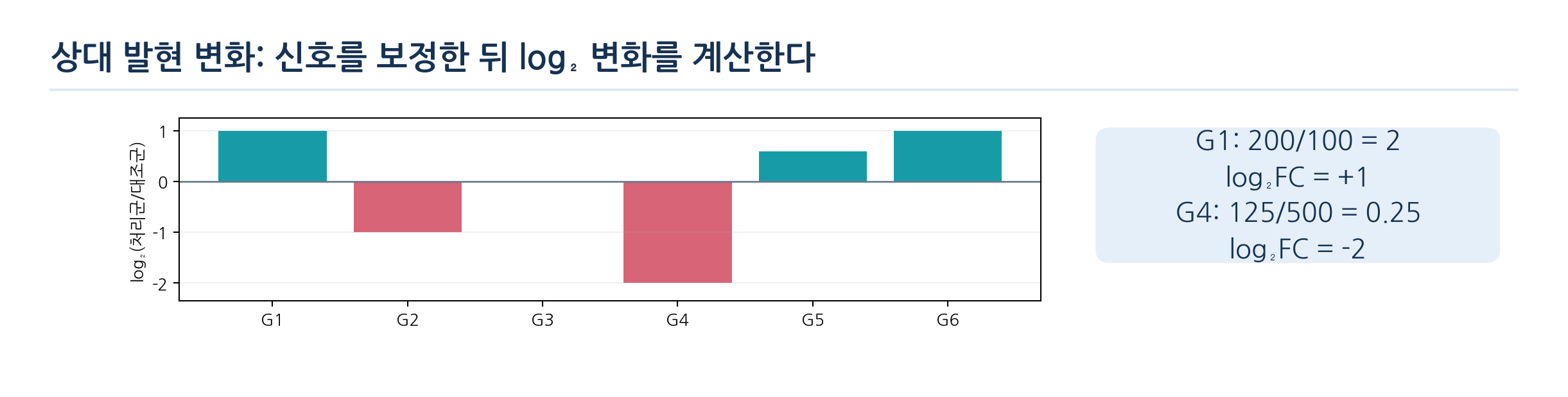
- The fold change is T over C and the log change is log2 of that ratio
- A log2 change of +1 is a doubling, -1 is a 50 percent fall and -2 means 25 percent remains
- Example: 125 over 500 is 0.25, so log2 equals -2, a 75 percent fall
- Lower transcript does not equal lower protein amount or activity
- Many genes produce large apparent changes by chance, so biological replication and multiple-testing correction are required
06
CRISPR perturbation tests protein function
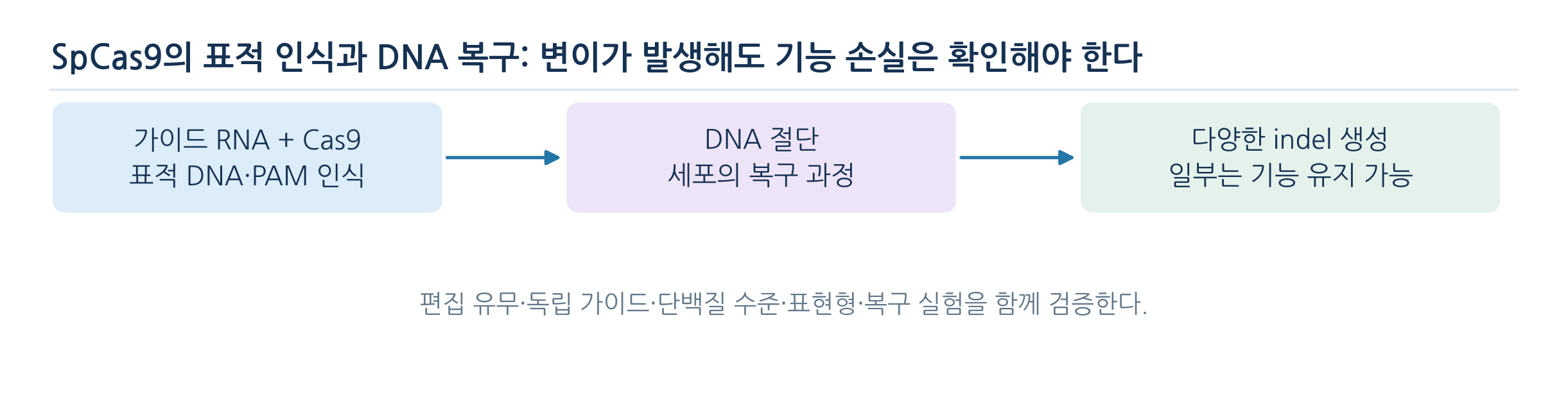
- With SpCas9 a guide RNA recognises the target and the enzyme cuts DNA next to a suitable PAM
- Insertions and deletions during non-homologous end joining can shift the reading frame and abolish function
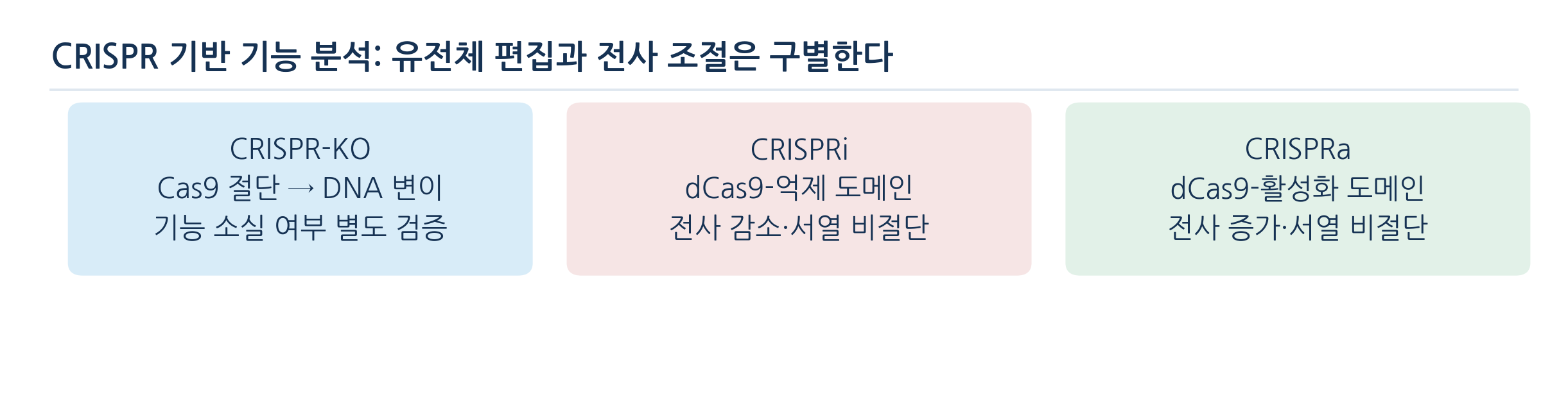
- Knockout cuts to destroy function, interference uses dCas9 with a repressor to lower expression and activation raises it
- Observed changes can also come from off-target effects, cell line differences or delivery
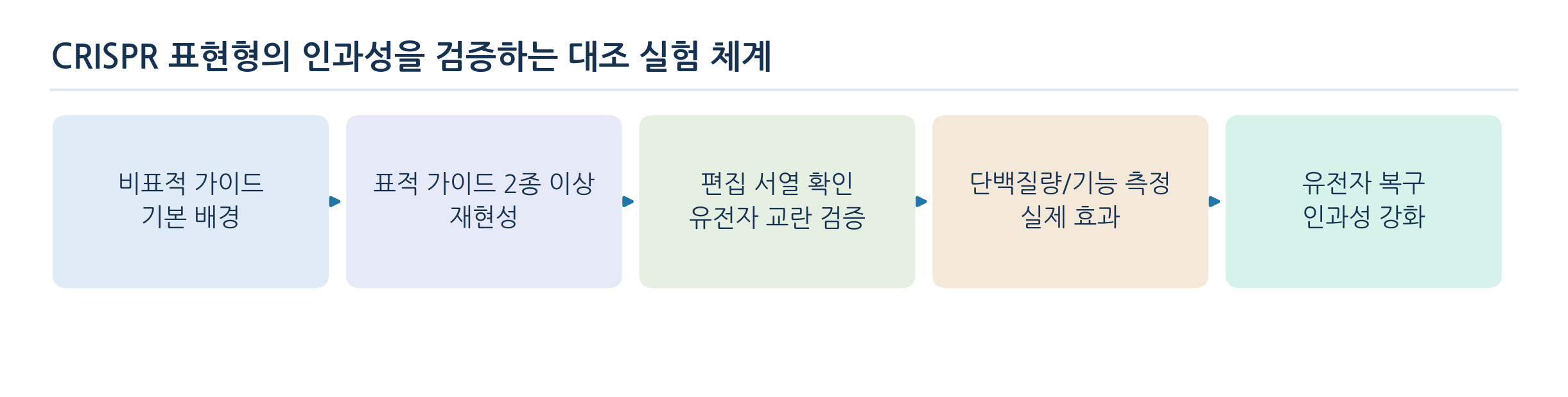
- Non-targeting guide controls and several independent target guides should be included
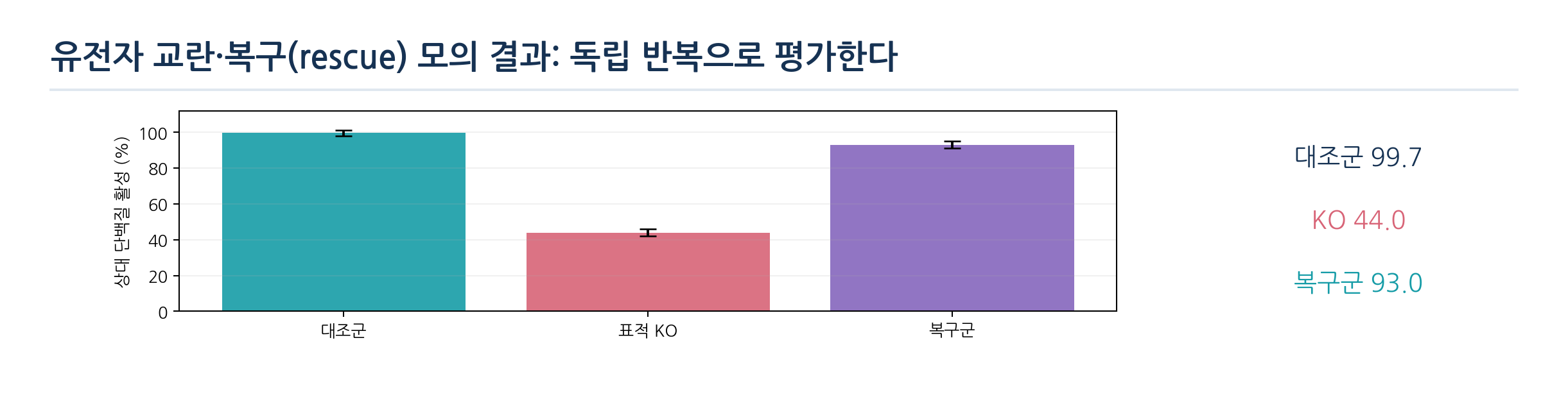
- Rescue by reintroducing the target gene strengthens causal inference
- Example: control 99.67 percent, knockout 44.0 percent and rescue 93.0 percent means a fall of about 55.9 percent
- Recovery in the rescue group supports dependence on the target
07
Integrated study: from sequence to biological function
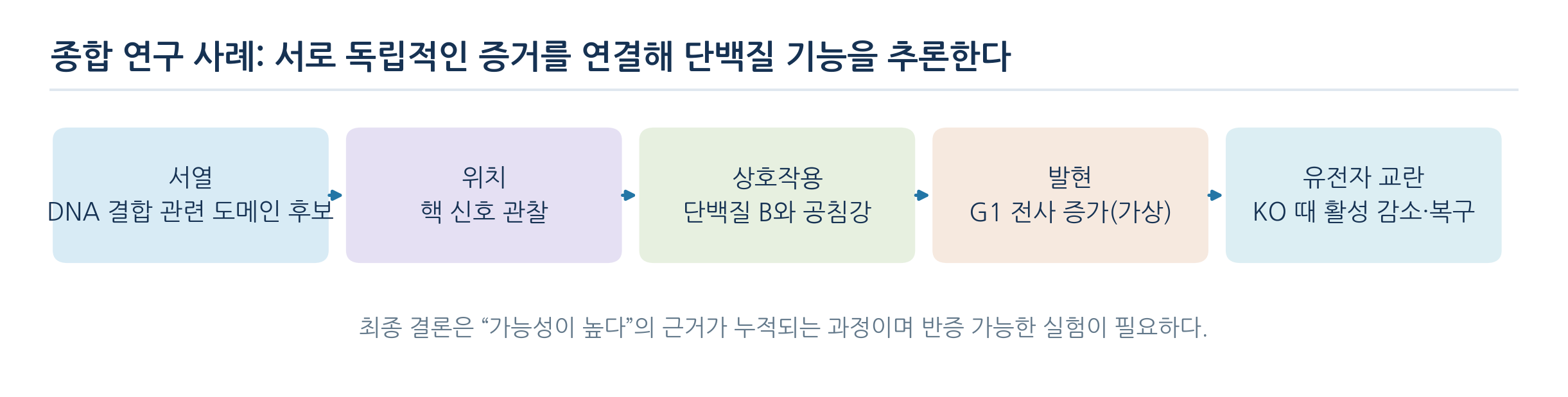
- Alignment suggests domain similarity, fluorescence gives localisation, Co-IP suggests partners and perturbation tests causation
- Each method supports a different proposition, so no single result fixes the whole function
- Consistent evidence raises confidence while conflicting results call first for a check of conditions
- The final judgement places sequence, localisation, interaction, perturbation and rescue evidence together
References
| Feature | Genomic DNA library | cDNA library |
|---|---|---|
| Starting material | Fragments of genomic DNA | Reverse transcripts of mature mRNA |
| Introns | Present | Generally absent |
| Representation | Represents the whole genome | Represents expressed transcripts only |
| Main use | Finding genes and regulatory regions | Finding expressed genes and producing protein |
| Method | Signal measured | Required validation |
|---|---|---|
| Fluorescent fusion | Distribution of fluorescence in the cell | Confirm the tag does not alter function or location |
| Immunofluorescence | Antibody staining pattern | Antibody specificity and secondary controls |
| Colocalisation | Spatial overlap of two channels | Resolution limits; not direct binding |
| Yeast two-hybrid | Transcription of a reporter | Exclude autoactivation and false positives |
| Co-immunoprecipitation | Proteins recovered together | IgG control and possible nucleic acid bridging |
| FRET | Energy transfer between donor and acceptor | Control distance, orientation and labelling ratio |


| Gene | Control signal C | Treated signal T | FC = T/C | log2 FC |
|---|---|---|---|---|
| G1 | 100 | 400 | 4.00 | +2.00 |
| G2 | 250 | 250 | 1.00 | 0.00 |
| G3 | 500 | 125 | 0.25 | -2.00 |
| G4 | 500 | 125 | 0.25 | -2.00 |